

Winter feels late this year. I’m looking forward to the hoary frosts that have yet to create beautiful white fringes on the few remaining leaves, and icicles catching the light from a low-hung sun.
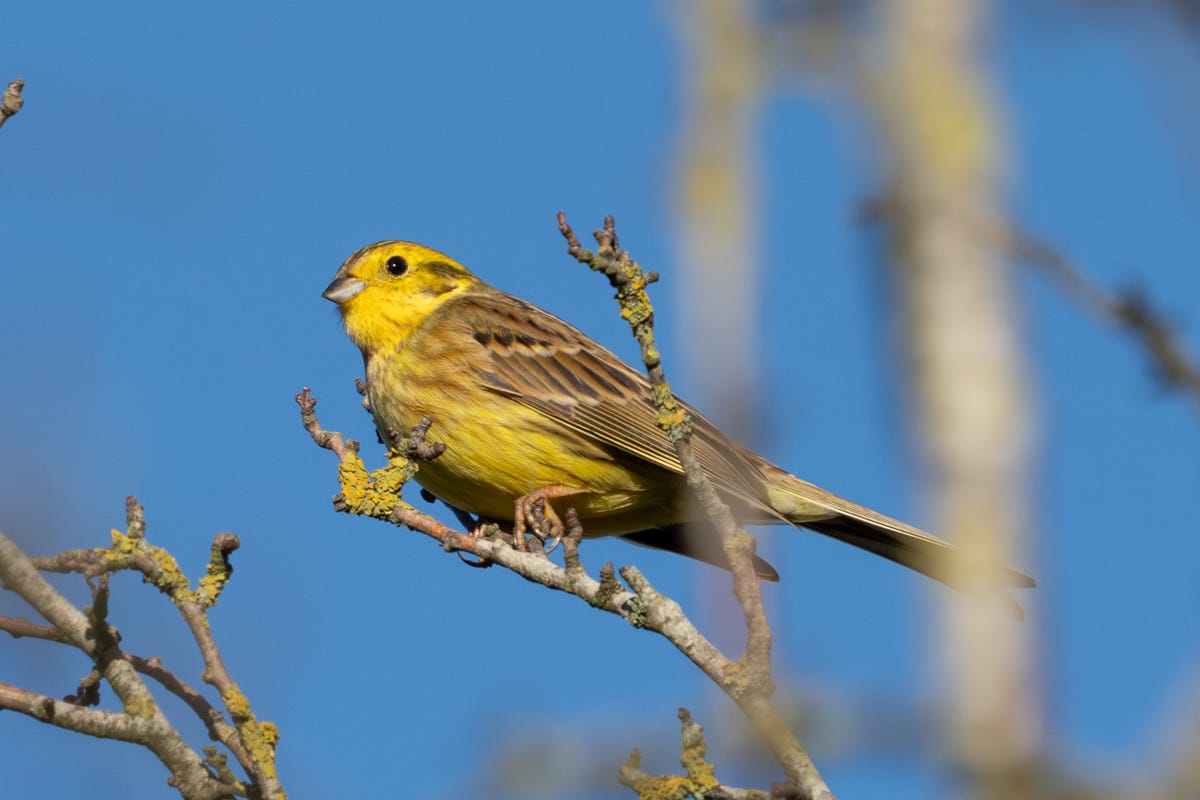
Dark days call for a splash of colour, and the Yellowhammer delivers. These finches never cease to stun me as they emerge from the margins of arable fields, showing off the white feathers at the side of their tails.
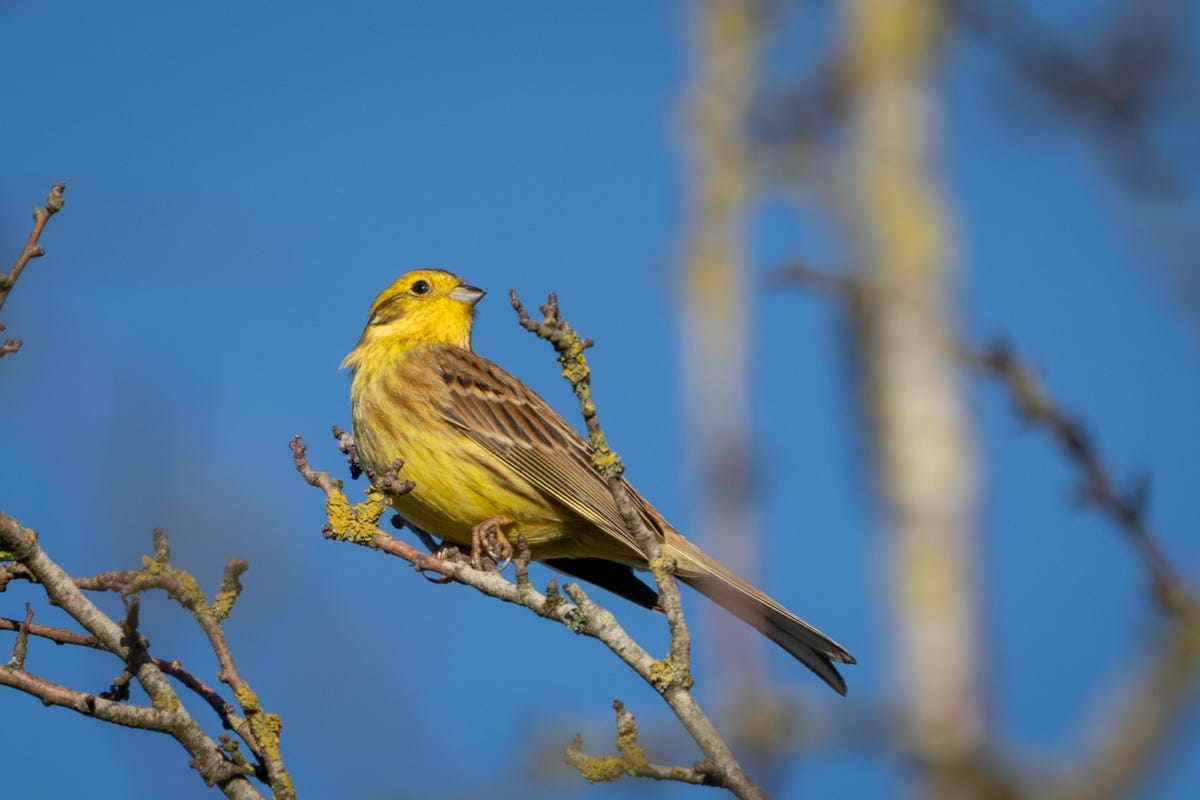
The RSPB tells me this is a sight to be savoured: “Populations plummeted by 61% between 1967 and 2020 due to a lack of food and nesting habitat, earning themselves a place on the Red List”.
Yellowhammers have one of my favourite calls. Often described as singing “A little bit of bread and no cheese”, I always think they sound more like a jug being emptied and then refilled from a tap: an ascending “Glug, glug, glug” followed by a descending “wheeeee”.
My next encounter came as I was hiding in a small woodland, looking for our winter thrushes – Redwings and Fieldfares – which I have yet to photograph to any acceptable standard. A small bird with scythe-shaped wings suddenly rushed onto the scene, high overhead, being mobbed by other birds.
My first instinct was that it was one of our smaller waders, but why would anything mob one of those?
The realisation that this might be a lifer slowly dawned on me.
I pointed my camera straight up and tried to track the bird, losing focus on it twice. The bird’s rapid dash across the narrow opening in the trees would not allow me a third mistake.
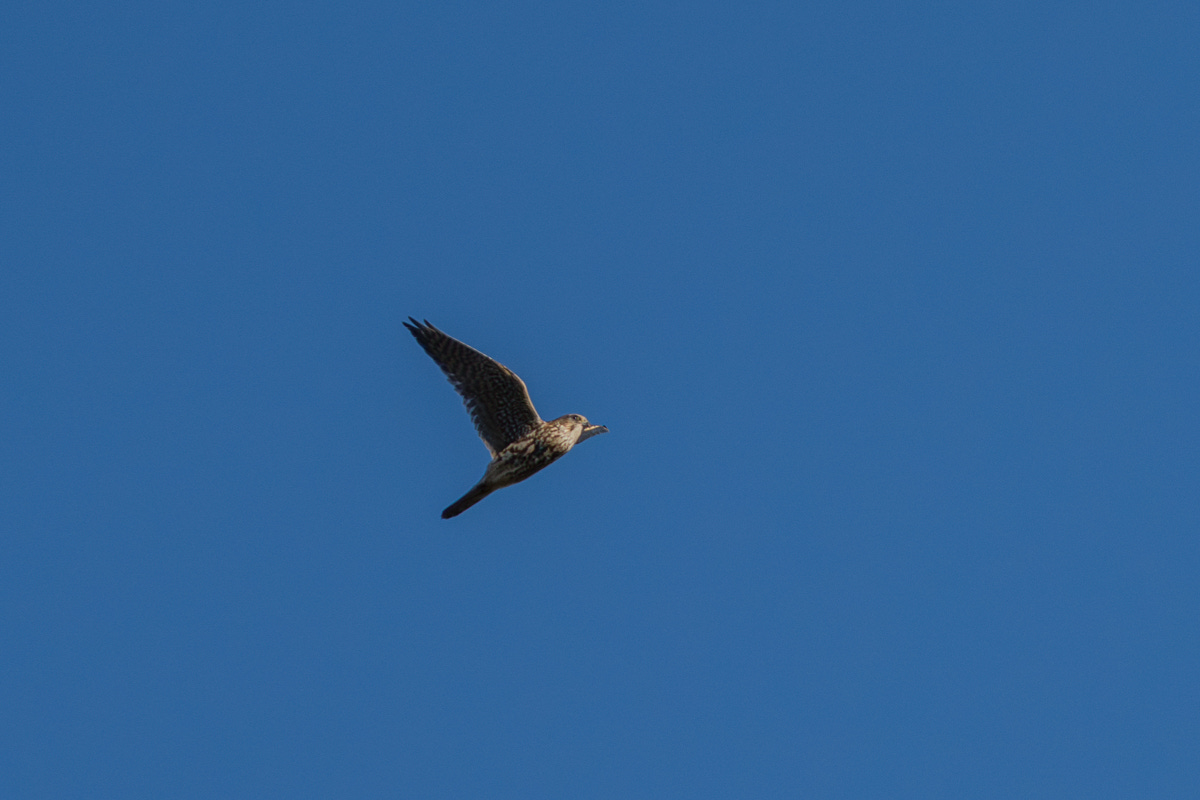
Thankfully, luck smiled on me and I captured a few shots: it’s a Merlin. A female Merlin with a very full crop, to be precise.
This is our smallest falcon, which only visits Bedfordshire during winter months. You can read the fuss a previous Merlin at this location caused in this Country Diaries post in the Guardian.
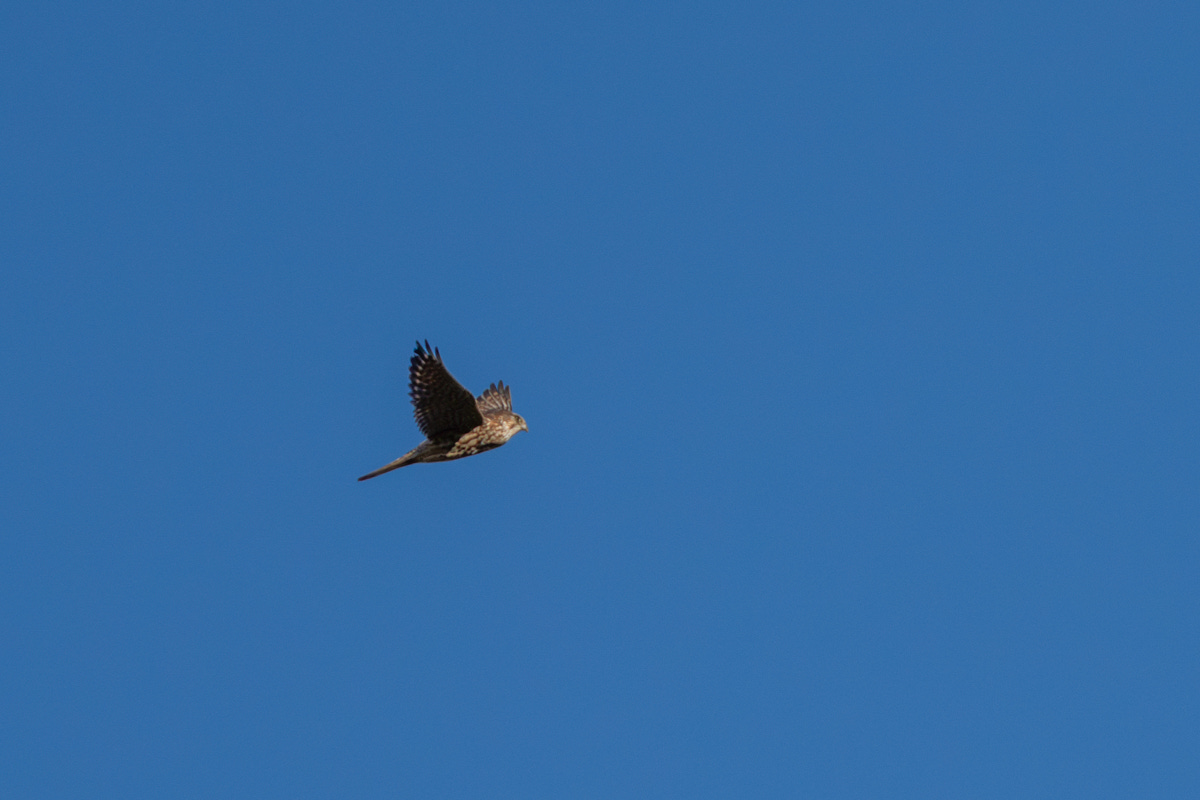
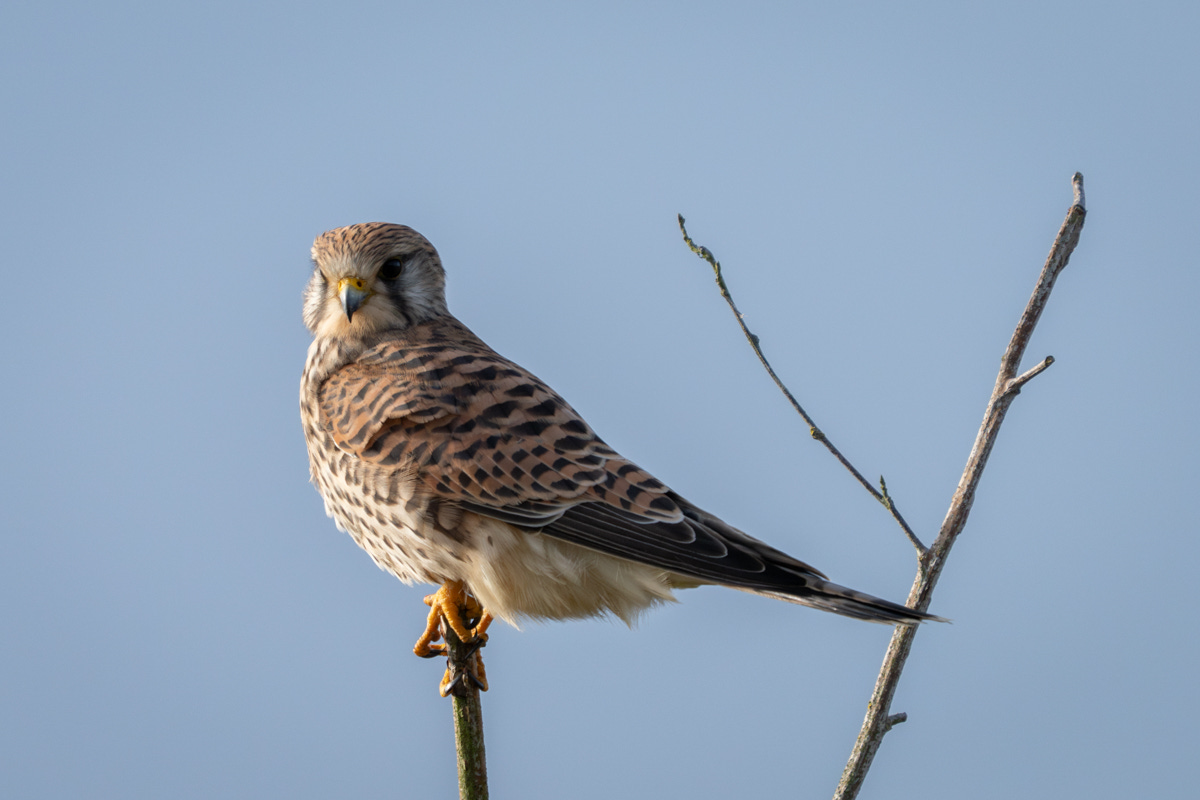
I had to confirm my photos were indeed a Merlin (thank you kindly, Burhinus) before I got too excited, because there are two female Kestrels in the area, and as you’ll see below the similarities are striking. It can be hard to trust your instincts when the bird in question is a lifer.
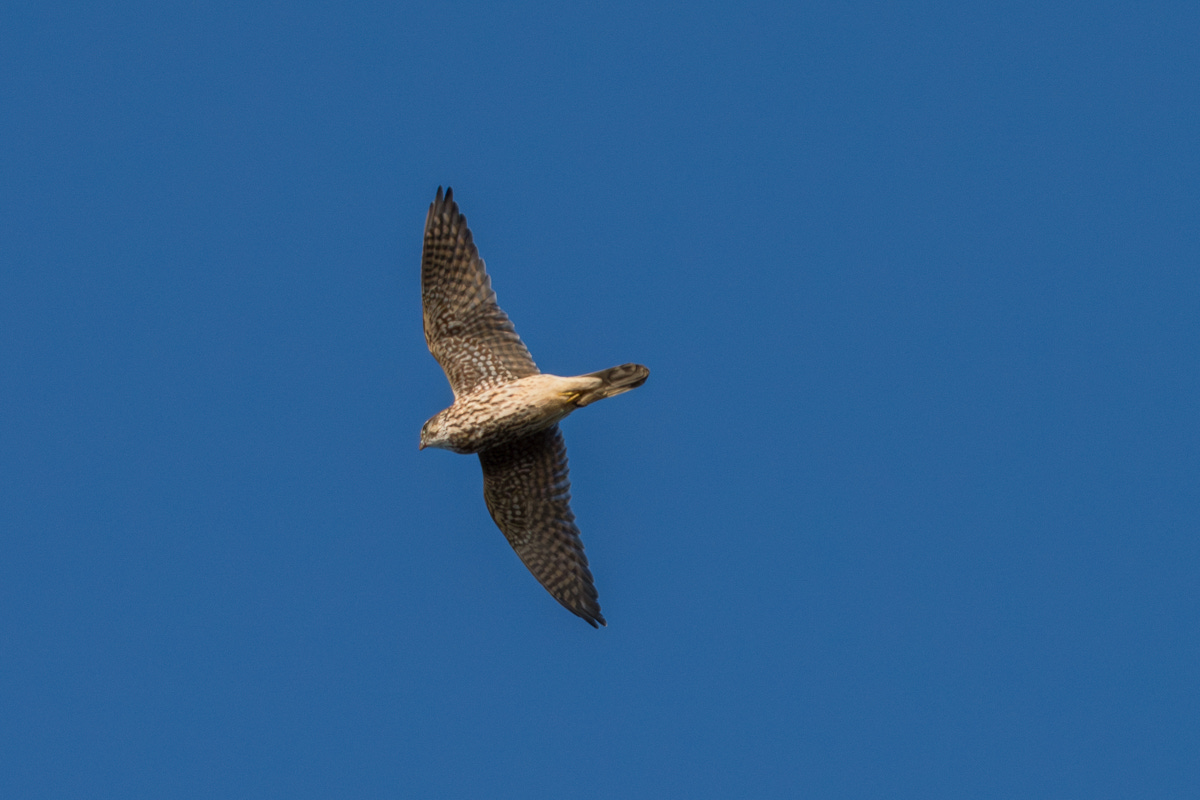
Note the differences between the birds in these photos aren’t the best way to tell them apart – the Merlin, above, does have a dark banded tail, it’s just not visible here. And the Kestrel, below, often has a dark ‘tear drop’ marking, like the Merlin; it’s just very faint on this individual.
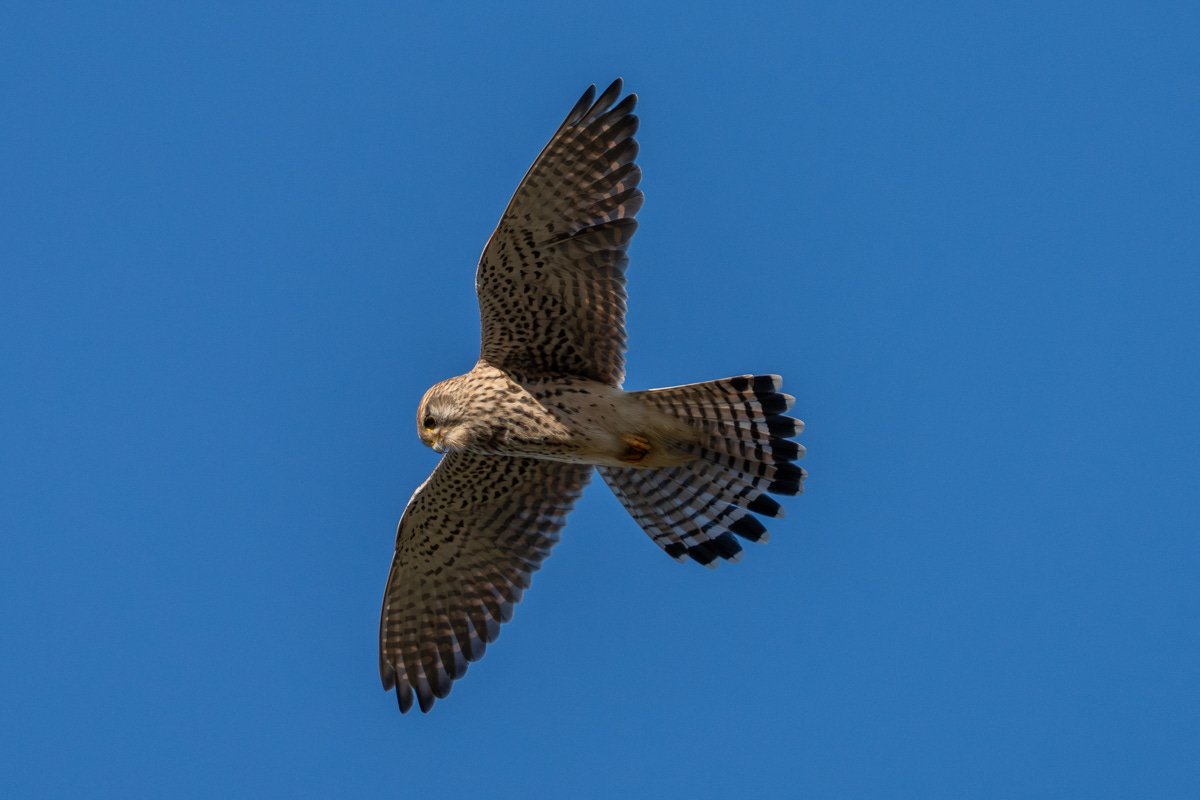
Aside from the size, I ruled out a Kestrel because of the long, narrow wings and the short, almost squared tail.
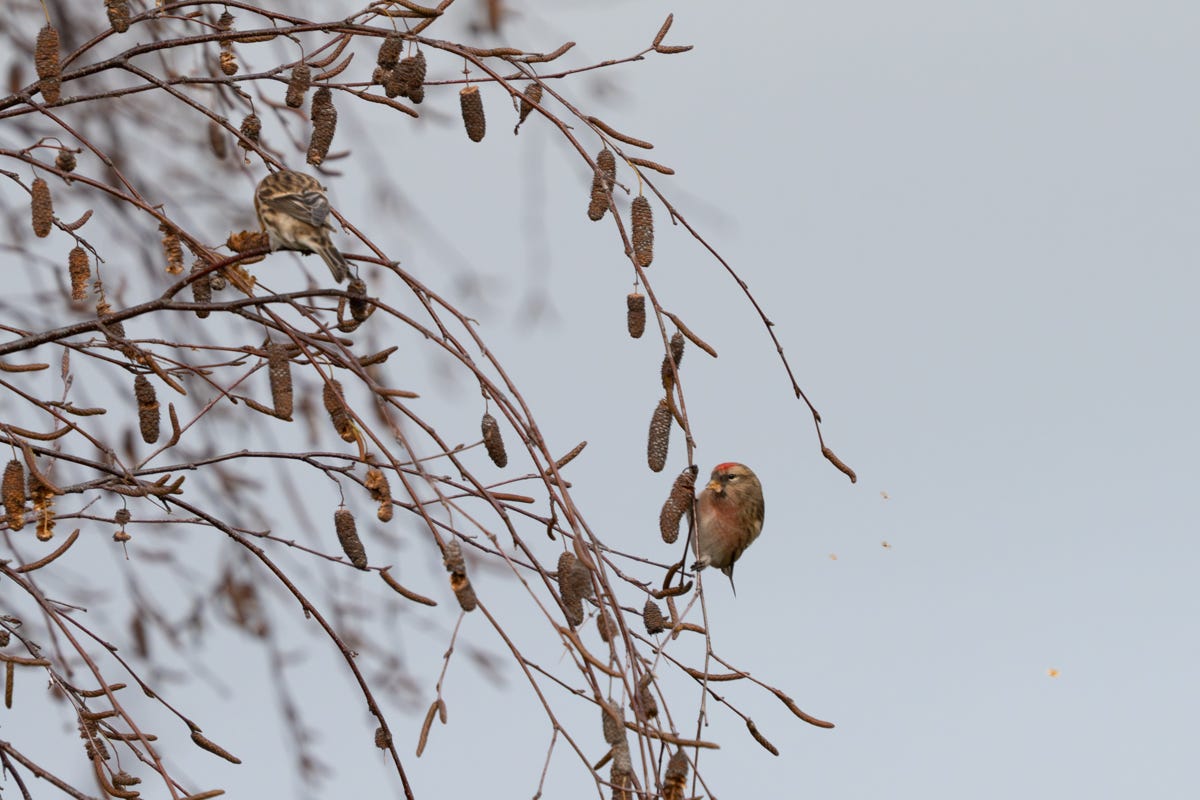
The Merlin appears to have timed her arrival well. A flock of around 50 little streaky finches adorned the Alder trees like Christmas baubles. Redpolls – another winter visitor – have gathered in larger numbers than usual.
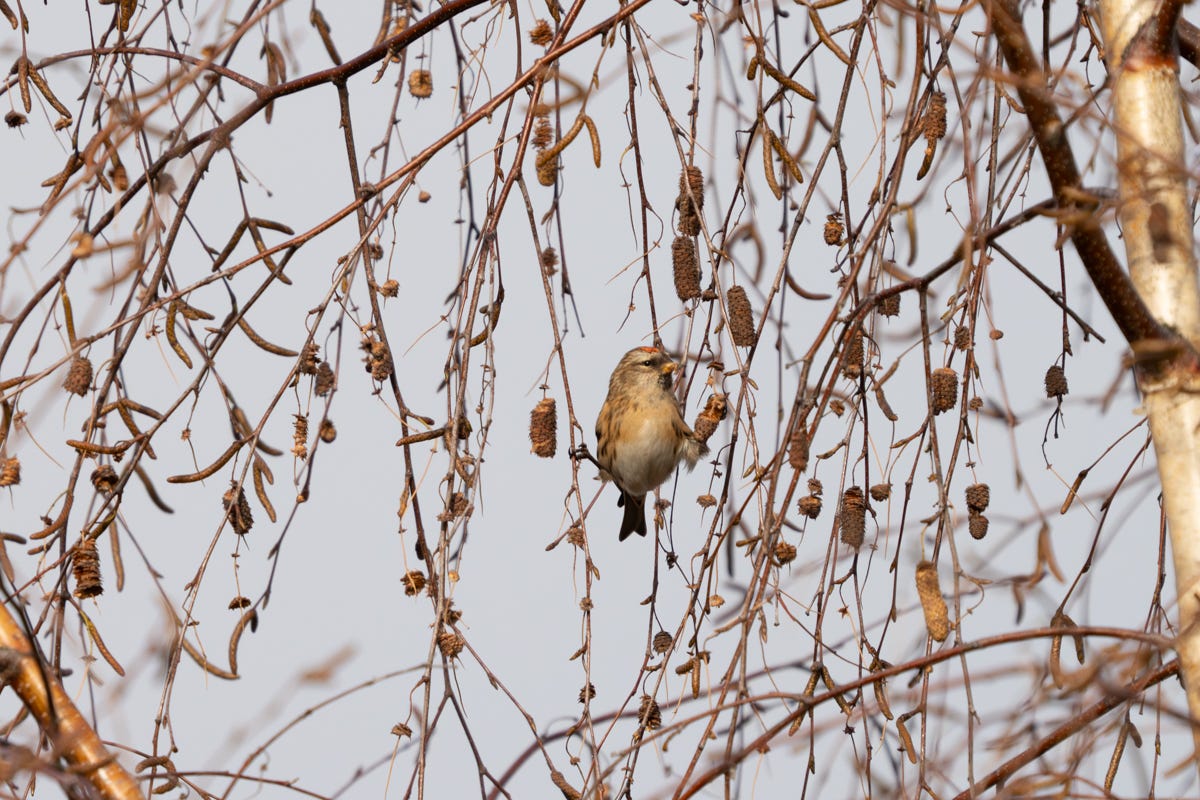
Every now and then, a gust of wind would take them fluttering into the air as one, like a sudden drift of leaves, and they would settle at the water’s edge for a quick drink.
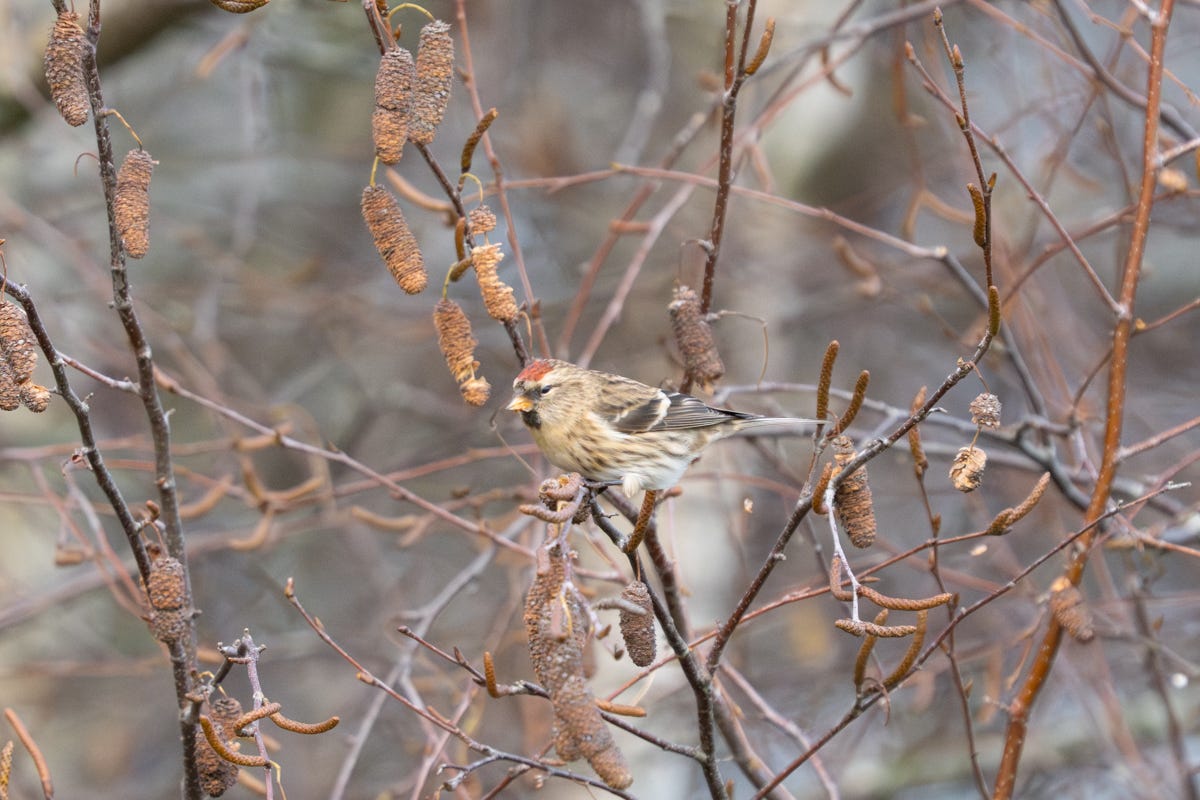
These extremely charming little birds are very messy eaters, often ruining a perfectly nice photo by having their beaks and faces covered with seed residue.
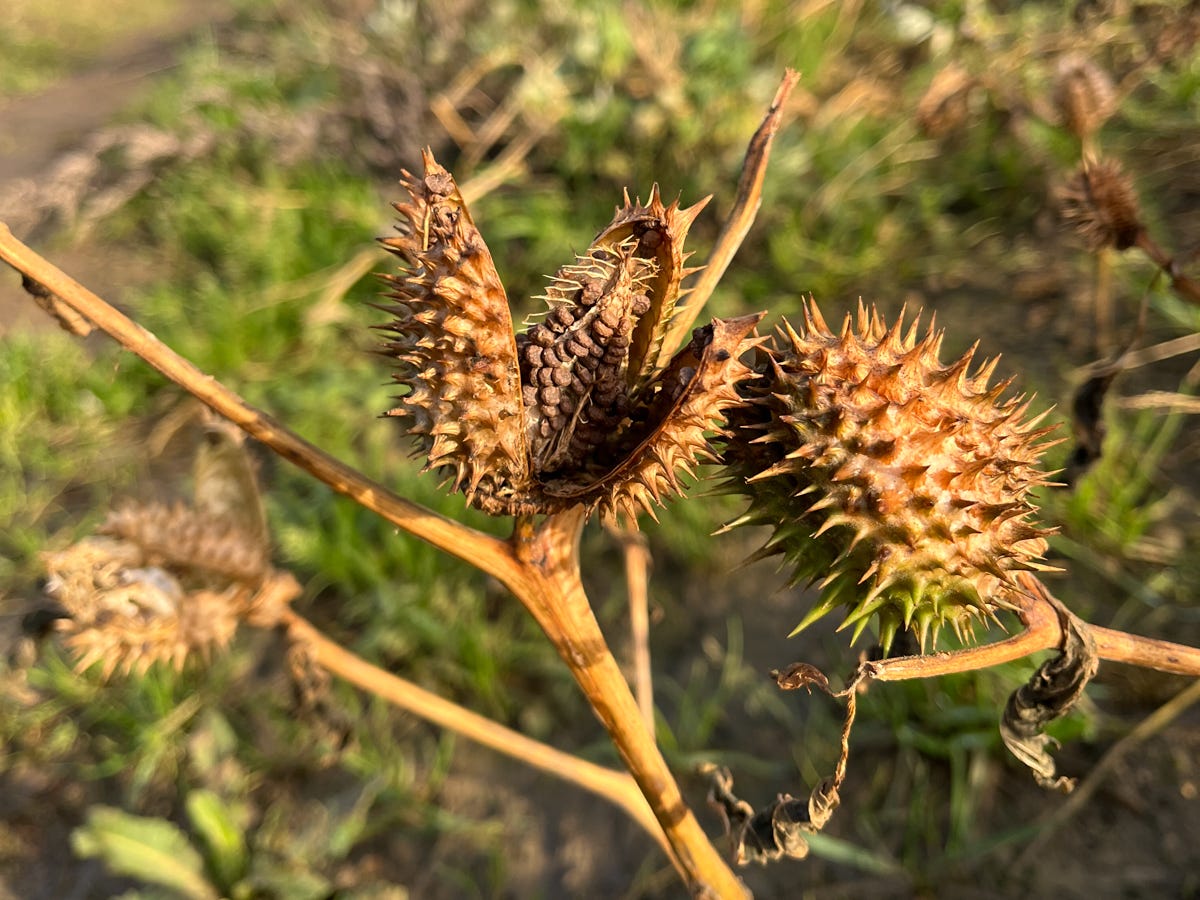
The Datura I wrote about in a previous note has gone to seed, so this fascinating plant looks like it’s here for the foreseeable. I haven’t seen any wildlife eating it, which may be just as well given some of its properties.
And there is still one more lifer to mention – this time, it’s a fungus. I felt sure it would be named Stagshorn due to its shape, but apparently this is Candlesnuff.
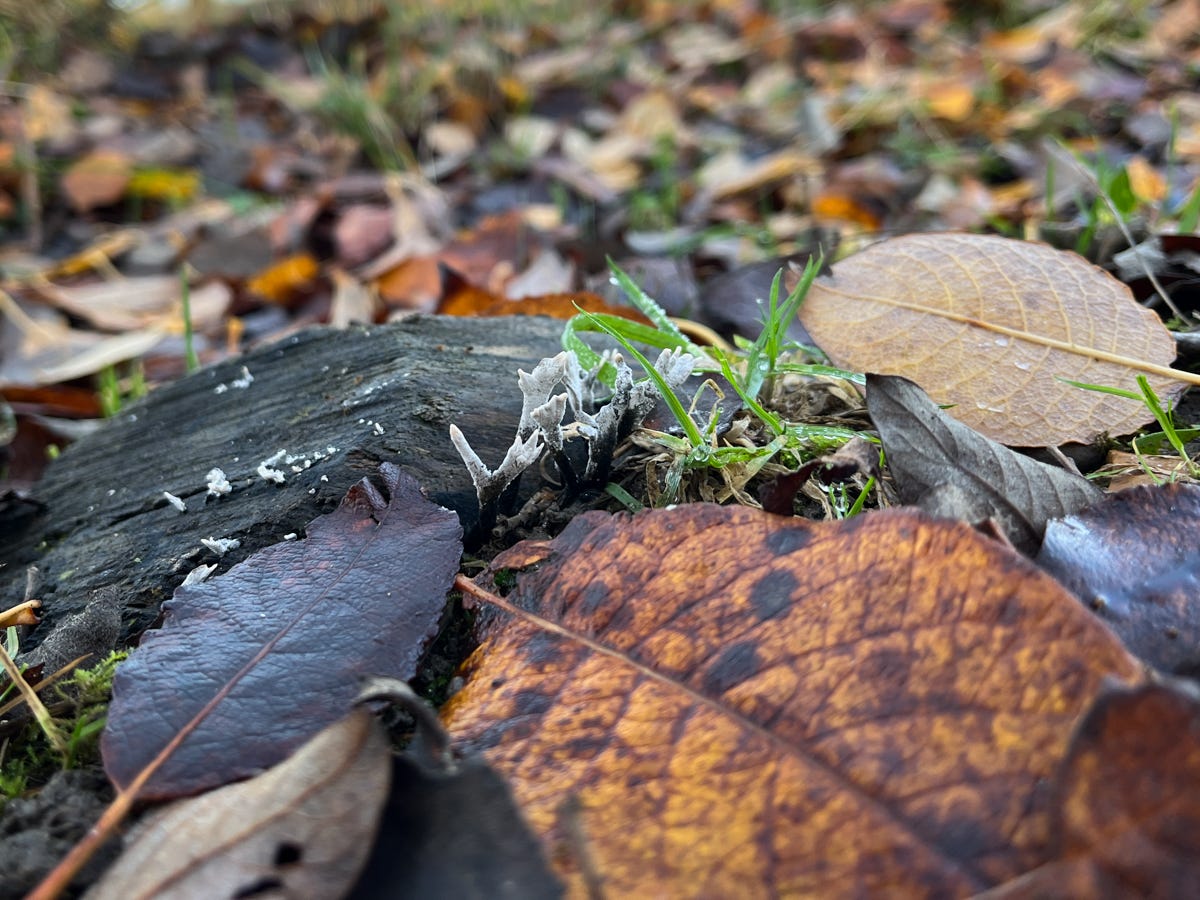
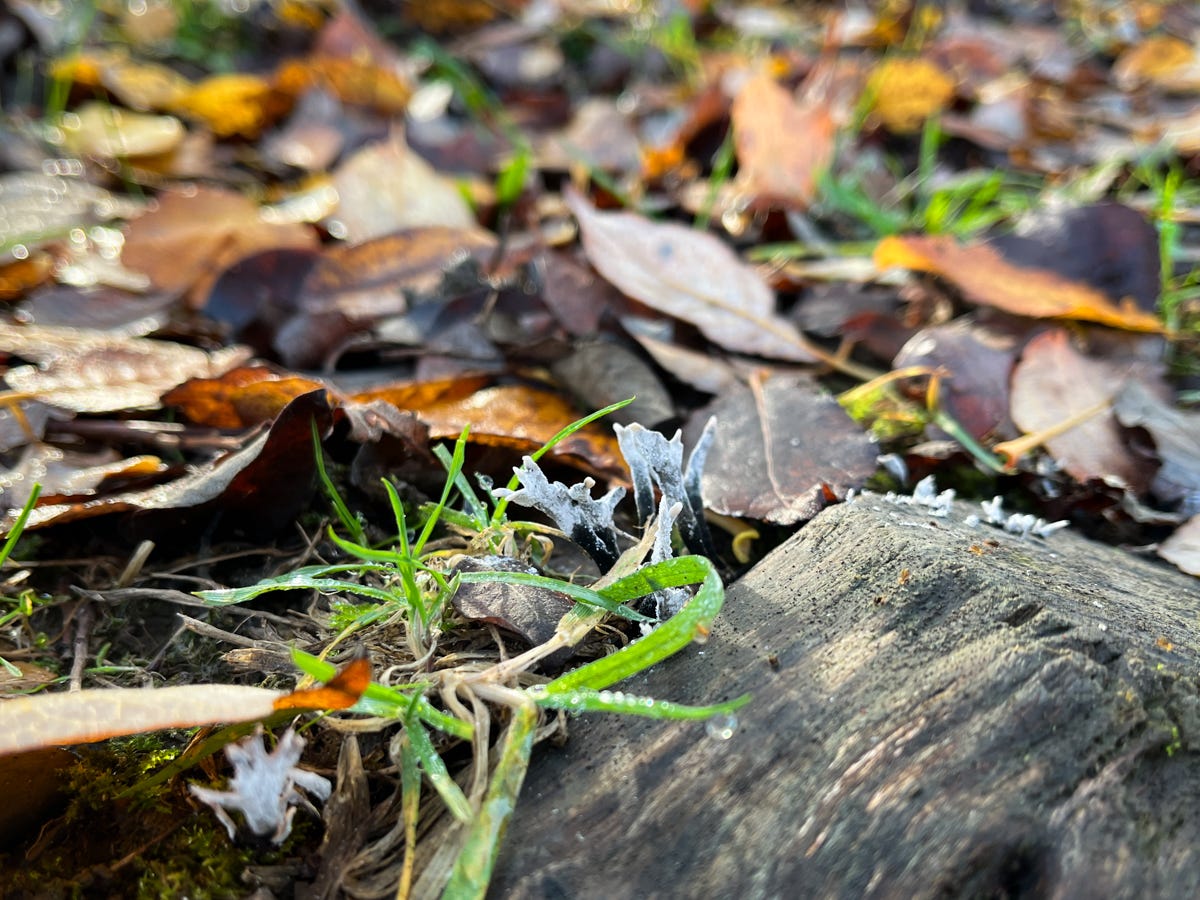
And it’s doing what Candlesnuff does best – devouring dead wood. Some of the compounds in this fungus have shown anti-cancer properties in the lab, but it is not edible (in case you were considering it).
And I can’t help but add this photo of a female Kestrel, perched and regarding me with suspicion. This is not the same Kestrel as the one in the photo earlier – you can see this one’s prominent teardrop marking.
Things are going to change around here…
My new(ish) job involves a lot of writing. I have also just received my ADHD diagnosis. So, I’m taking the pressure off – I’d love this to be a weekly newsletter, but that isn’t sustainable for me 100% of the time.
I won’t dwell on it any more, as I’ve already banged on a bit about missed weeks quite a lot. The words come when they come. I hope you’ll stick around and enjoy them.
Thanks, as always, for joining me on this walk. I’d love to know what you’ve seen out and about this month – have you had any winter visitors to your patch?
Gem
Thank you for describing the differences between the Krestel and Merlin. I'm always wondering which ones are flying around here and seems they already likely kestrels. 😊