
Today, we’re having more of a potter than a walk. Still, it’s a longer post than usual so you may want to read it in the app rather than your inbox.
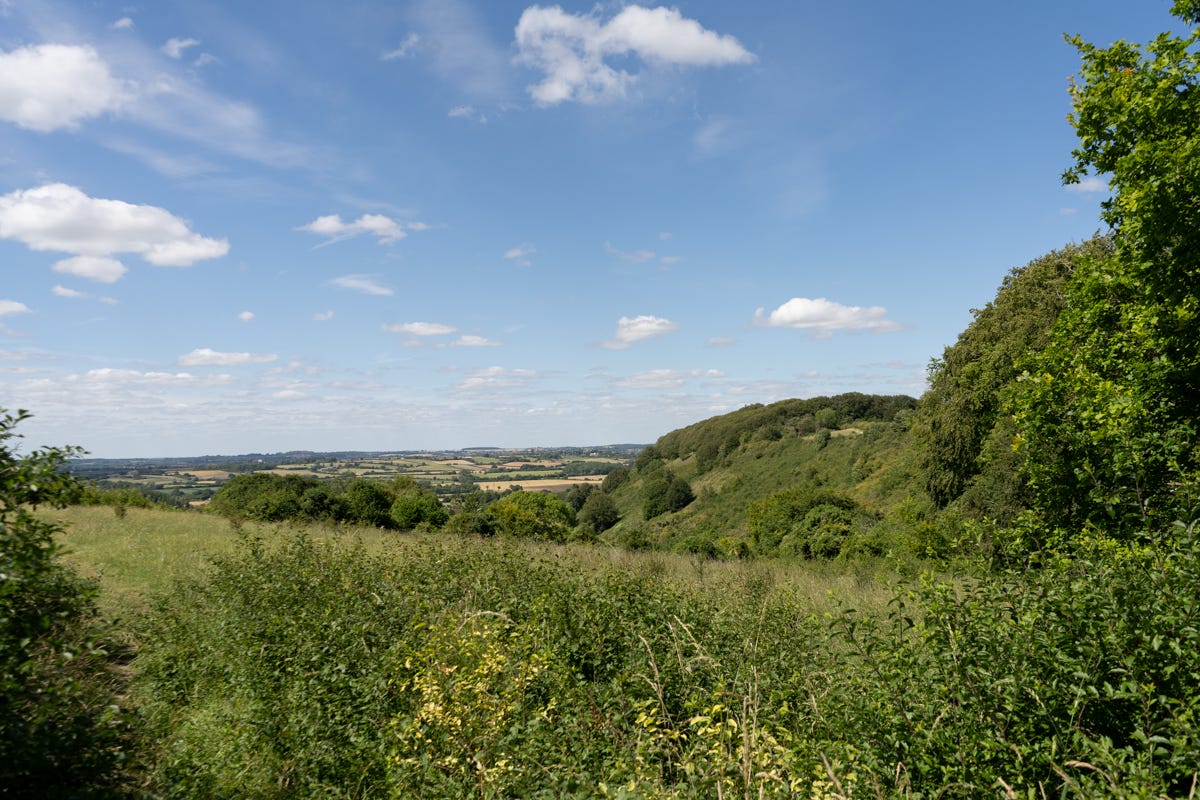
It’s very hot, and we’re on the exposed hillside, hunting for wildflowers and butterflies at the fabulously named Sharpenhoe Clappers.
The pale, chalky hills reflect the sun’s heat back up, baking us twice. But look around!
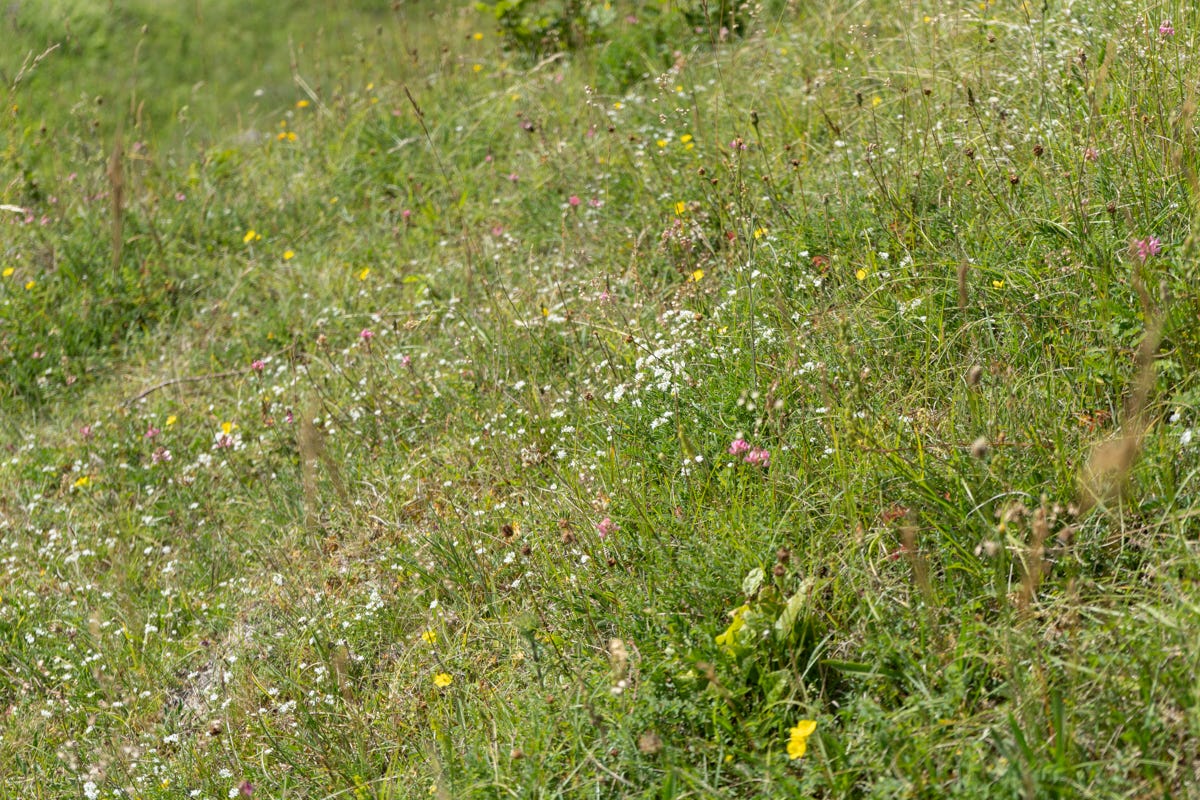
The meadow is alive with insects and there are all kinds of wildflowers dotted about, swaying breezily whenever we are blessed with a cooling gust.
It’s hard to say which insect species is most numerous, but the Meadow Brown is a strong contender. This one is showing off some of the underwing features that help you tell it apart from the Gatekeeper.
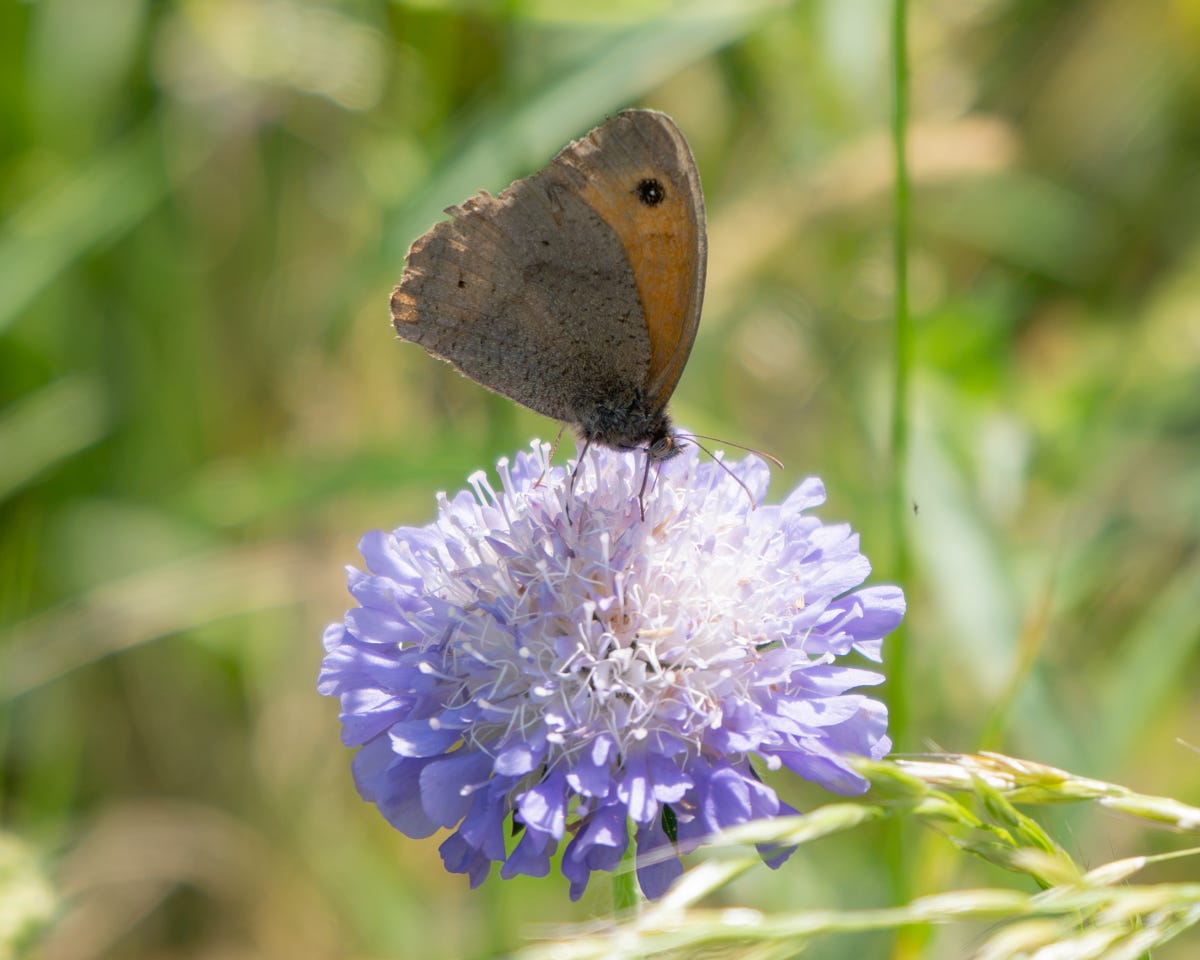
The two evenly spaced smaller black dots on the lower wing, for starters. These aren’t always present. The Gatekeeper always has a series of dots, and theirs feature a white centre. And then the larger black spot in the orange section contains a white dot in this species, but two white dots in Gatekeepers.
This is sitting on a beautiful scabious, a wonderful flower that loves chalk grasslands and is fantastic for pollinators.
Now we get to the part where I may have to add in corrections later! I understand this to be a Vestal Cuckoo Bee. They look very much like Buff-tailed Bumblebees, because (like their avian namesakes) cuckoo bees are parasitises, and need to look similar to their buff-tailed hosts.
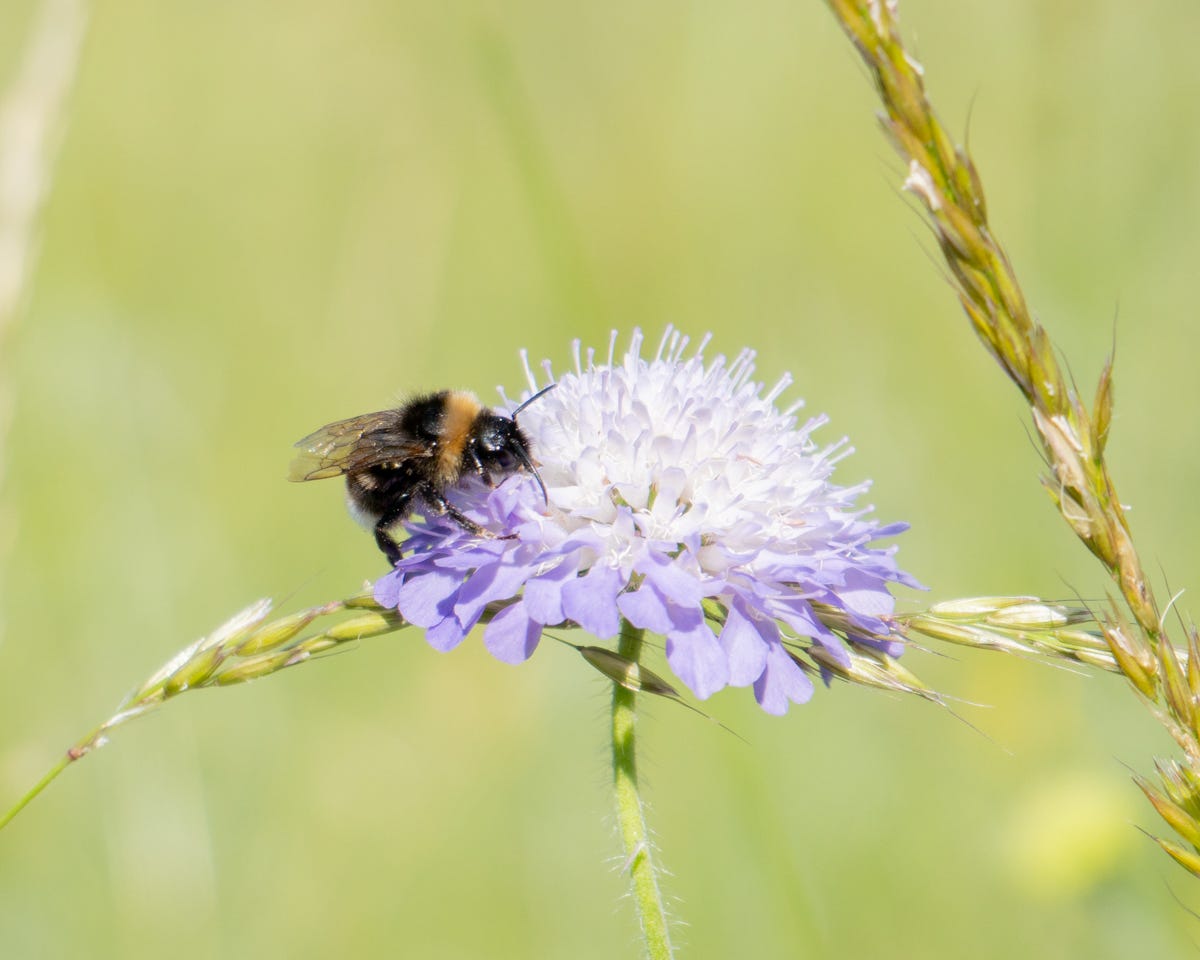
This one had yellowy patches at the top of its white tail and has no pollen baskets, which leads me to think it’s the cuckoo variety. This species sneaks into a host nest, kills the queen and tricks the workers into raising their offspring instead. Crafty!
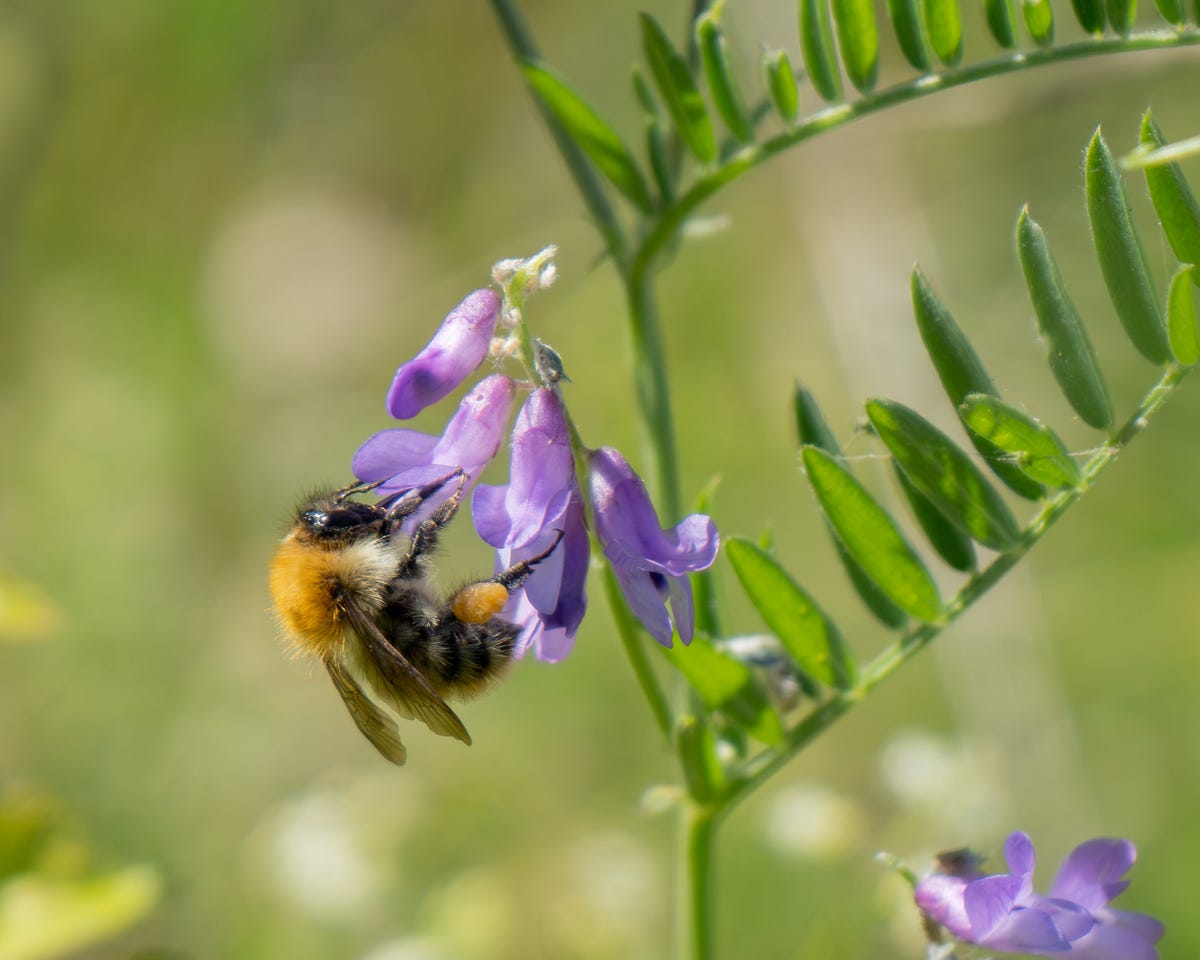
A little cuter, the next pollinator we see is the Common Carder Bee. You can see the stripes on its back that look like carded wool, lending it its name. And it’s on some lovely purple Vetch, which has some of the prettiest foliage going.
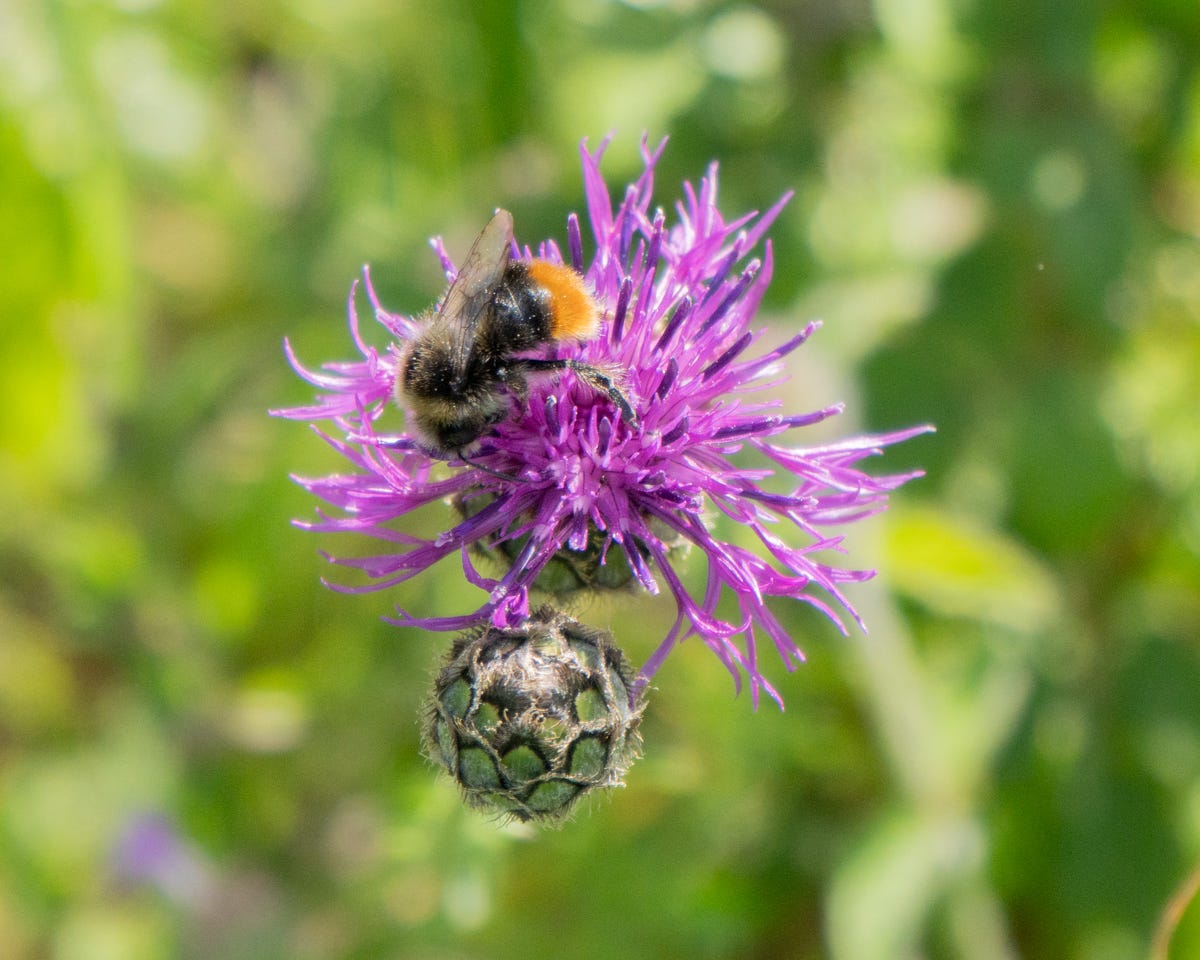
We’re learning as we go here – this is an Early Bumblebee. I thought it was a Red-Tailed, but the yellow collar rules that out. I love the pattern on Knapweed flowerheads just before they bloom.
Unlike the slow and noisy bees, the butterflies are making us work for a chance at a photo! It’s important not to trample wildflowers, but waiting for the butterflies to haphazardly pass close to the path can be infuriating.
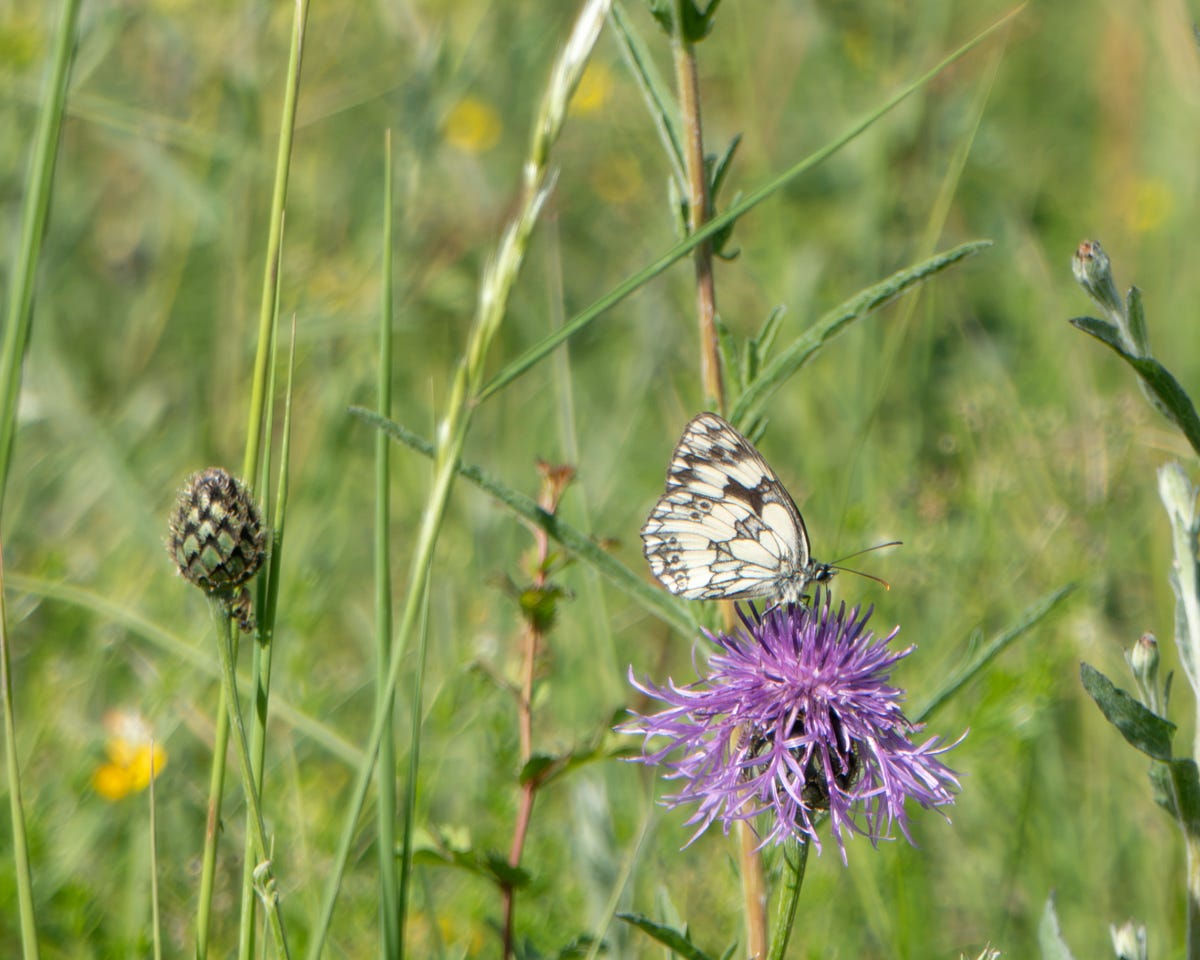
This Marbled White was quite some way away and didn’t sit still for long. A photo offers the opportunity to marvel at the intricate pattern of lines, dots and patches on their wings.
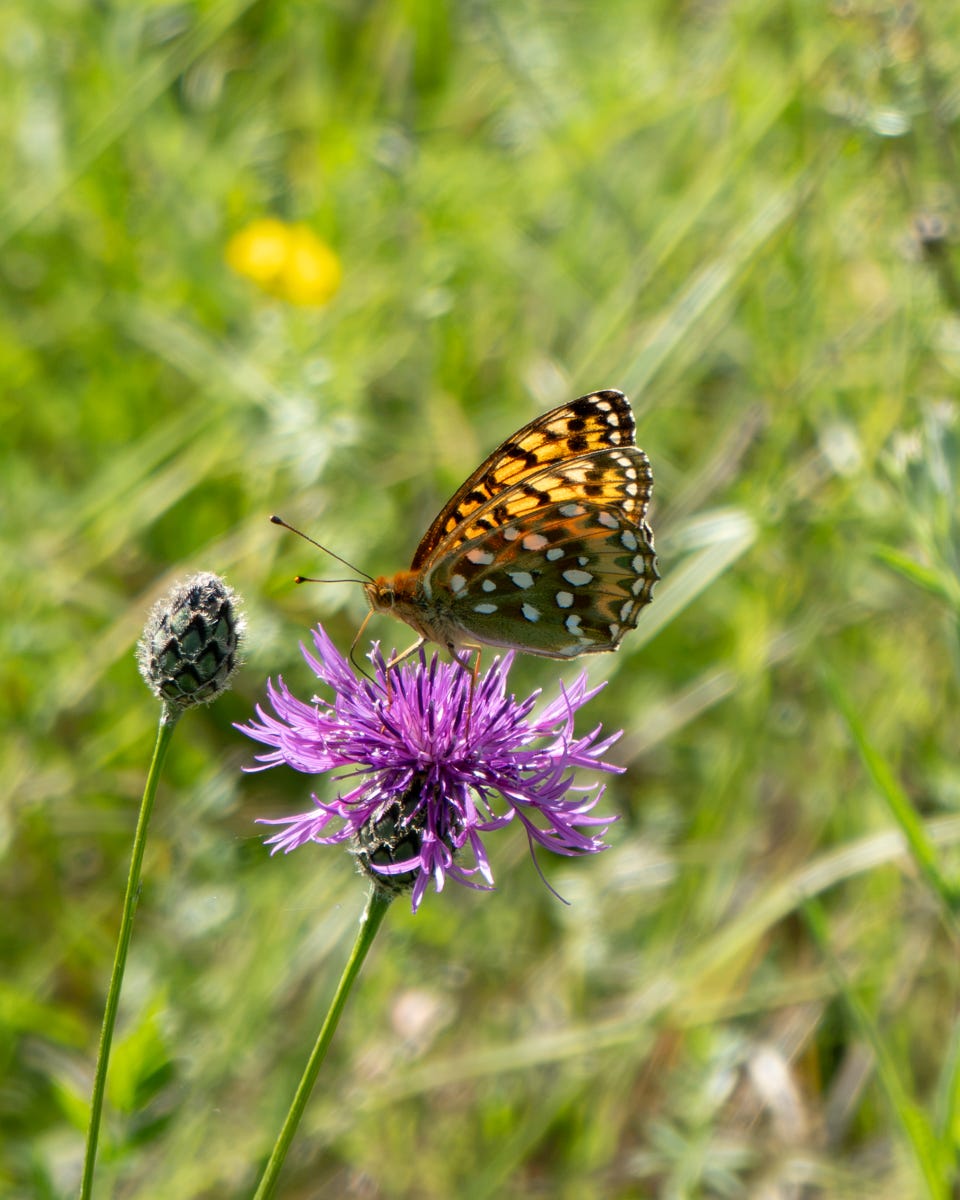
This Dark Green Fritillary was even more infuriating, taking the entire walk to finally get a shot at it.
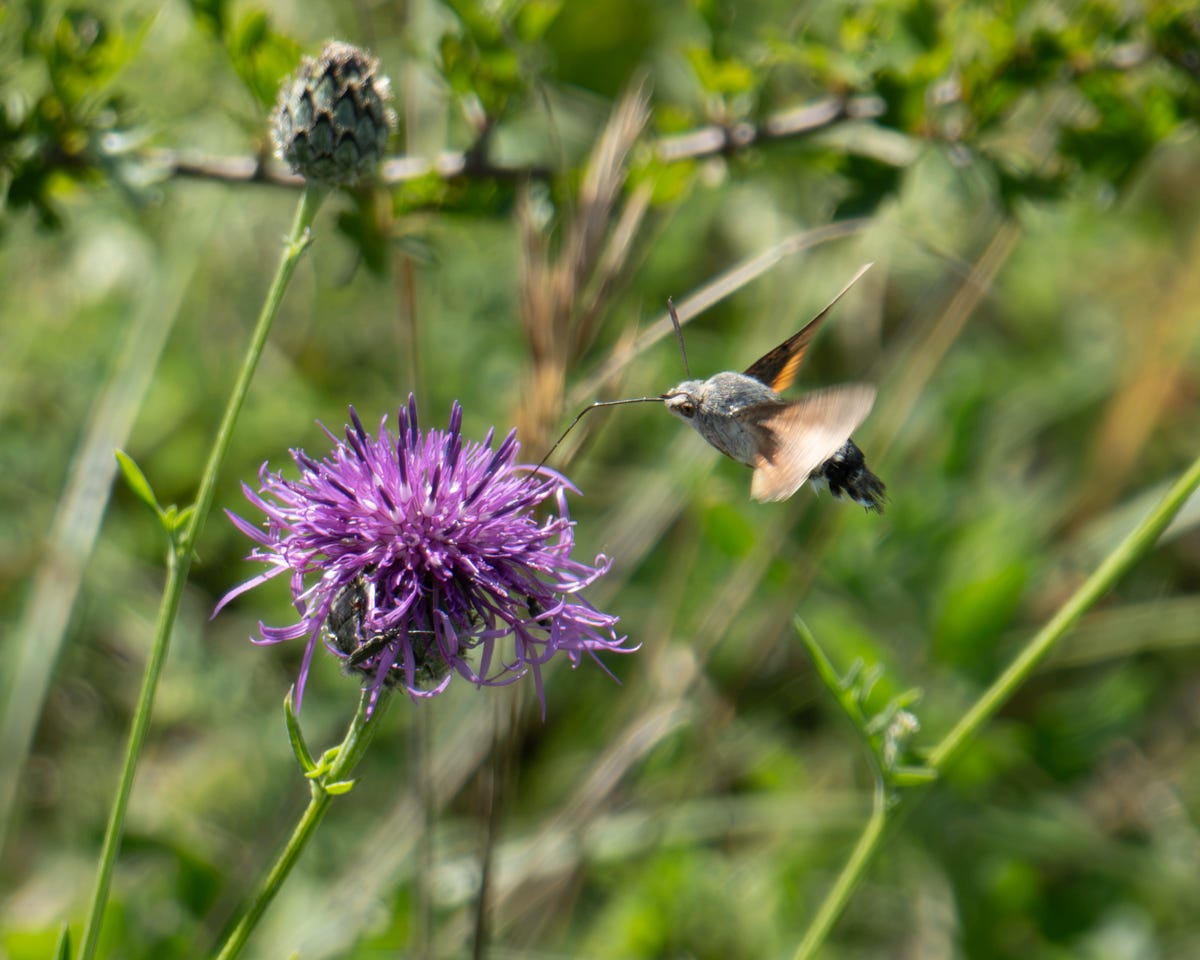
A slightly random aside, here. I once went to Barbados and desperately hoped to see a hummingbird. Sadly, the only one I spotted was expired on the ground. Feet firmly in the UK, the nearest thing I get is this Hummingbird Hawk-moth. Let’s be honest, it’s almost as good!
Right that’s enough of the good guys – the pollinators – for now. Look at THIS! (And while you look, please consider the absolute horrors I experienced while trying to get the camera to focus on it.)
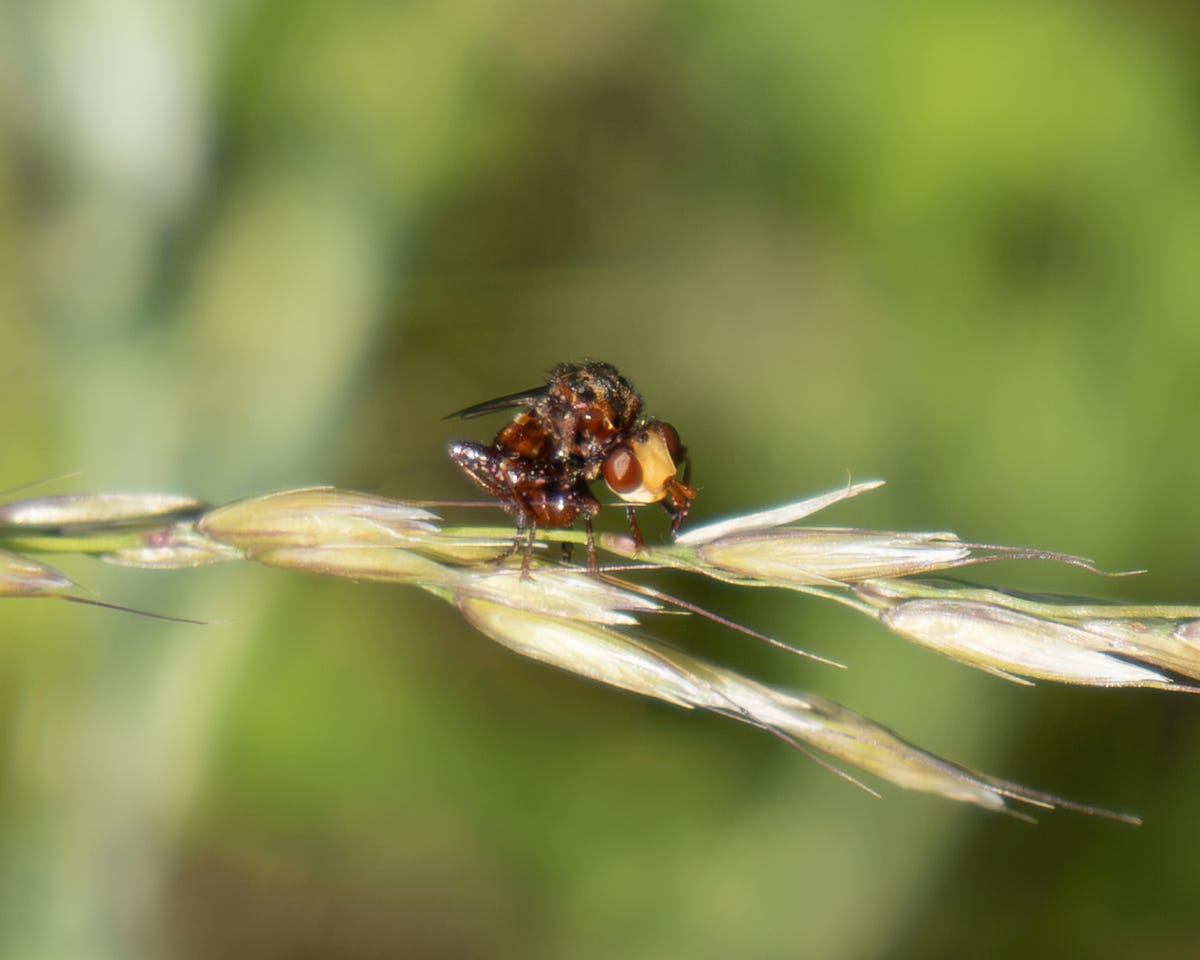
This weirdo has an arched back thanks to its fat little tail tucked between its legs. It seems like a funny shape, until it introduces itself as a Ferruginous Bee-grabber (a type of Thick-headed Fly, as if the name wasn’t already insulting enough). Here’s what the Wildlife Trust says about them:
“They hang out around flowers, waiting for the right bee or wasp to appear. When they spot their target, they pounce and grab it – either on a flower or in mid-air. They lay an egg inside the target’s abdomen, then let it go. When the egg hatches, it feeds on the insides of the host, eventually killing it and pupating in the dead husk.”
Its fat little tail is a perfectly poised egg-deployment weapon. Moving swiftly on…
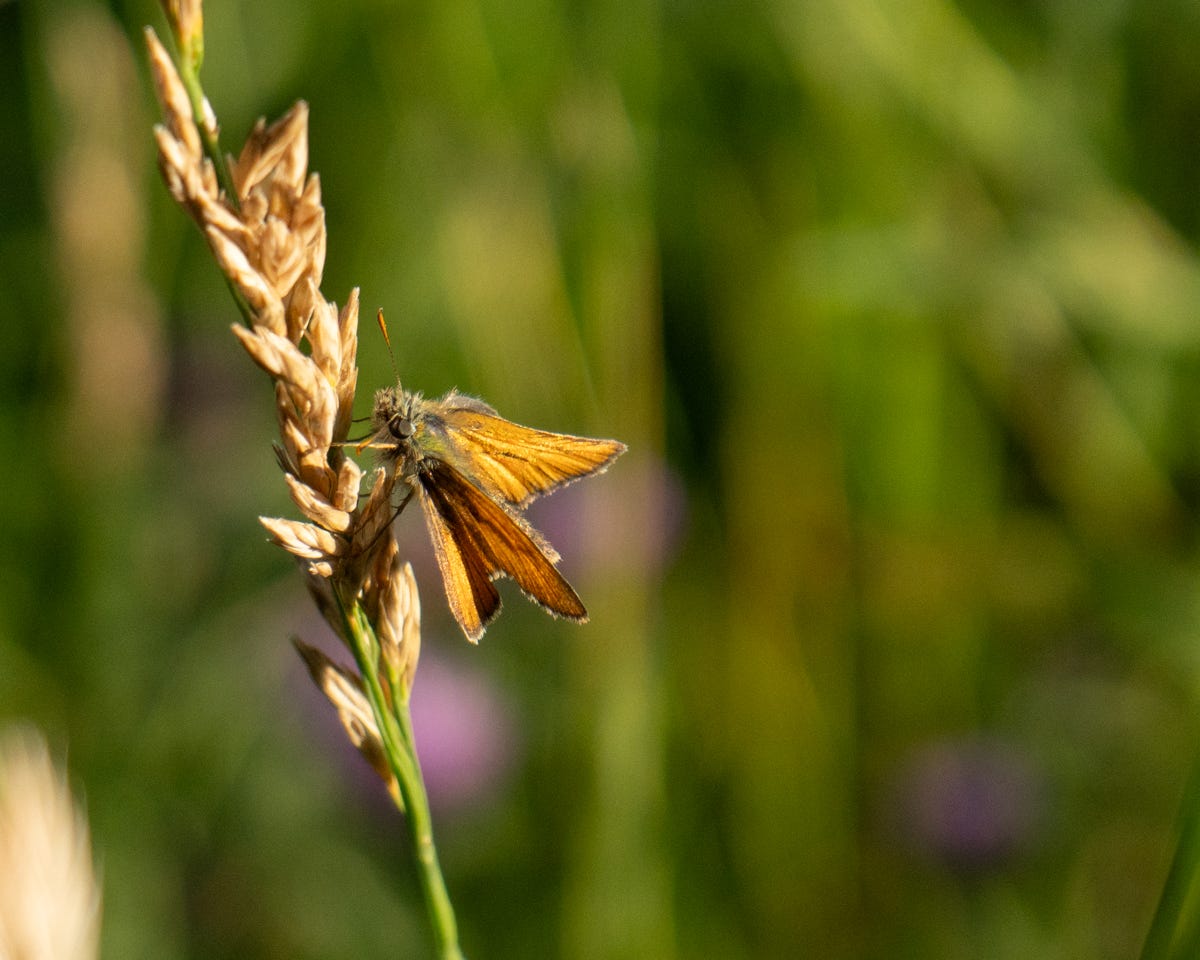
This is a Large Skipper, and if it’s not then it’s a Small Skipper. Skippers don’t carry their two sets of wings flat like other butterflies. This one has a dark line on its wing, so it’s a male. This and the following photos are all species we saw at Sharpenhoe, but were taken at another nearby location in the evening.
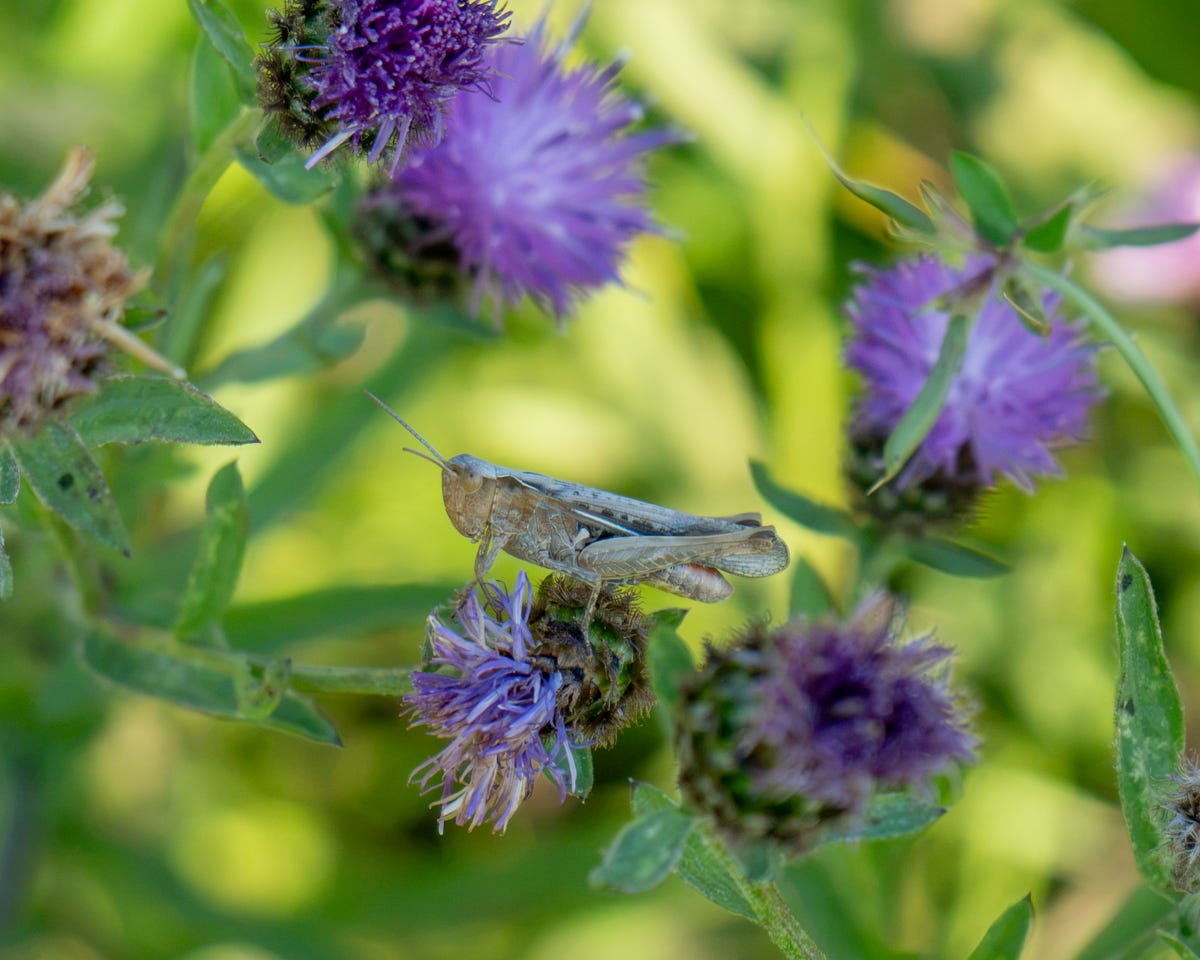
This gorgeous little Common Field Grasshopper is so well camouflaged that I’m not surprised it didn’t think it needed to do a better job of hiding.
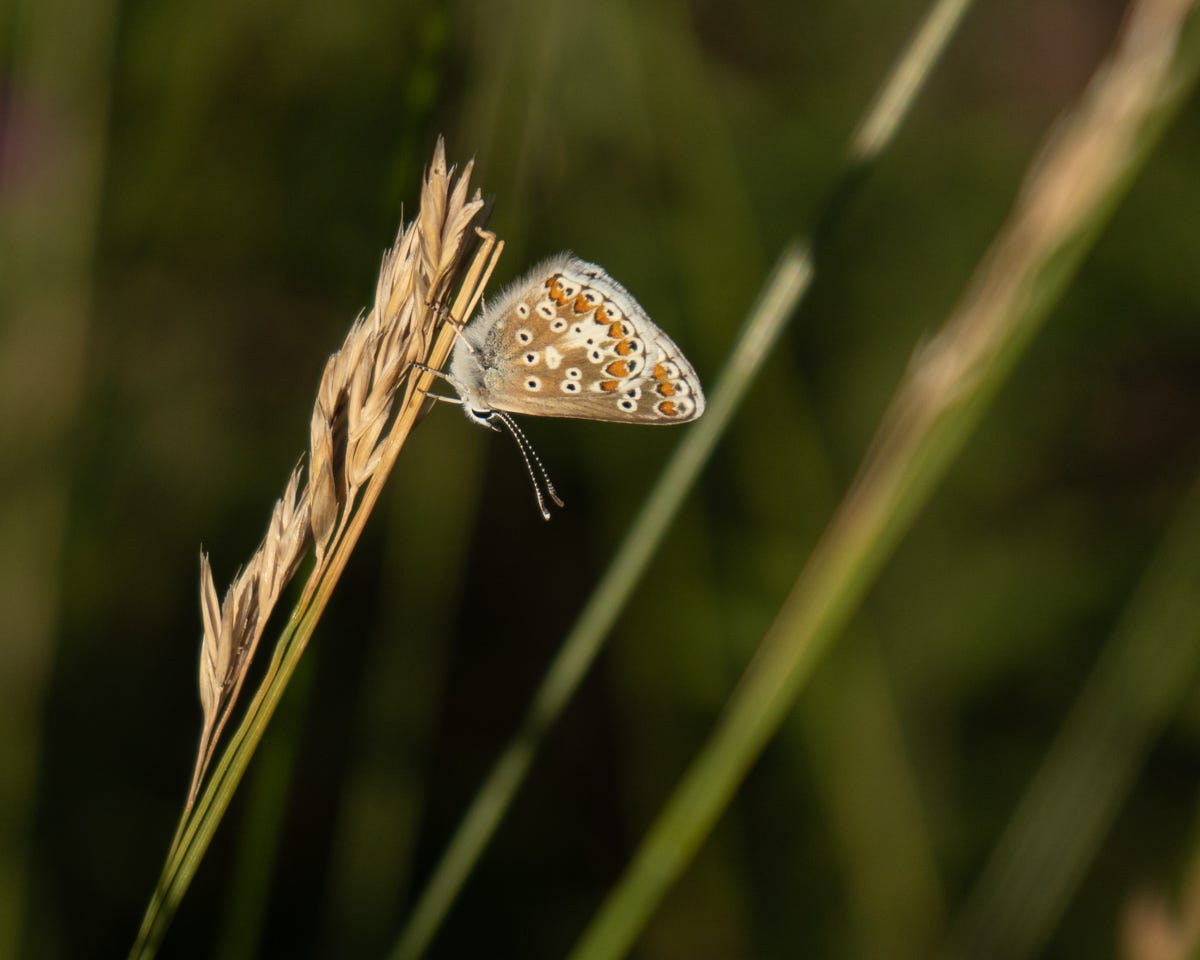
The underside of this Common Blue is a stunning selection of dots and spots.
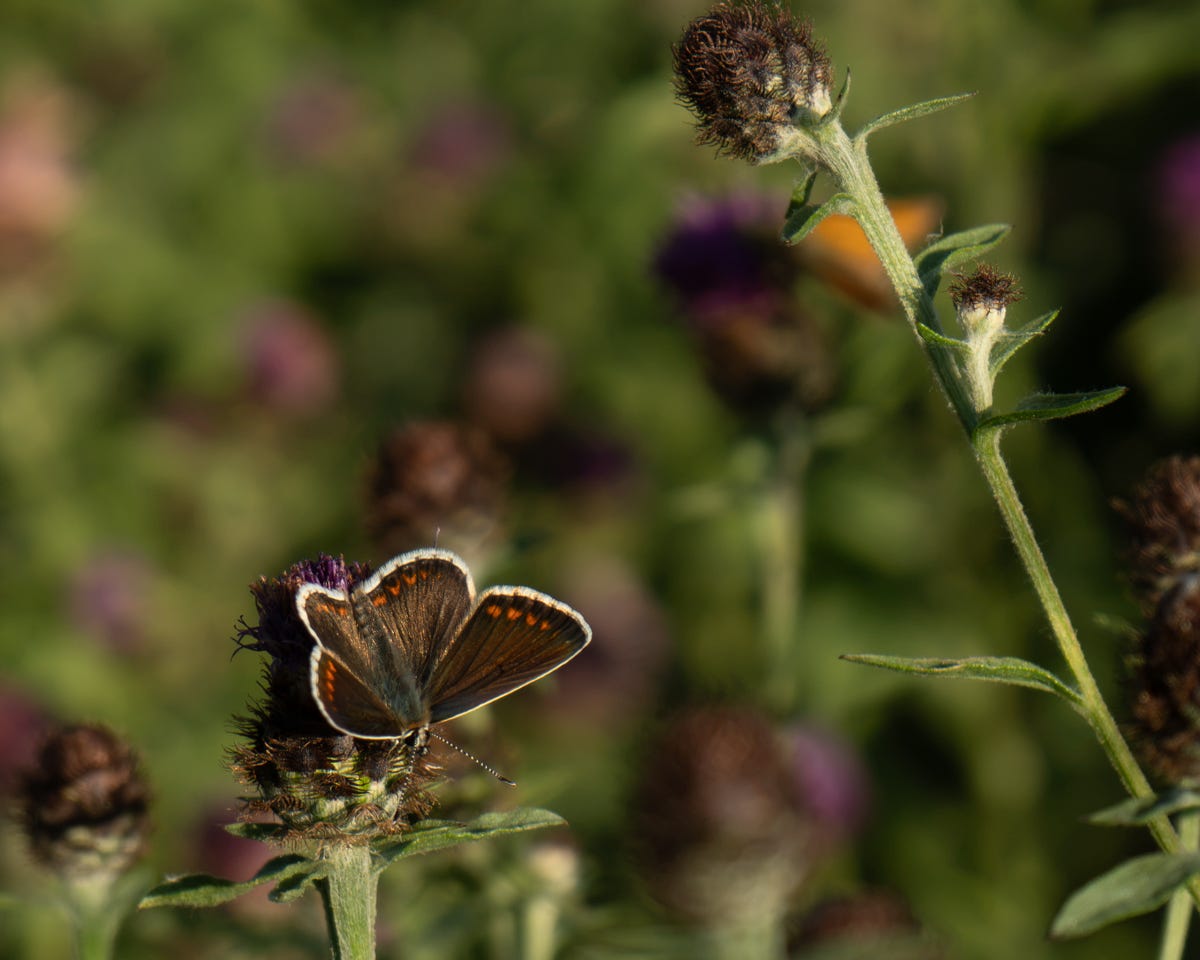
The top looks very Brown Argus-like, but I believe you’d see larger orange spots that continue right to the top of the wing in that species.
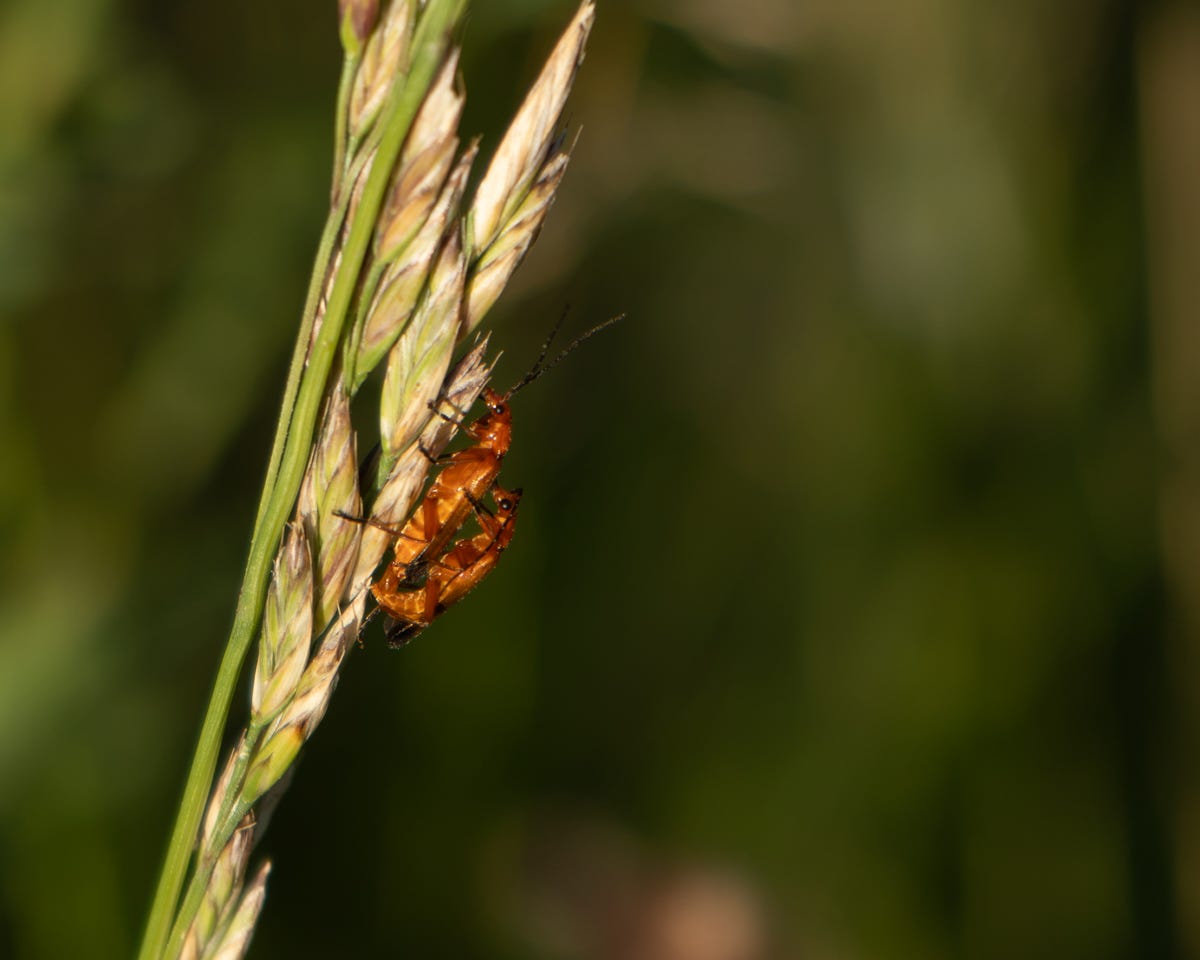
And finally, a rather low-brow end to the day with this pair of bonking beetles, living up to their nickname. Of course, you’d probably call them Common Red Soldier Beetles in polite company, but you’re not in polite company!
Thank you for joining me. I will get back to birds next time round, but the wonderful world of invertebrates deserves a spotlight every now and then. As ever, I’d love to know what you’ve spotted out and about recently?
Gem
That bee grabber is the stuff of nightmares! Great pics Gem.
Beautiful photos and a very interesting read.