
Hello, welcome! Let’s go for another walk along the chalk stream at RSPB Fowlmere, Cambridgeshire – I hear some very special residents are showing well at the moment.
It’s 6am on a weekday morning. Pulling into the carpark, the mist is starting to lift already. Only one other car is present, but it’s far from quiet – the birds are singing.
Or rather, alarm calling.
A pale ghost of a bird lifts off from a post near the entrance before melting into the woods. A Barn Owl.
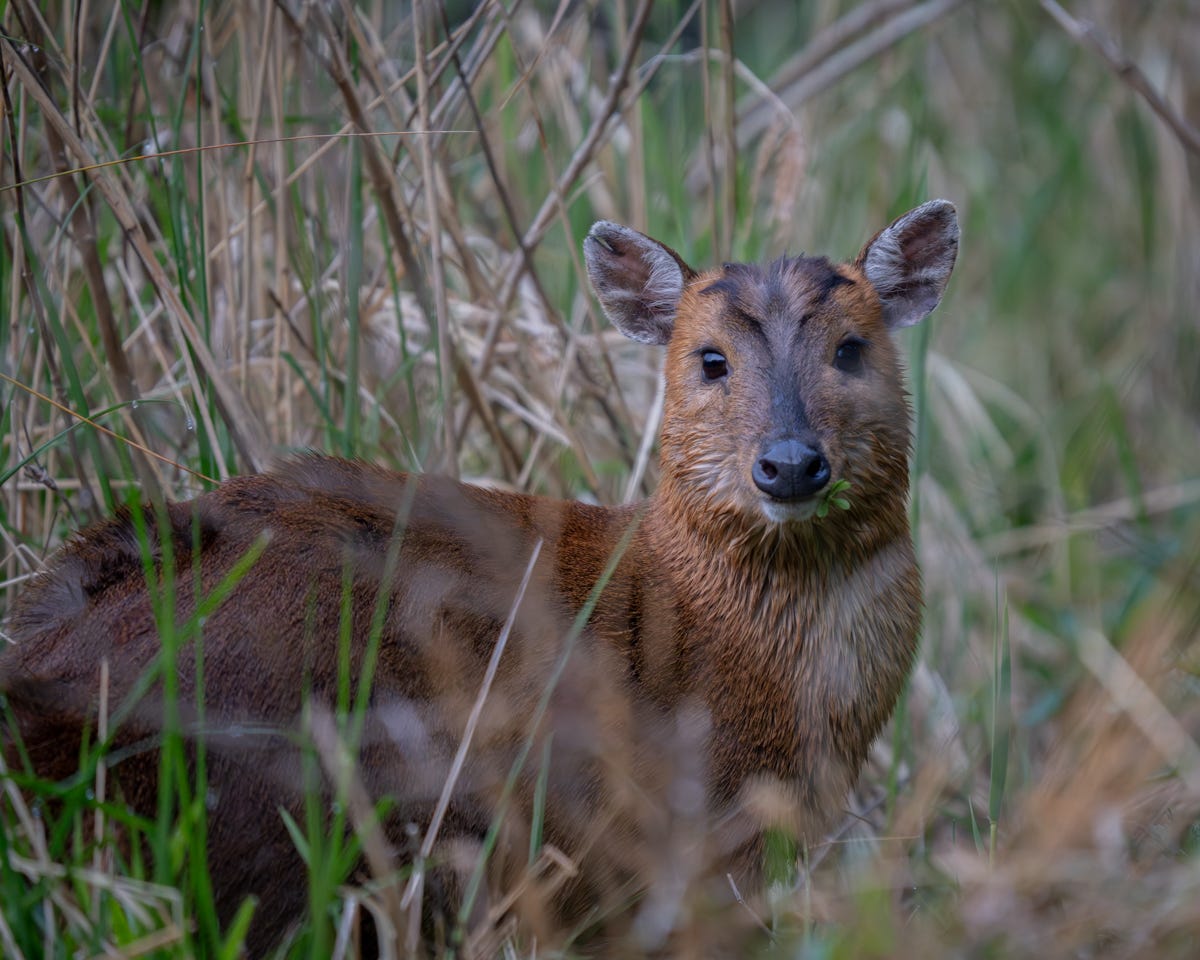
It doesn’t pause for a photo – but this female Muntjac obliges.
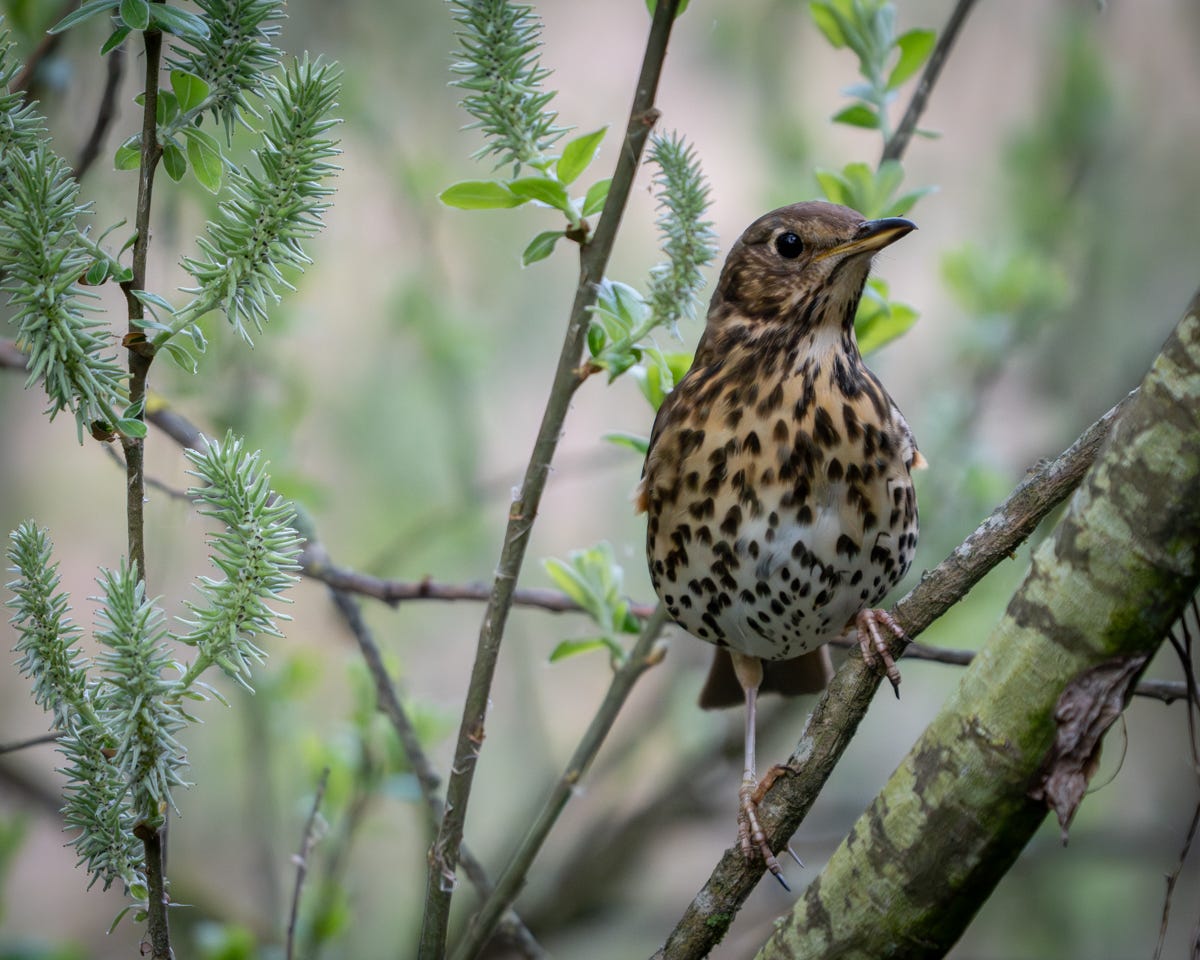
Once the threat of the owl has gone, the songbirds begin their melodies in earnest.
The Song Thrushes seem to have some attitude in them today – this one watches us from an unusually short distance away.
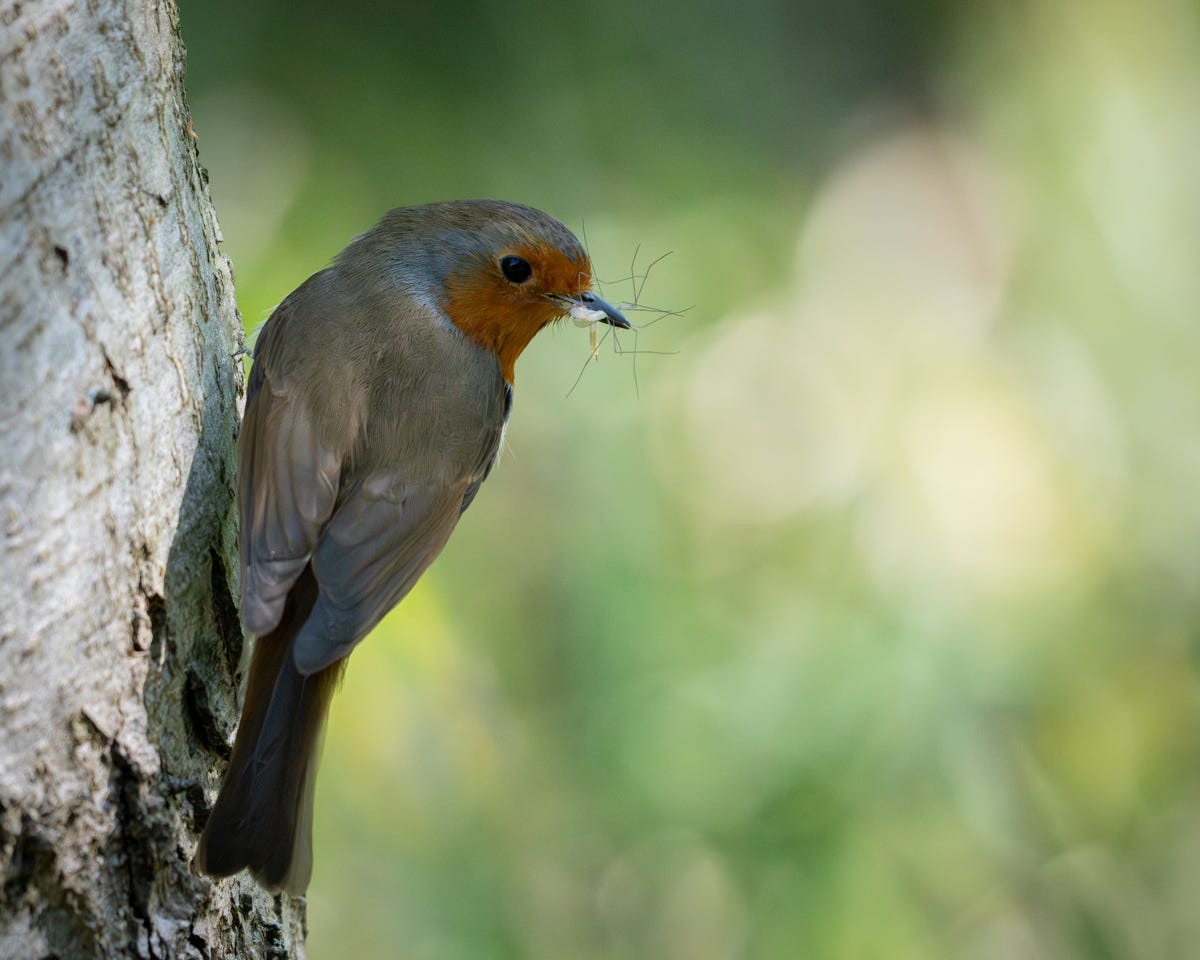
This Robin also seemed surprisingly tame as it hurriedly gathers a beakfull of insects for its hungry offspring.
He doesn’t go far, flitting to a low branch nearby where an extremely grumpy looking juvenile is waiting. My first fledgling of the year!
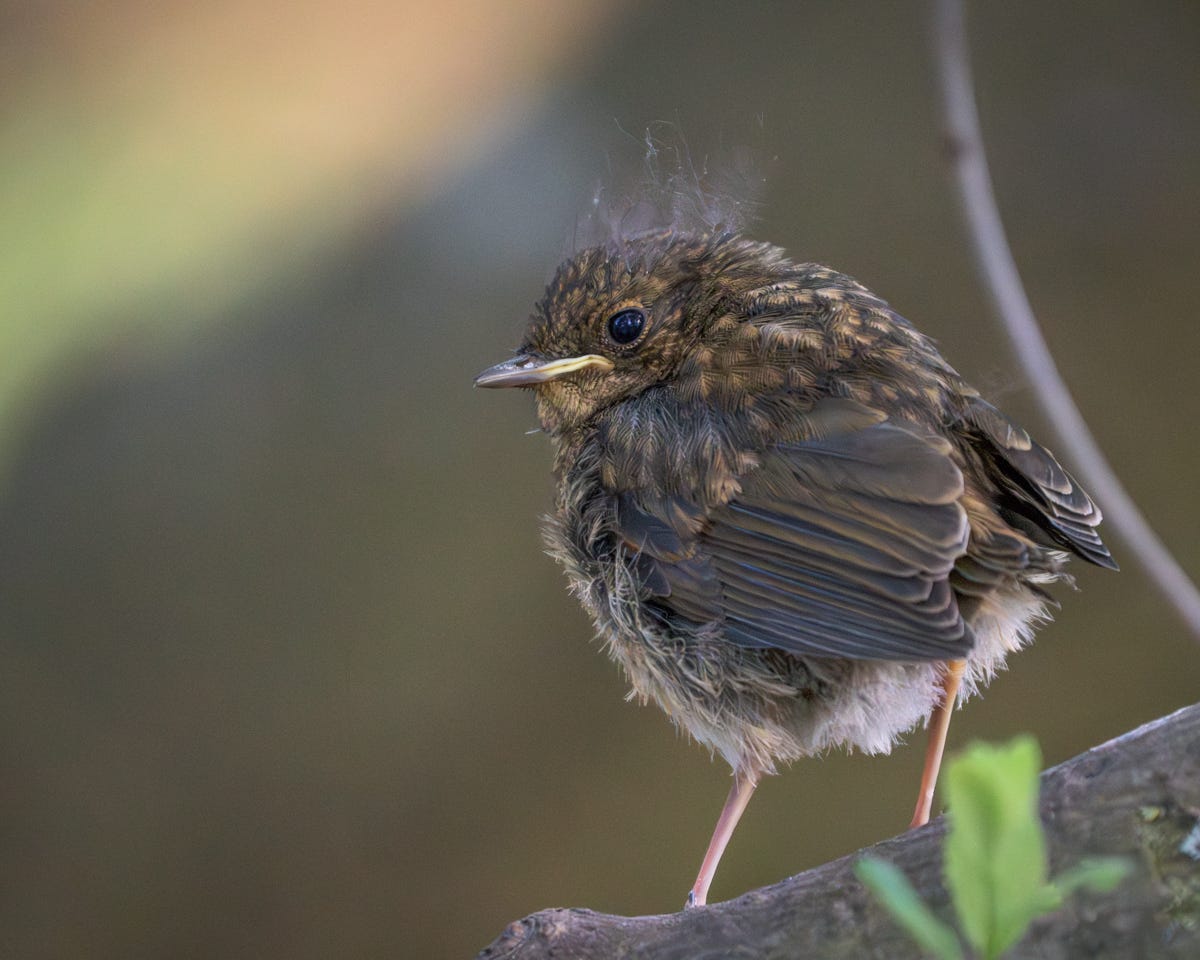
The two juveniles seem to be hanging around the path and are well accustomed to passers by. One of the parents perches near my head, opening his beak ever so slightly and quietly serenading me with a sweet song. I offer him suet pellets, which he’s not quite brave enough to take from my hand.
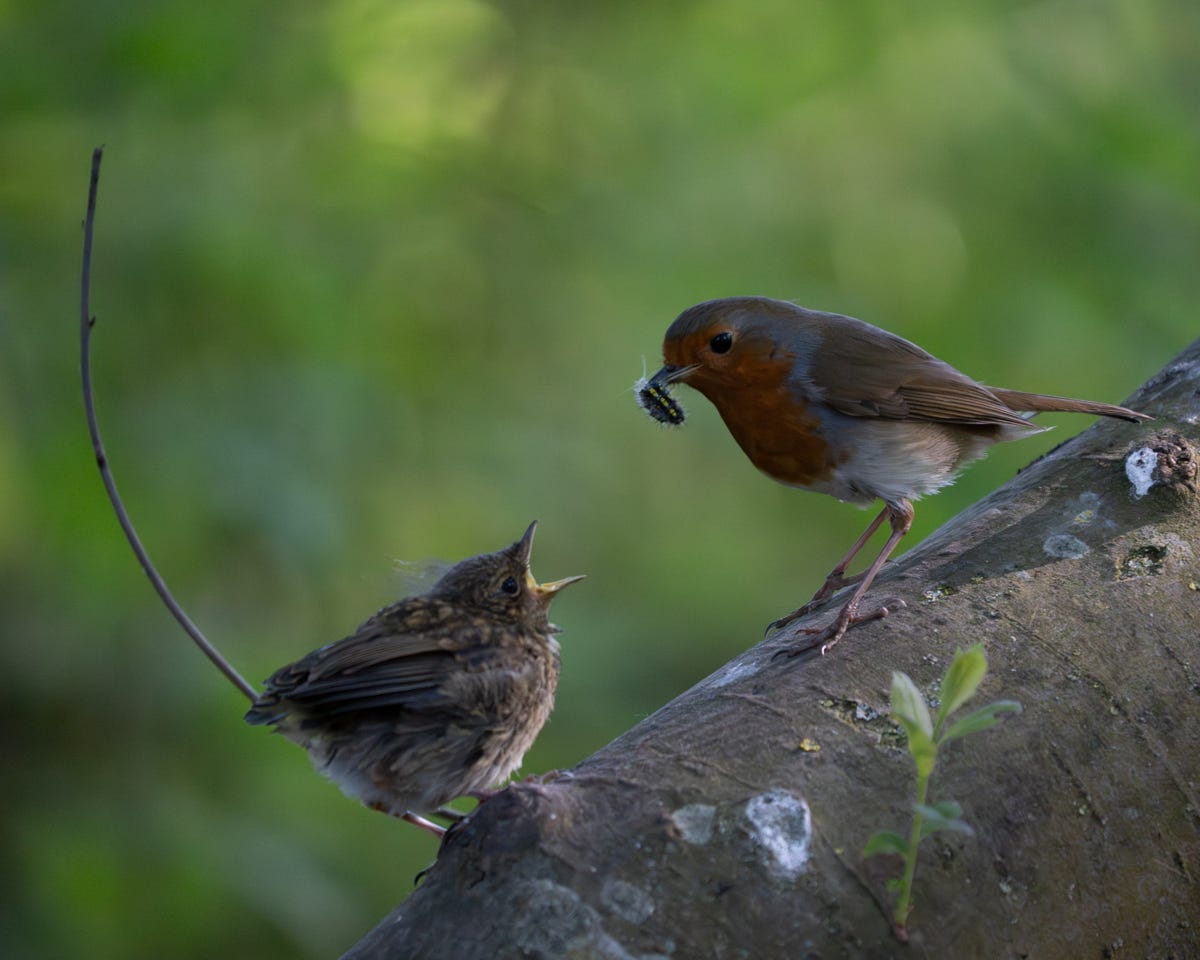
I drop a couple, but don’t empty the rest of the pellets on the ground as I know the babies need much higher protein snacks, like the caterpillar in the picture above.
But these are not the residents we’re looking for, and we’ll have to be very quiet if we hope to catch a glimpse of them. I flinch every time my foot crunches on the gravelled path that winds alongside the chalk stream.
Plop!
Just missed one, then. That was the unmistakable sound of a Water Vole dropping into the icy cool water. No chance of seeing it, as they swim below the surface like furry torpedoes when spooked.
But just around the corner – what’s that perfectly round ball of fluff? (Please, don’t be a rat.)
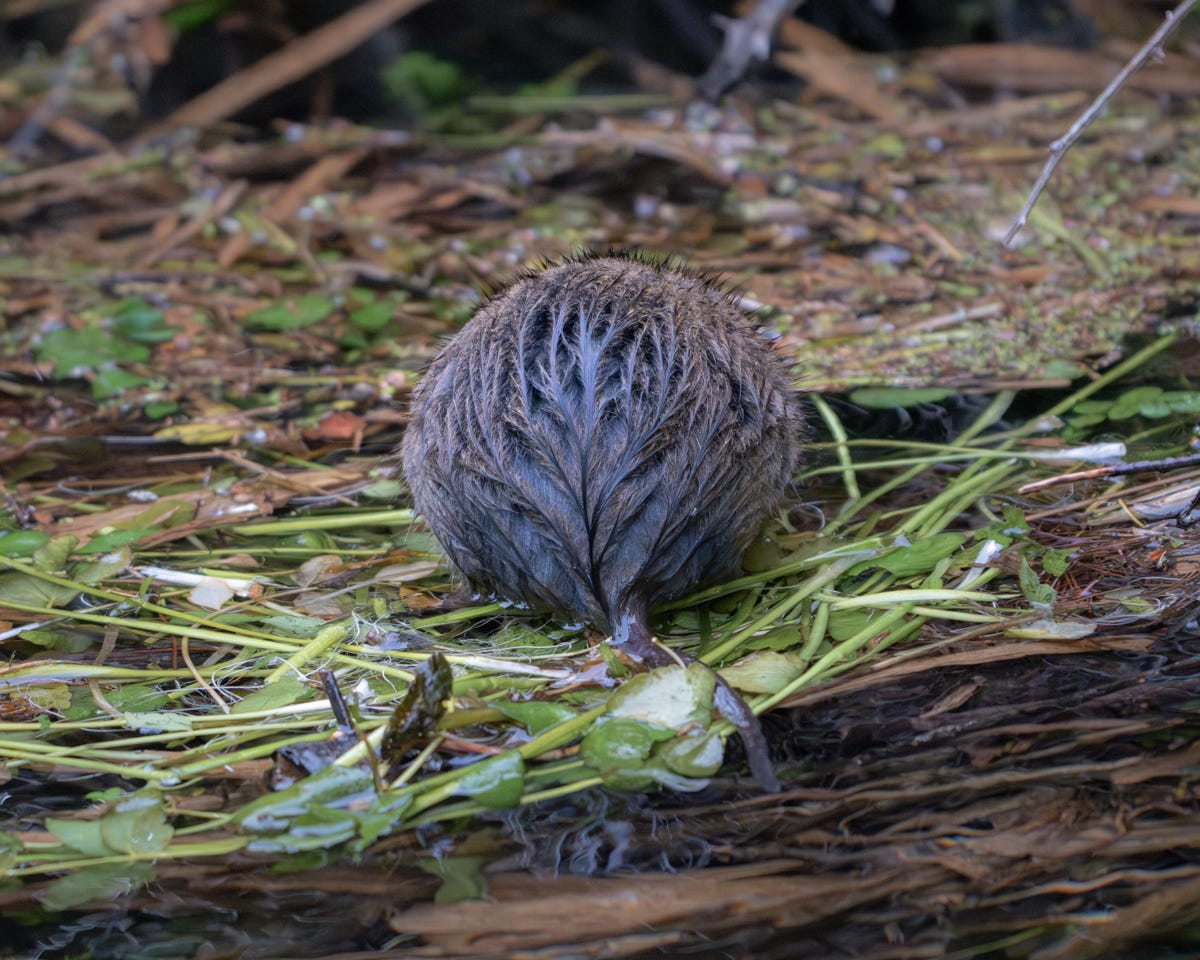
The raft of vegetation it’s sitting on is a dead giveaway though – not a rat. Now, if only it’ll turn around…
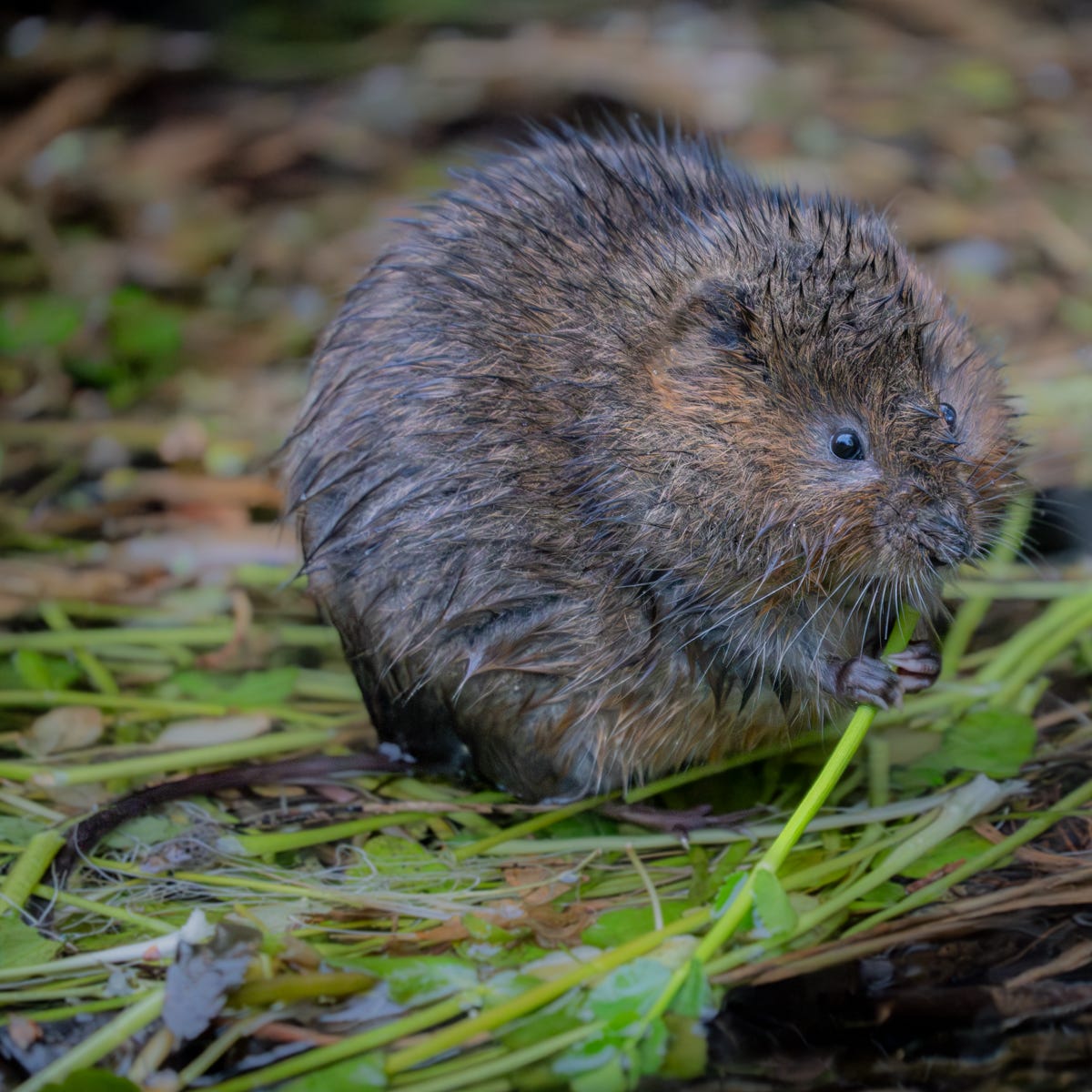
That face gives it away. Chubby cheeks, a snub nose and the hint of long, yellow incisors. Ears that are just barely visible. The Water Voles have young, so the females are out early to stock up on vegetables. Later, the babies will venture out to join them.
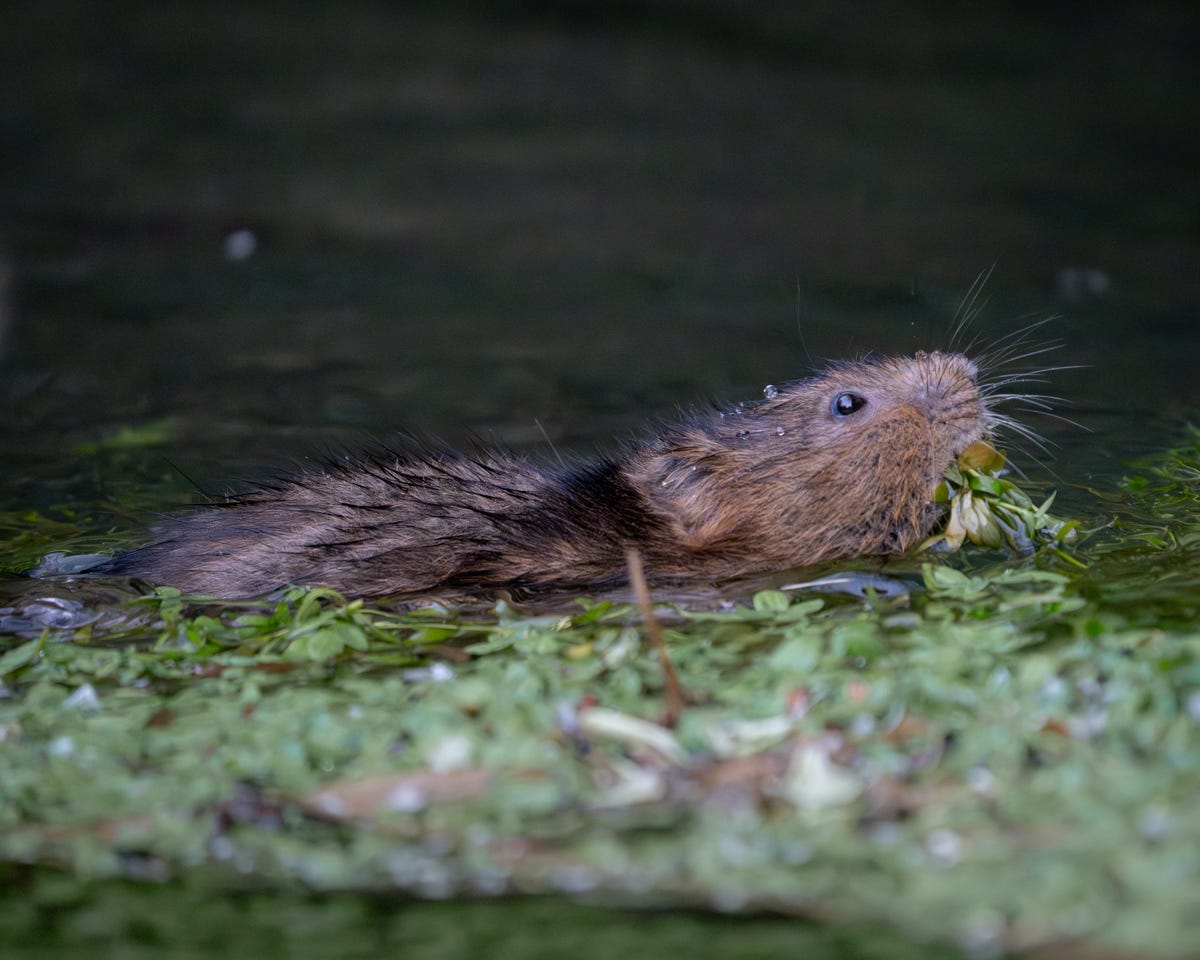
If we’re lucky, we’ll see a behaviour I often read about and always wanted to see: a Water Vole climbing a tree. They look to have impossibly short limbs for such an activity, but the promise of fresh leaves inspires amazing feats.
And there she is – a mum on a branch leaning over the river.
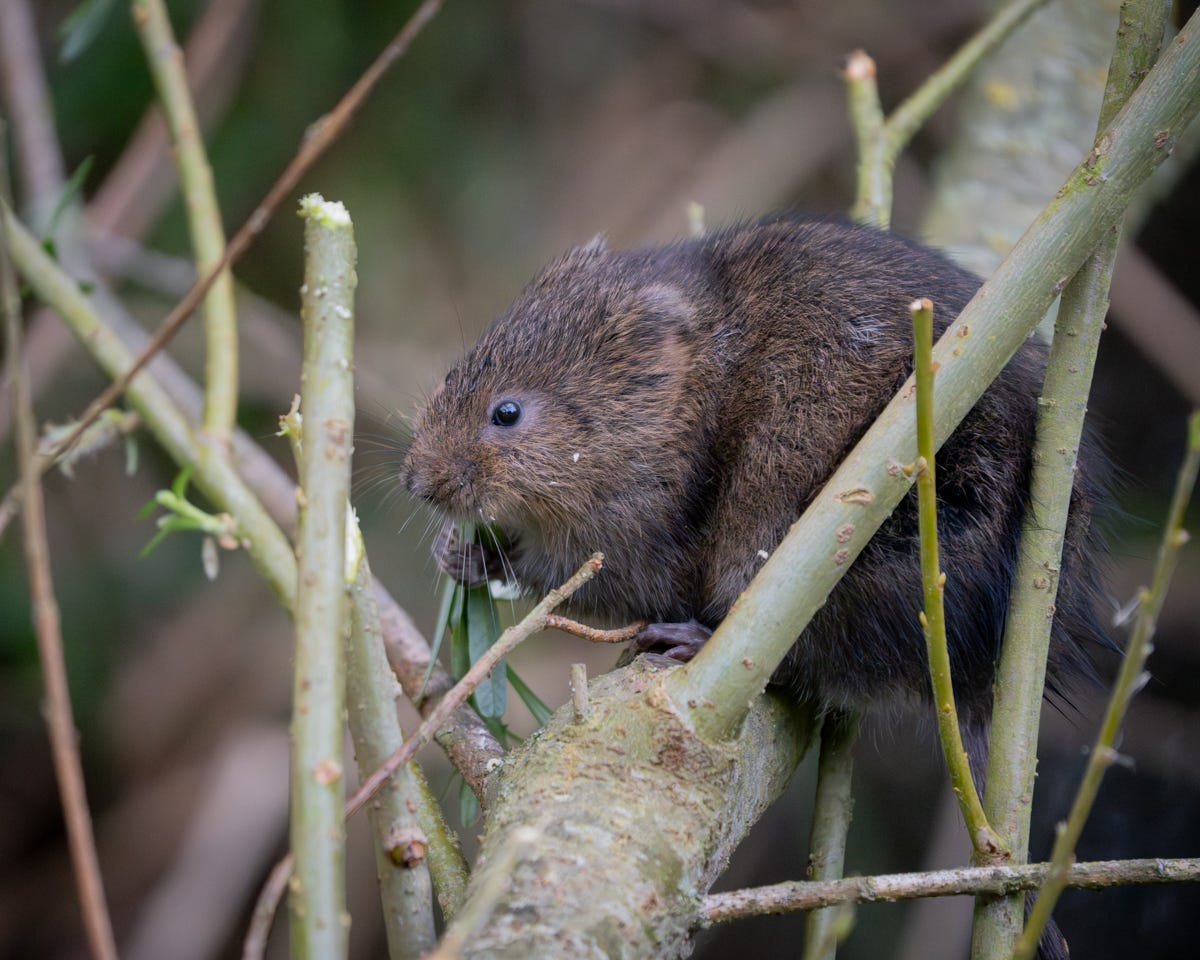
These adorable little acrobats used to be commonplace. Over the last century, they’ve suffered the most dramatic decline of any mammal in the UK – but Fowlmere seems to have a thriving population.
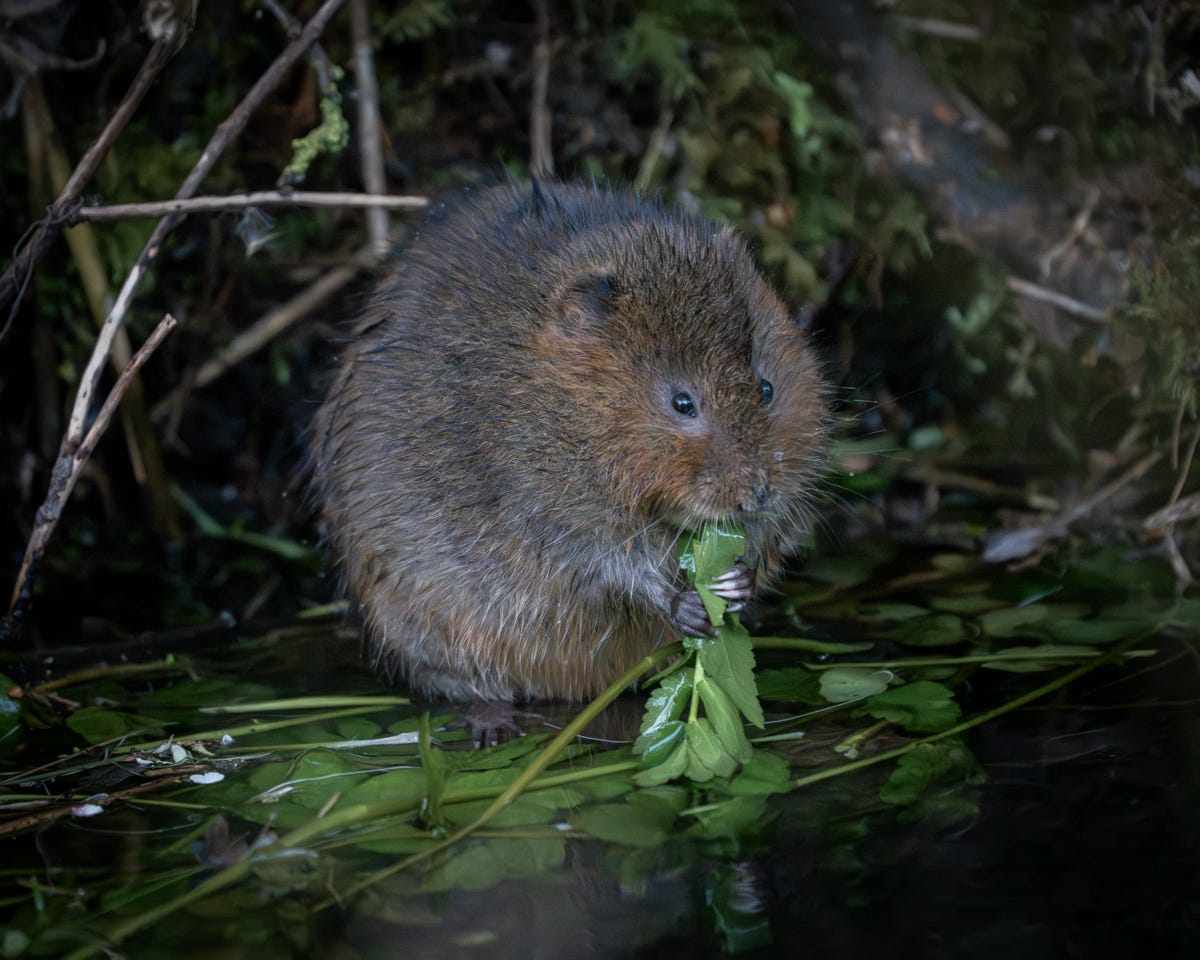
Their diet includes over 200 species of plant, and according to the Wildfowl and Wetland Trust “Pregnant water voles often try to find more protein rich sources of food, like flowers and snails, and have recently been reported eating frogs’ legs.”
As we follow the winding track further along the stream, birds become the main focus again. This Treecreeper is very interested in what we’re up to.
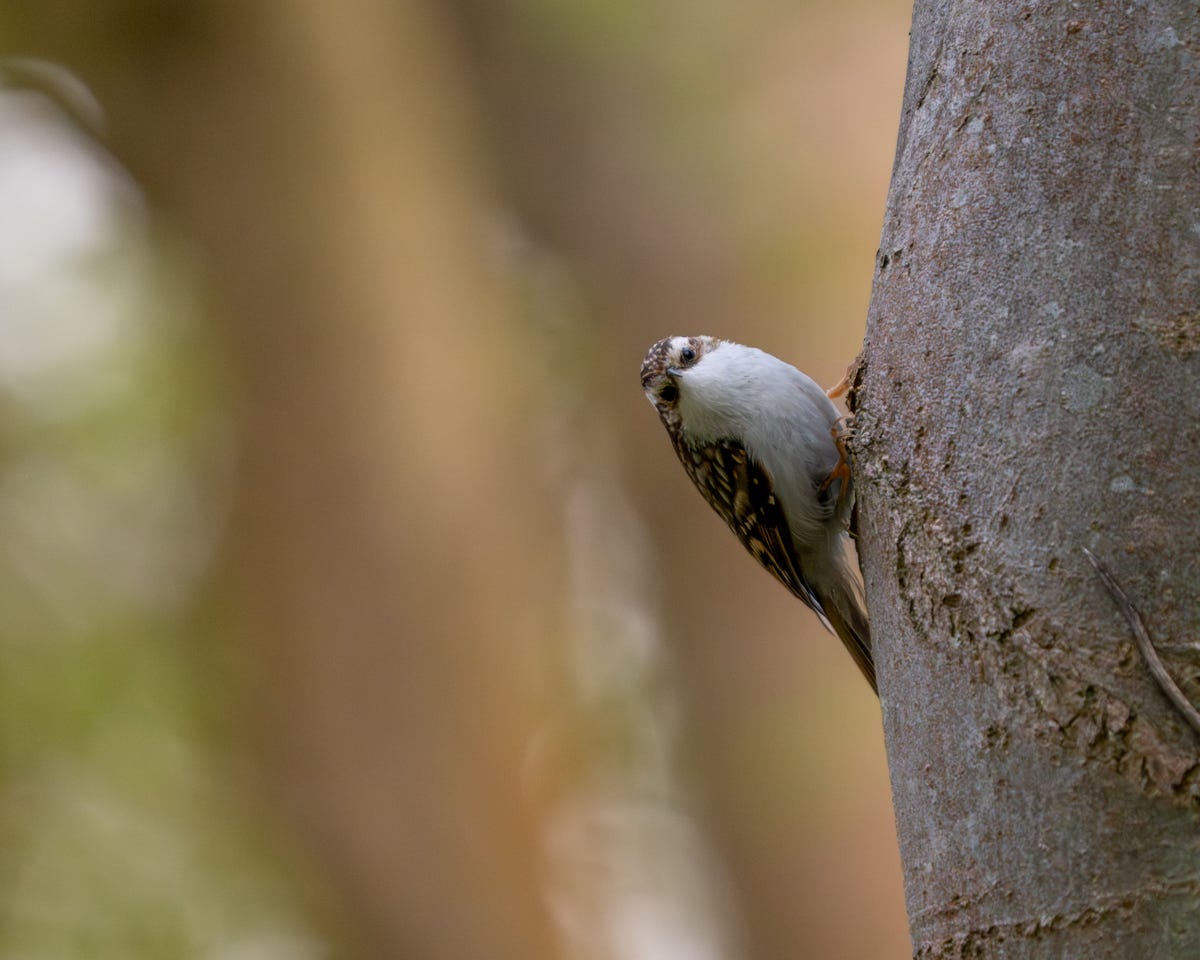
Notice how its eyes are situated underneath its beak? The beak turns down at the end and this arrangement allows it to see what the tip of its beak is up to as it forages under tree bark.
The trees alongside the path give way to reedbeds. The stream diverts to the left, and we continue on straight. As we walk under an arch created by leafy shrubs, a loud chirping call starts up directly overhead: the recently arrived Common Whitethroat.
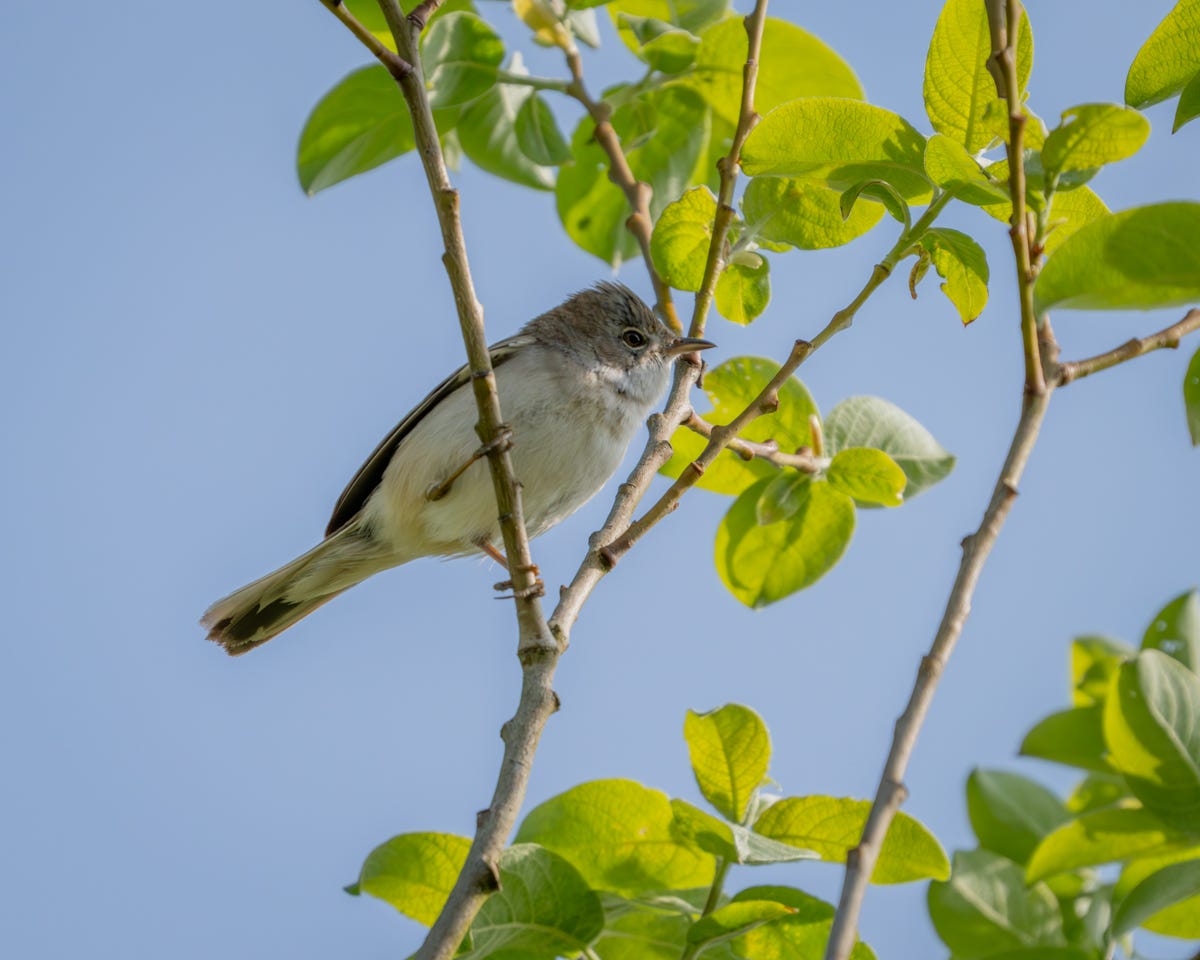
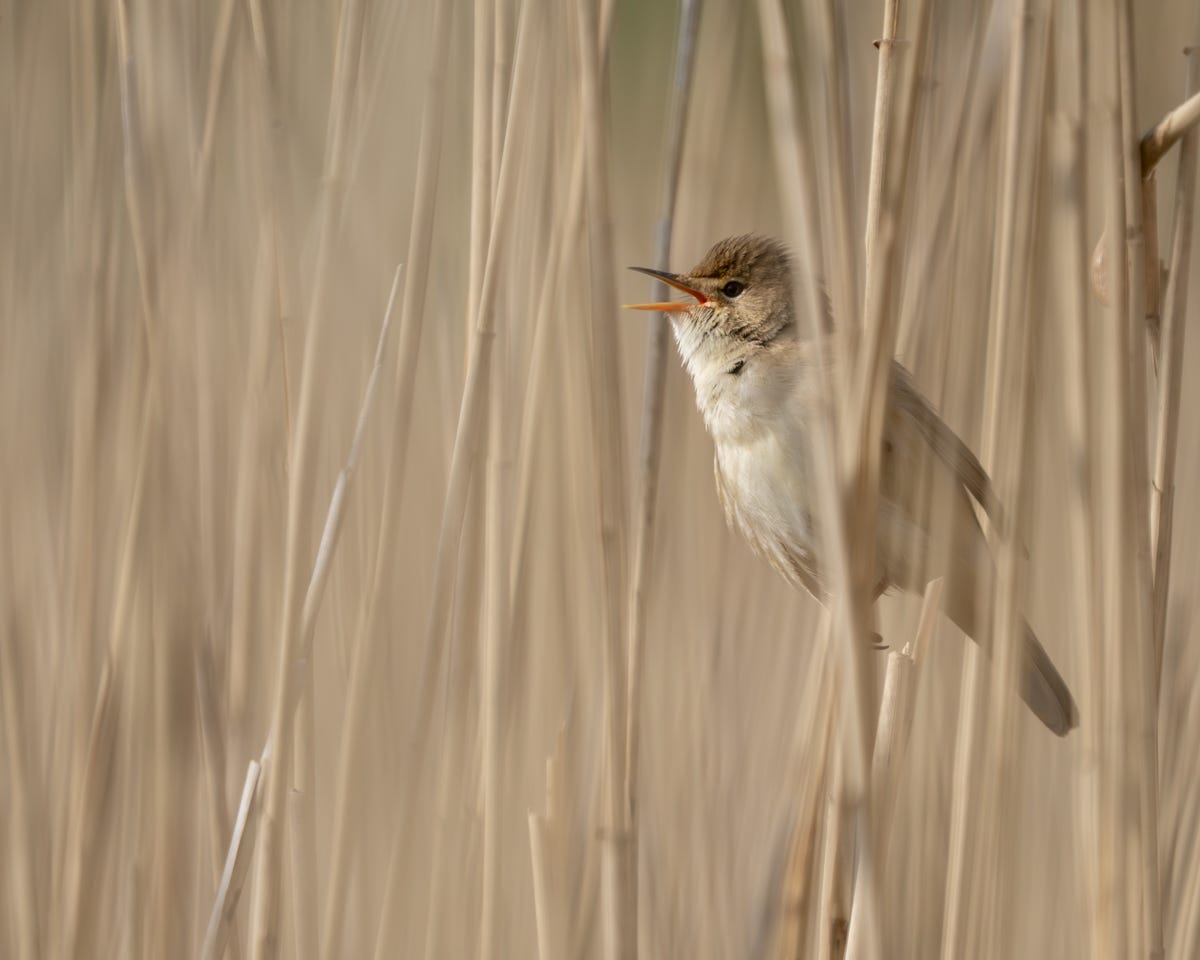
The Reed Warbler keeps up an absolute cacophony from deep in the reed beds, safely obscured from view by the vertical stems. A dreamy half an hour sat on a bench overlooking the gently swaying reeds finally delivers a chance of a photo.
Somewhere behind him is a Sedge Warbler, singing its equally chaotic but slightly clickier, mechanical song. It briefly flutters up into the air calling, then drops out of sight again – no time for a picture.
The usually reclusive Cetti’s Warbler though – well, he’s found the perfect perch to scream his “Hey! Come-and-look-at-me, come-and-look-at-me!” call from, and he isn’t going to leave it for anything.
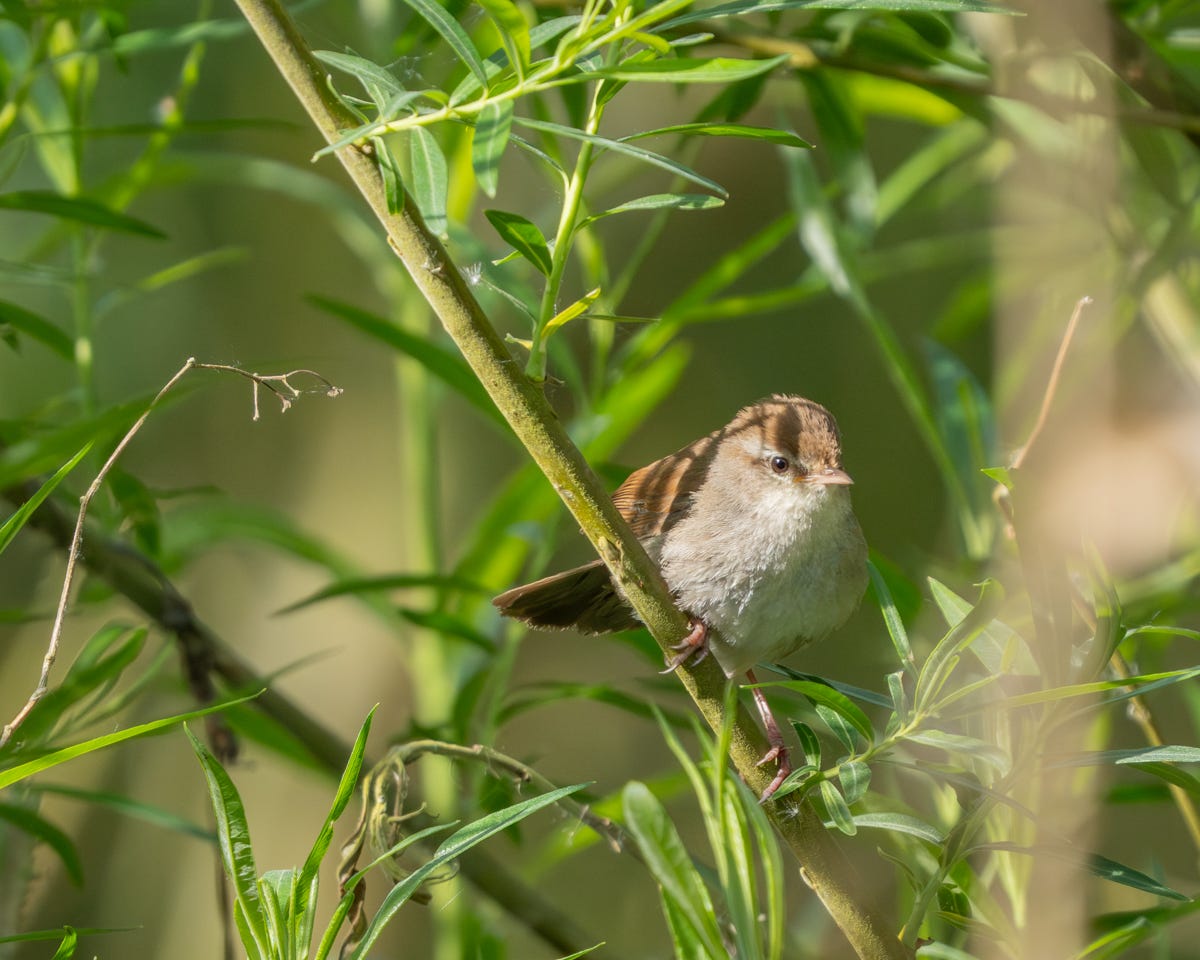
This is the best season for a visit to the reserve. I haven’t even mentioned the Swallows, arriving from Africa and delighting in splashing into the cool water on the mere as if for fun. Or the pair of Marsh Harriers, who are likely awaiting the arrival of their hatchling any day now.
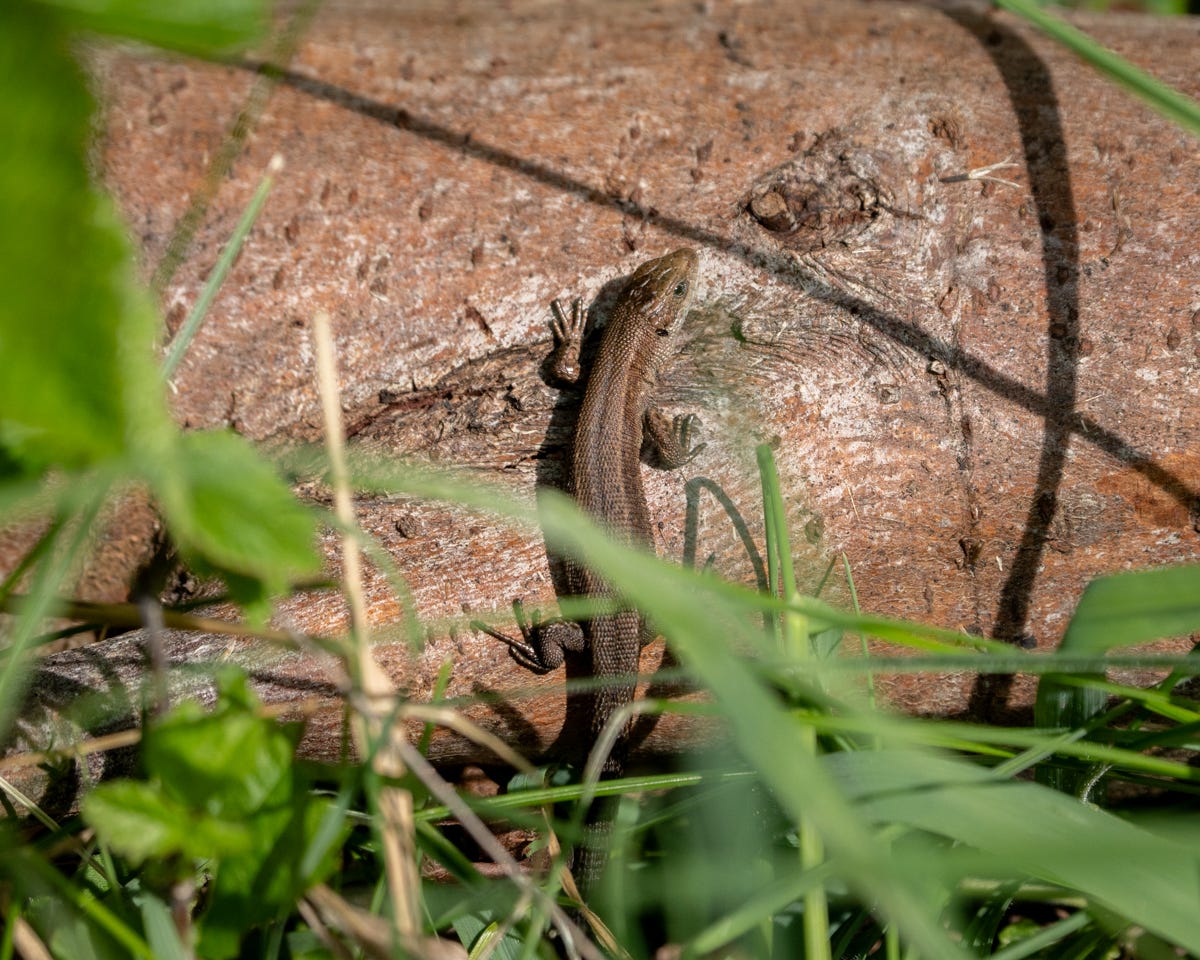
This Common Lizard, basking in the Spring sunshine, is the last critter of this visit – but we’ll be back very soon. I can’t seem to keep away from this very special place at the moment. I hope you’ll join me again next time.
In the meantime, I’d love to know what you’ve seen near you in the last few weeks? Any fledglings?
Gem
Over here in the U.S. today, I heard a Nashville warbler singing in a tree above me, but could I SEE it? NO WAY! It wouldn't let me, ha-ha! I love your photos of the birds and water voles!
Envious of your water vole sighting. Have not seen one for years. Our local river used to have a thriving population.
Fledgling robins in the garden, bathing and being fed by mum and dad.