

I’ve been away, but the abundance of change in the natural world has brought me back to Substack. Nature is stirring (and so am I!). But first, a question – please do let me know the answer, as I’ll use it to inform the shape of my photos.
The soundscape for this week’s walk still features the weak ‘seep seep’ of wintering Redwings, and the ‘pew pew’ of Siskins. But they are almost drowned out by springtime songs – most notably from our resident thrushes, Song, Mistle and Blackbird. Their warbles, trills and melodies immerse you in all the shenanigans that spring courtships bring as soon as you step outside.
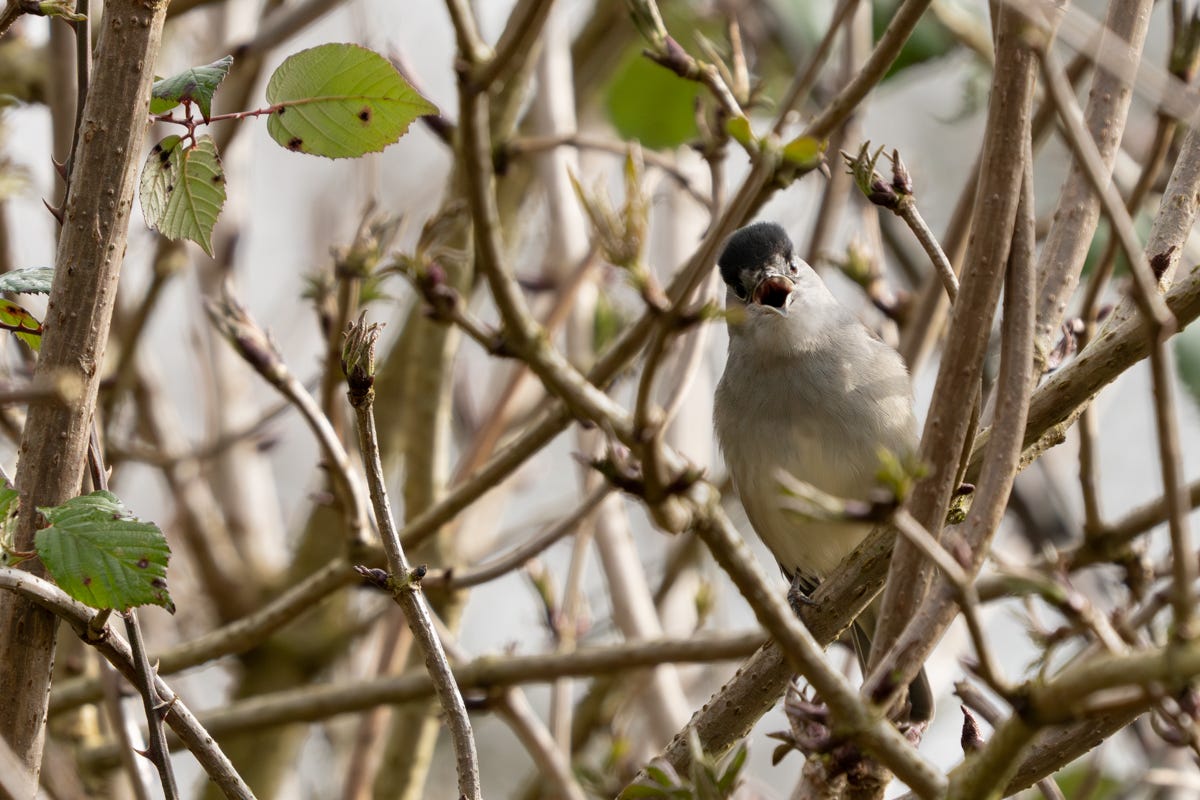
And the first warbler song of the year came from this extremely loud Blackcap.
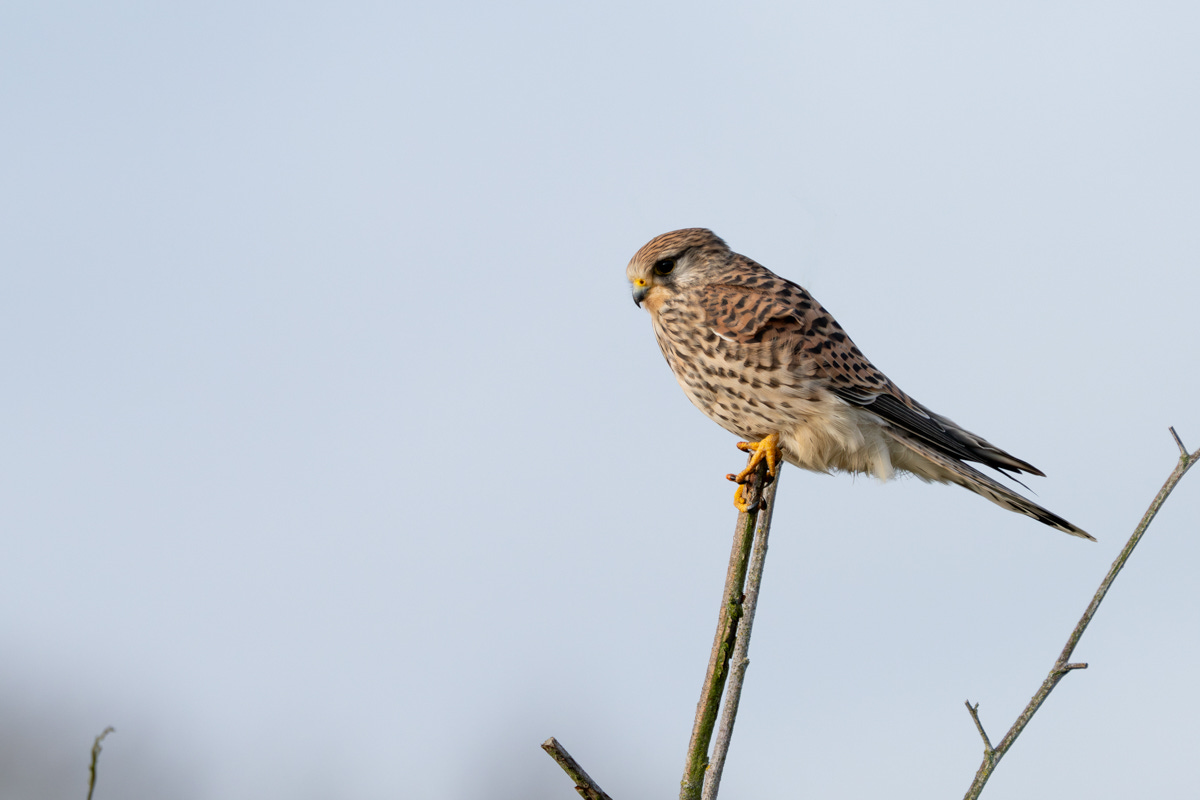
Robins and Great Tits also join the cacophony, and the lilting chatter of Goldfinches can be heard in the quieter moments. But not all the birds are ‘singing’ – there’s the loud drumming of Great Spotted Woodpeckers on dead trees, the repetitive shriek of a female Kestrel chasing Crows from its chosen nest site, even the occasional daytime ‘hooooo’ from a Tawny Owl deep in the woods.
There’s a feast for the eyes, too: tiny, tightly balled pink buds adorn the fruit trees, some with the first feathery hint of petals starting to peek out. Brimstone and Peacock Butterflies have started to appear, drifting along the flayed hedgerows that have not yet burst into leaf and blossom.
It even smells different outside now. Air that smelled of damp greys and browns has the vibrant odour of wet greens.
I am grateful for this abundance of distractions from words like cancer and prognosis. But they can’t distract me from the absence of my dad at my side, especially when I visit Fowlmere – one of our favourite local birding spots.
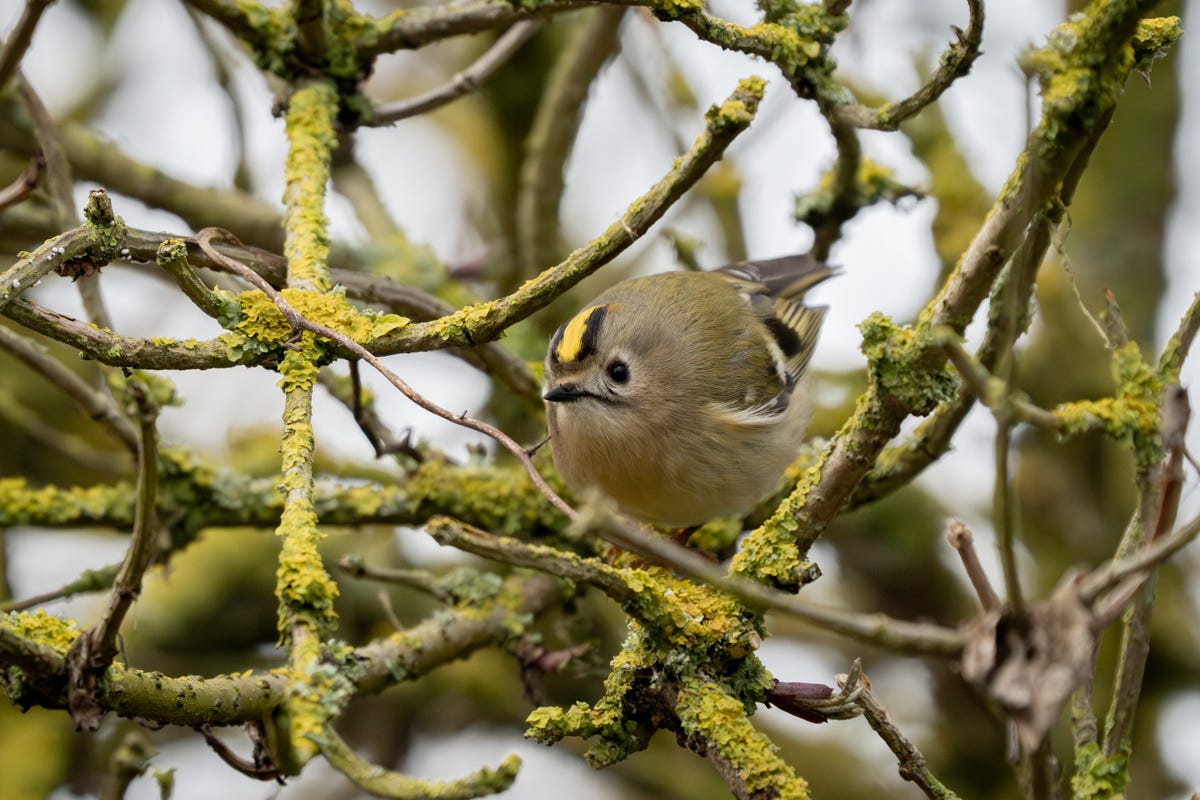
As I walk, I make a mental note of all the things to tell Dad about – like this very round Goldcrest that allowed me to take its photo.
And around a year ago, when I made my first foray onto Substack, it was one of Fowlmere’s most popular residents that I featured: the Marsh Harrier. This year, the pair have returned, although I saw no sign of the male myself.
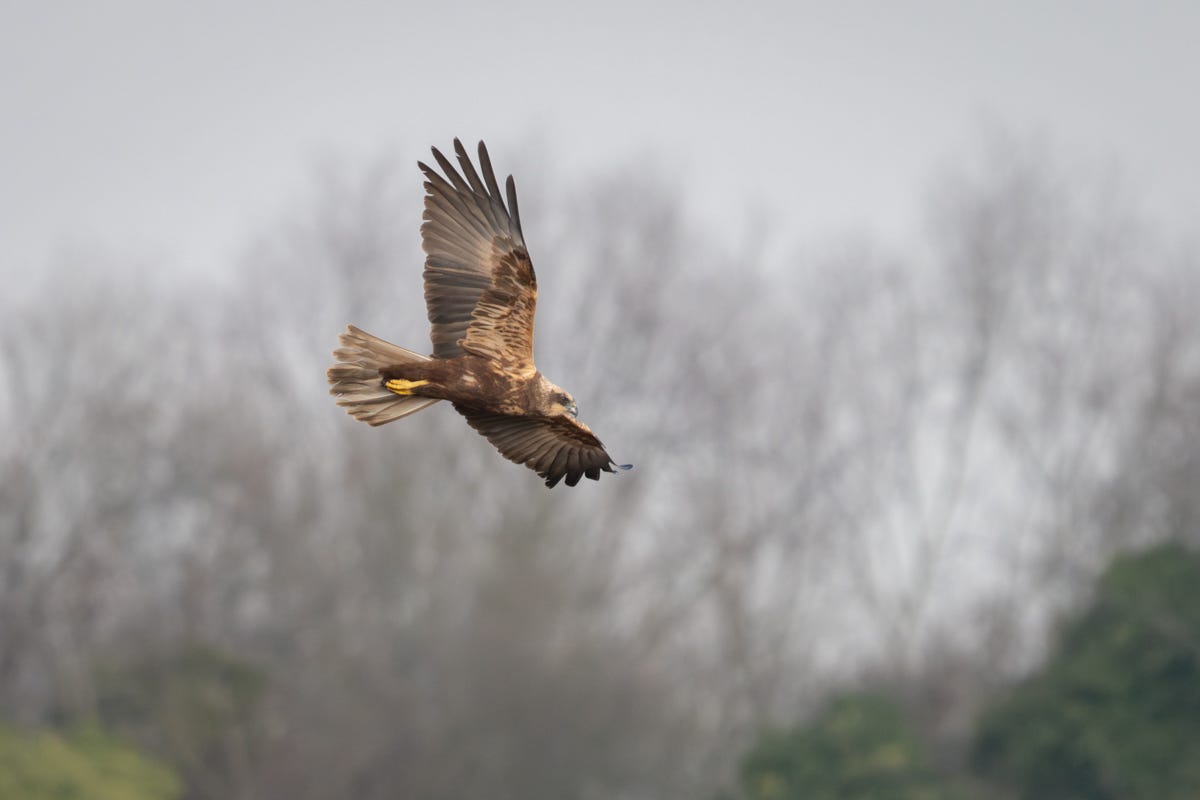
As recently as the 1970s, there was only one breeding pair of this magnificent bird left in the UK. Now, there are over 700 pairs and while most migrate to Africa in the autumn, some now spend winter here too.
Our female has been absent, but she has returned a month earlier than predicted – I wonder if she only migrated to the south of the country, or Europe, rather than further afield.
She seemed to be checking out various nest sites, dropping into the reads with her long, yellow legs extended below her.
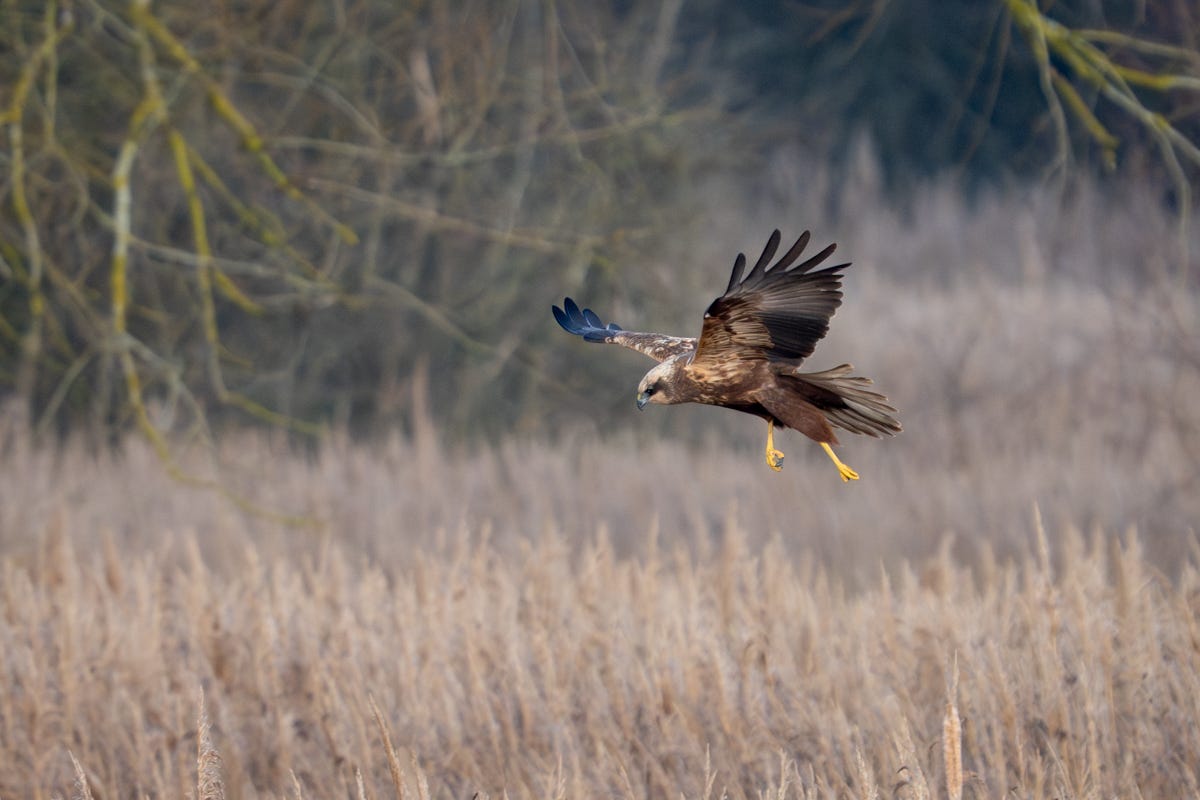
As she swoops low before such a landing, the nearby waterfowl set off a chain of alarm calls, giving an indication of why the name harrier (from the verb ‘to harry’) was chosen.
The Greylags, however, didn’t feel particularly harried by her as she sat in the reeds.
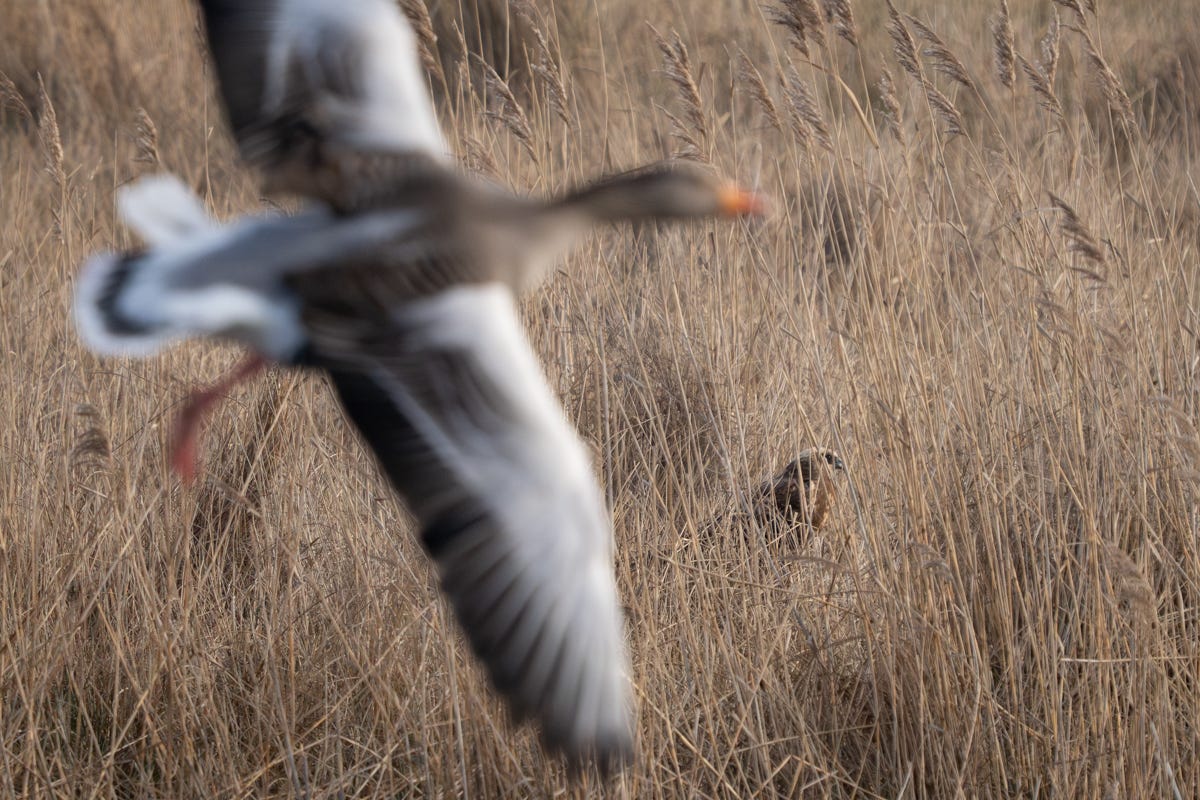
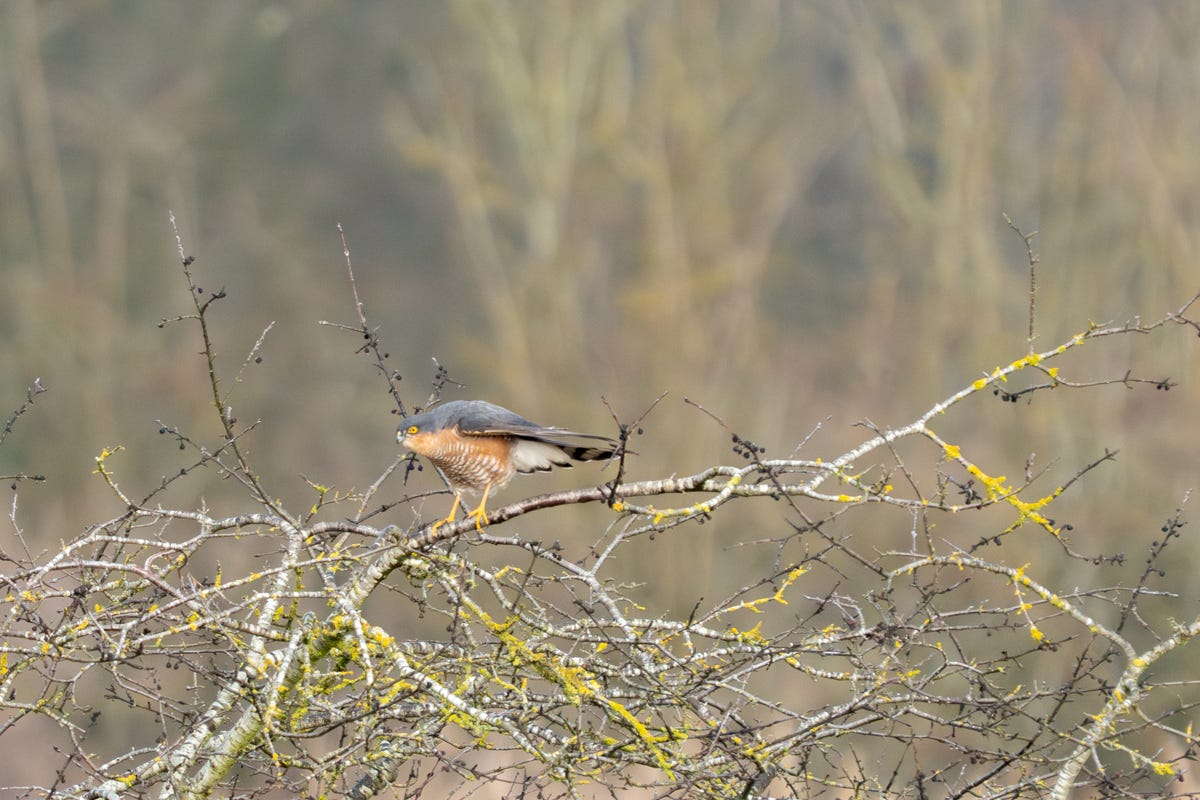
She didn’t appear to have hunting on her mind today, though she did fly past this male Sparrowhawk in an apparent display of displeasure. He roundly ignored her.
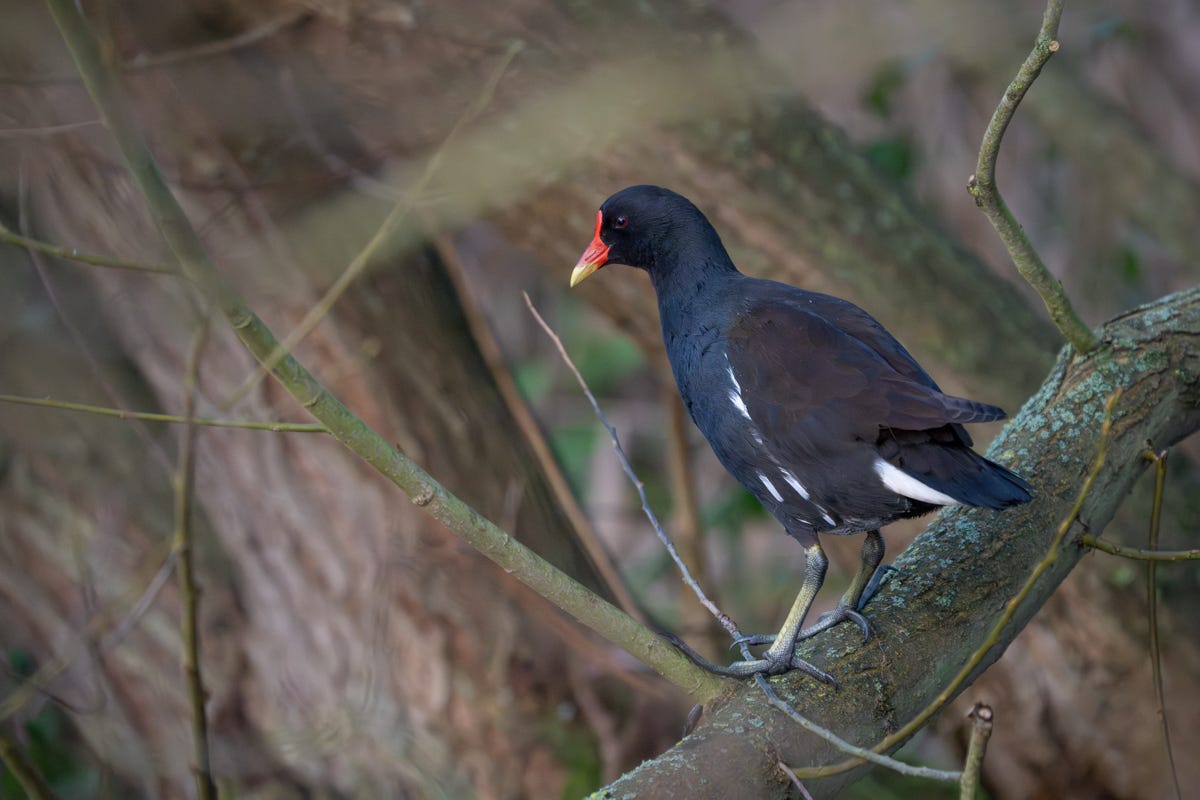
The ducks have the most immaculate plumage at this time of year, as do the brightly coloured finches. Even this Moorhen looked particularly dashing, with its blue-black chest and red-black wings.
There has been work done to remove reeds at the reserve, opening out the space in front of the Drewer hide; my dad and I call it 'the boring hide’ when we forget its name. It’s not, really, as it’s the best spot to see the Kingfisher, and I once watched four Little Grebes foraging just a couple of metres in front of the hide.
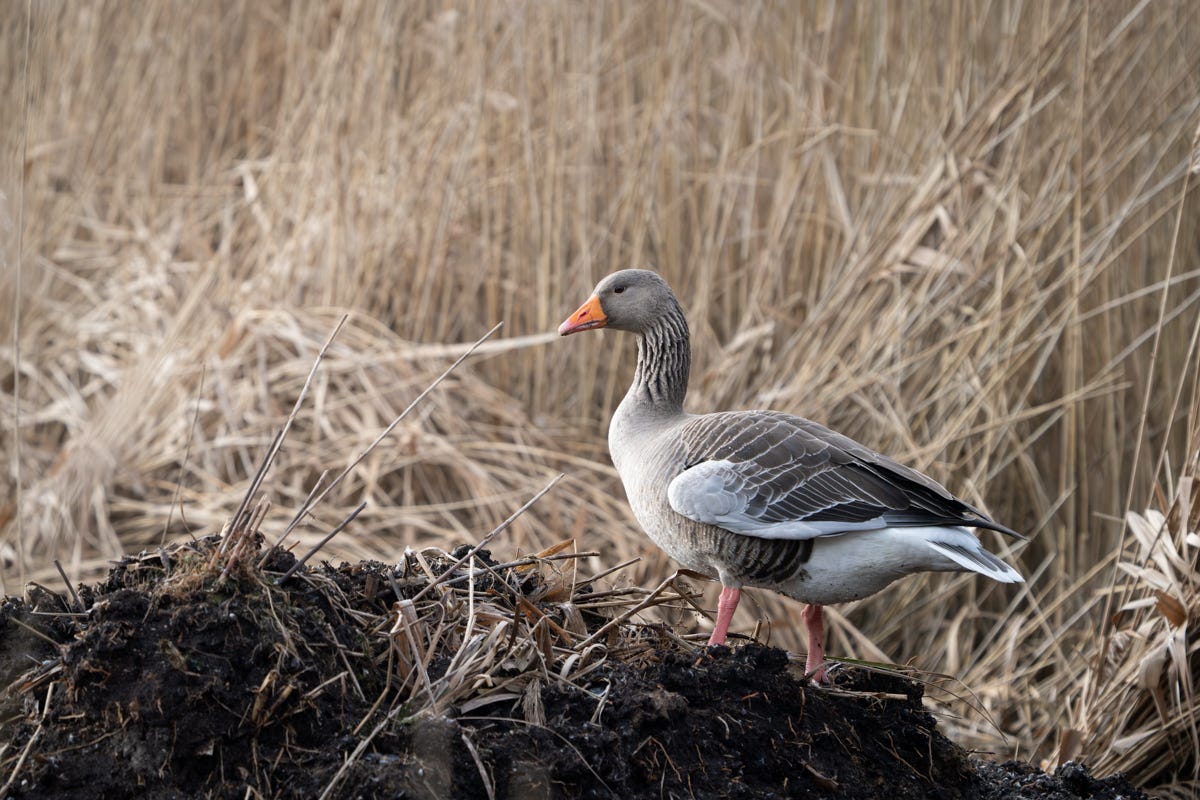
But the Greylags used to nest in the reeds under a small tree here, and the reeds have now been removed, exposing the nest site. It’s not clear if they’re going to nest there anyway, but they seemed to be checking out nearby alternatives.
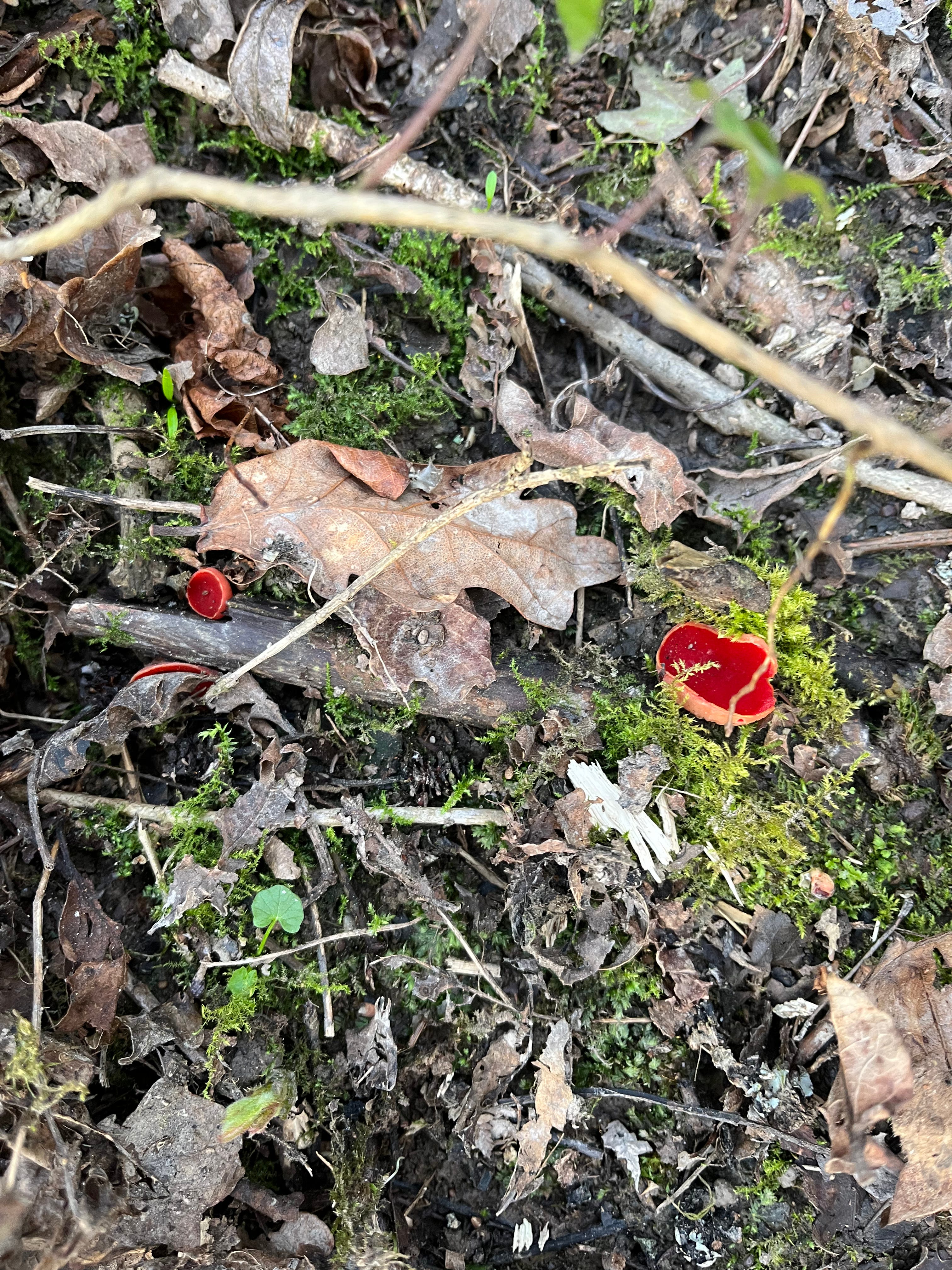
In wooded areas, it’s a great time to look out for a very special little fungus, the Scarlet elf Cup. At first sight, they look like someone has dropped some tiny plastic litter. They’re very small – around 1cm across – and often grow on decaying sticks, hidden away just under the leaf litter.
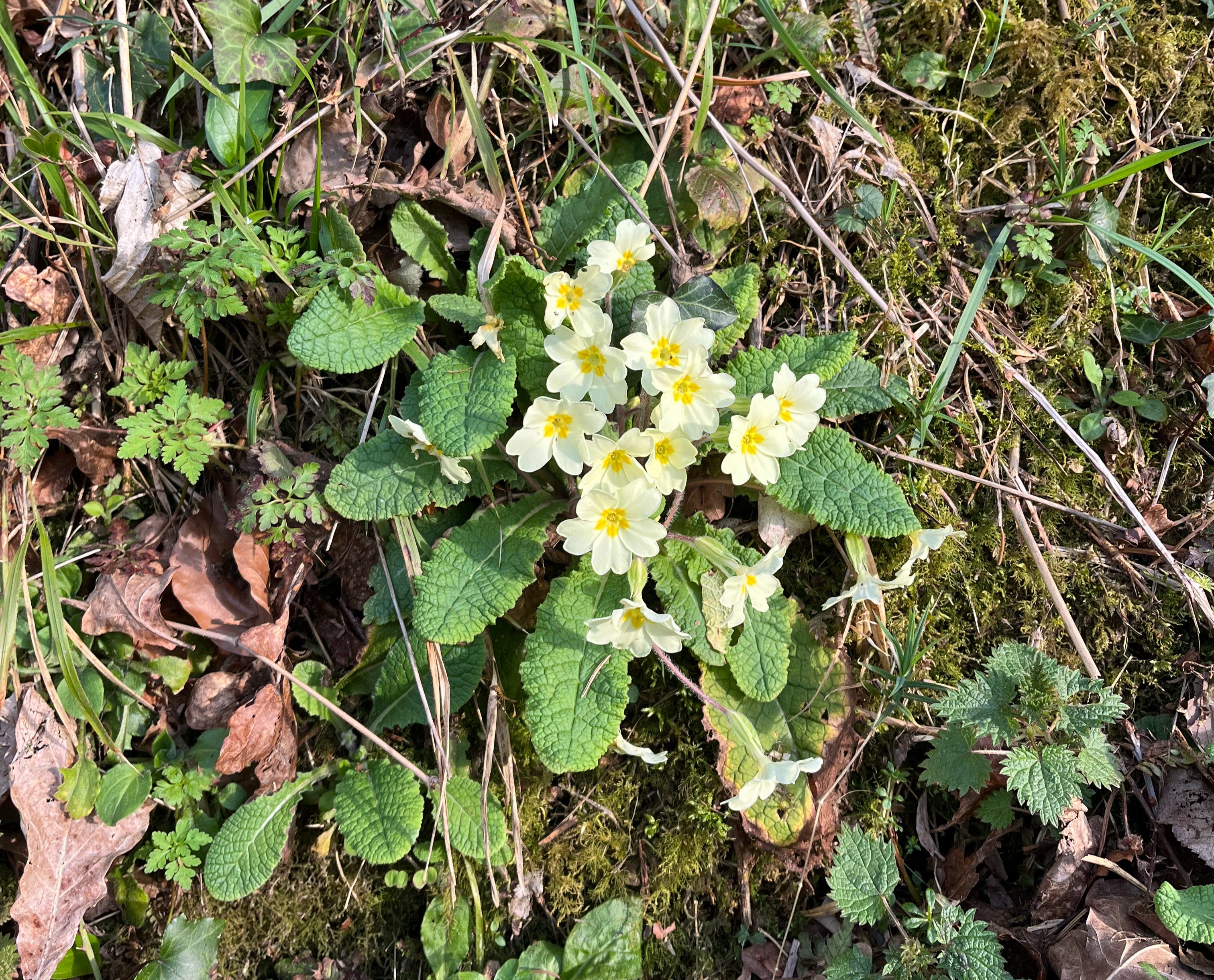
And of course, it’s Primrose season. These jaunty little flowers love to cling to mossy drystone walls in the parts of the country lucky enough to have them.
I’m hoping that my dad will be out of hospital and we’ll be back at the boring hide before long. I hear the Little Grebes are around, and their trilling, wailing cry is quite something.
I’d love to hear about your springtime sightings – let me know what you’ve seen! Just yesterday, I heard my first Chiffchaff of the year, have you?
All healing energy for your dad. I hope you can spend some time at the blind together soon 🦆
Common Grackles and Red-winged Blackbirds are back. Song Sparrows singing like crazy. Eastern Phoebes and Louisiana Waterthrushes soon.
Less a sighting than a hearing, but the wood frogs are awake here in West Virginia, USA. And my neighbor spotted a bald eaglet in the cow pasture. I’ve been enjoying watching its parent stretch its wings in the warming air. (So far, the eagles have left our chickens alone, which I credit entirely to our terrifying, noisy geese.)