

There’s change in the air – not spring, but a hint of it. It’s still cold, around 3°C on my last walk, but the wind chill isn’t nipping at my fingers and nose any more. Everything is damp, rather than icy.
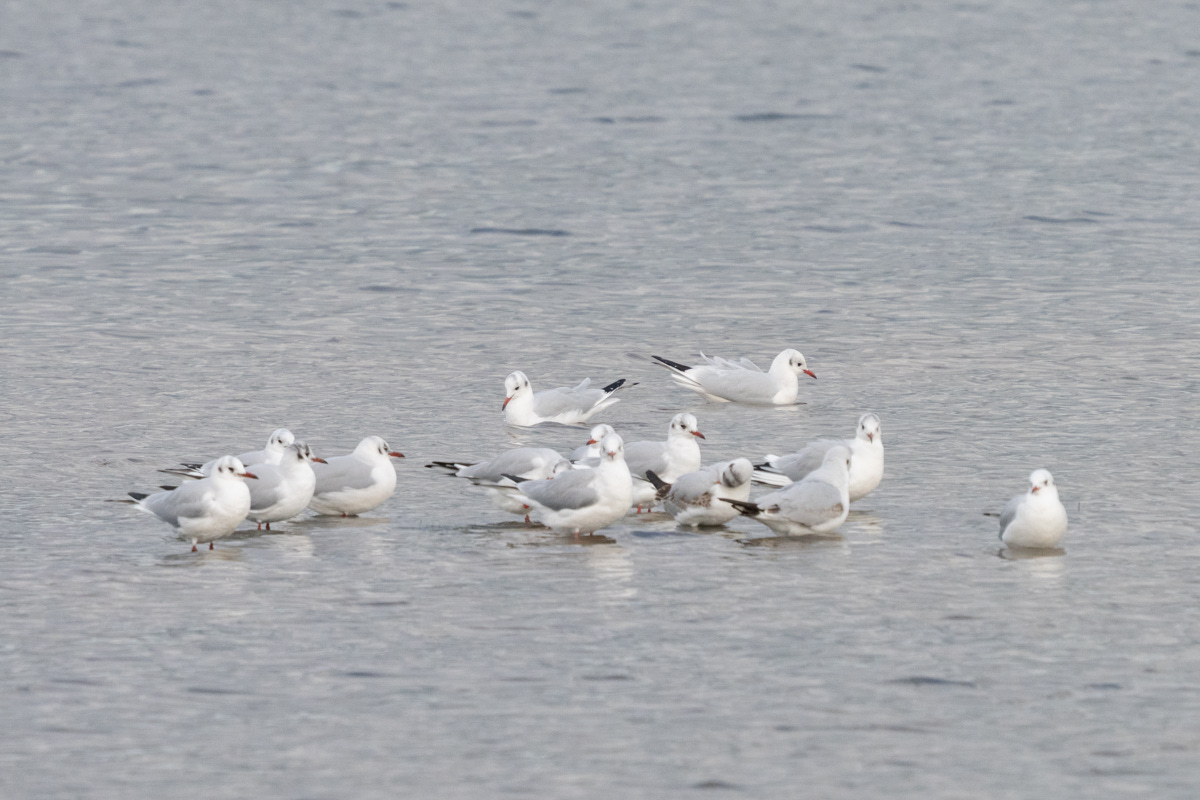
My favourite sign that things are changing is the development of colour on the Black-Headed Gulls’ heads. In a few individuals below, you can see it starting to com through.
The countryside is alive with noise – this is a fantastic time to go out and get to know some of our common species and the calls they make.
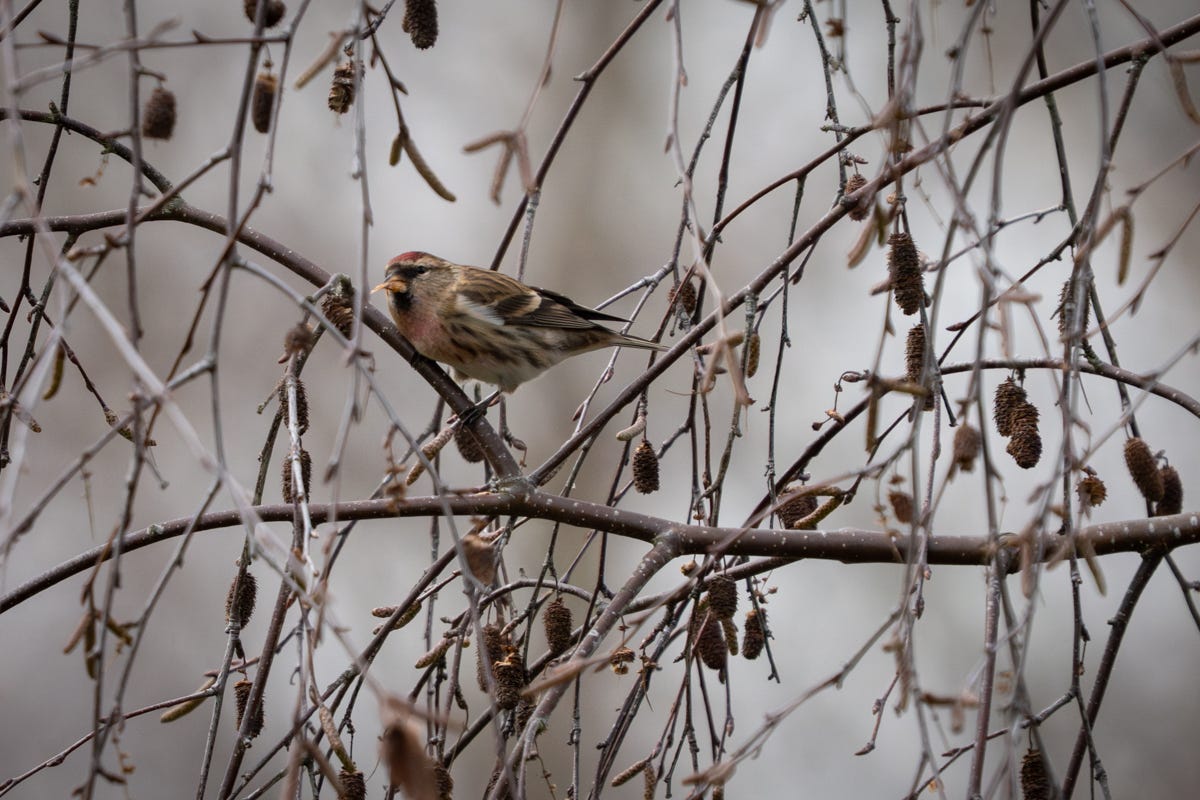
The soundtrack still features winter finches and thrushes: the ‘pew-pew!’ of Siskins, the chatter of Redpolls and the weird ‘chuck-chuck’ of Fieldfares.
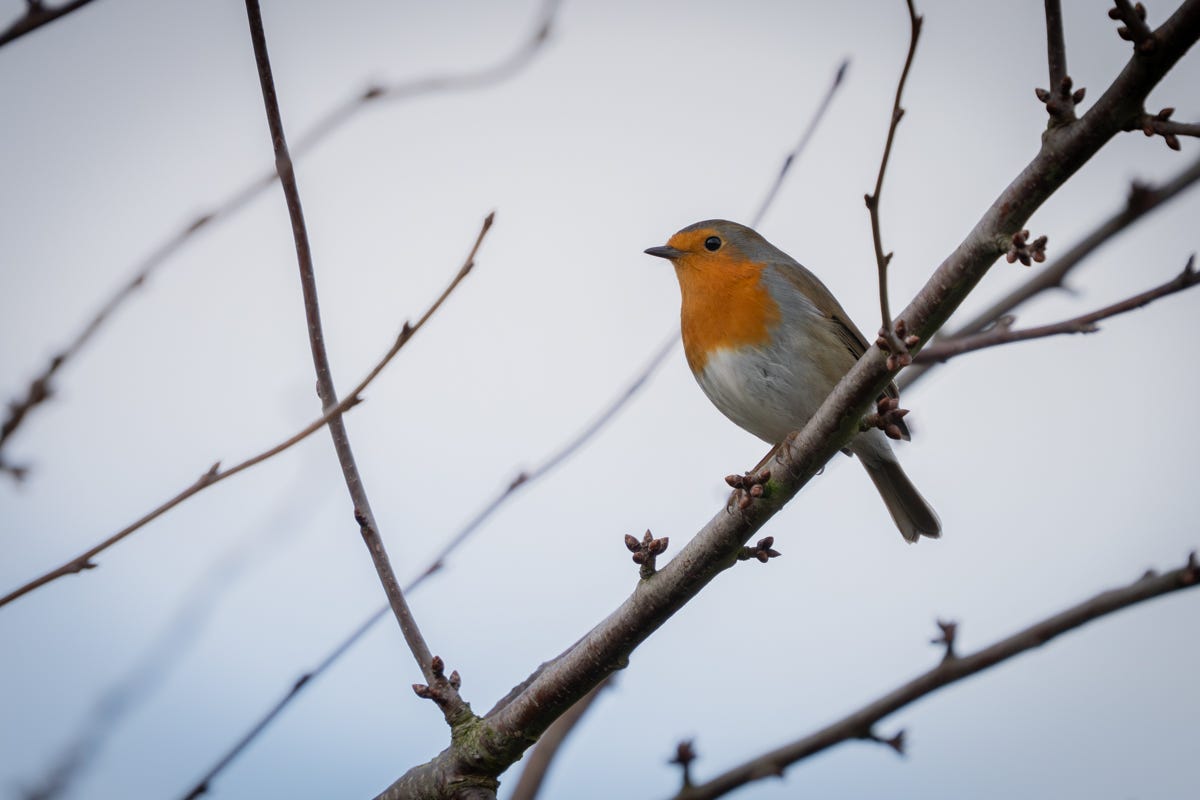
But there’s a cacophony of spring sounds, too, as our year-round resident birds plan ahead to breeding season: ‘teee-cha, teee-cha’ from Great Tits and melodic songs from Robins that seem to be dotted around every few metres or so.
Song Thrushs’ loud, varied tunes are delivered from a high position, usually in a large tree, and interspersed with impressions of other birds. I heard one confidently mimic a Green Woodpecker, a Buzzard and a car alarm in rapid succession.
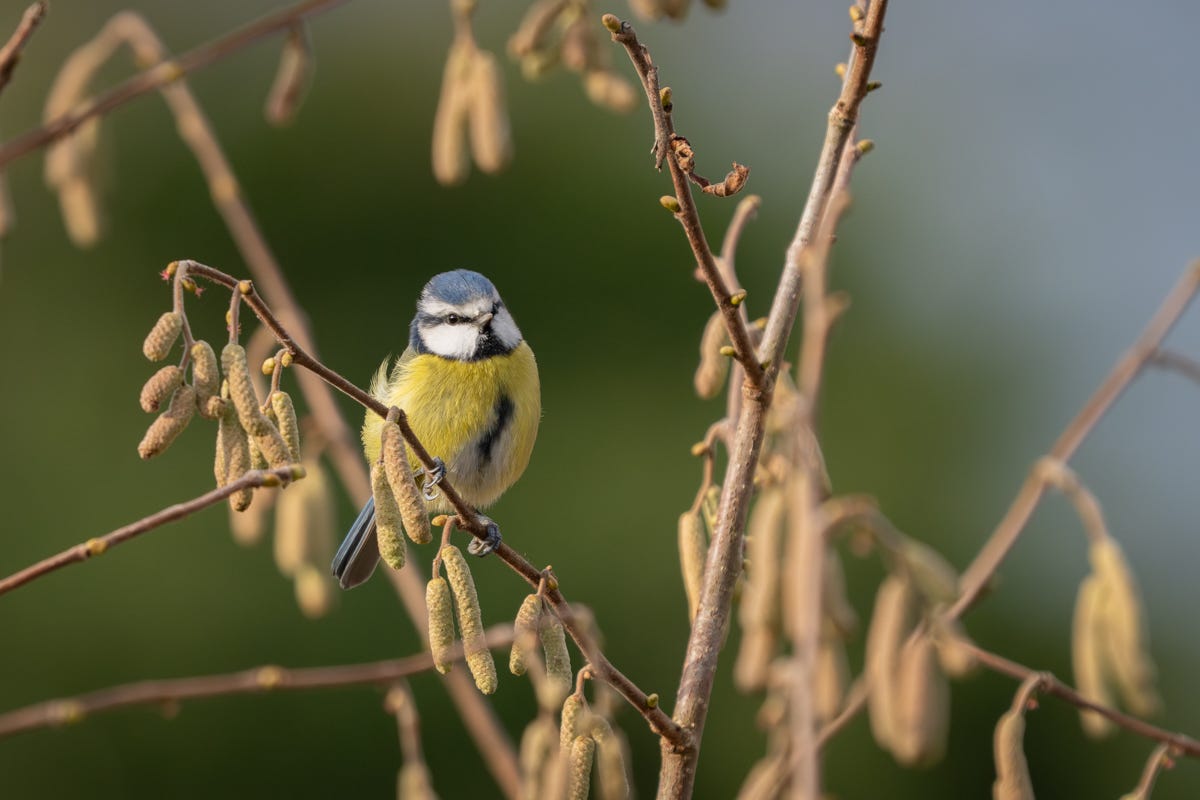
Pairs of Blue Tits are busily checking out potential nest sites, and the Stock Doves are doing their low, rumbling roar once more.
While squirrels can breed year-round here, they must have it on their mind at the moment as six of them (five grey, one black) seem to be endlessly chasing each other along the garden fence and through the tall trees behind our garden.
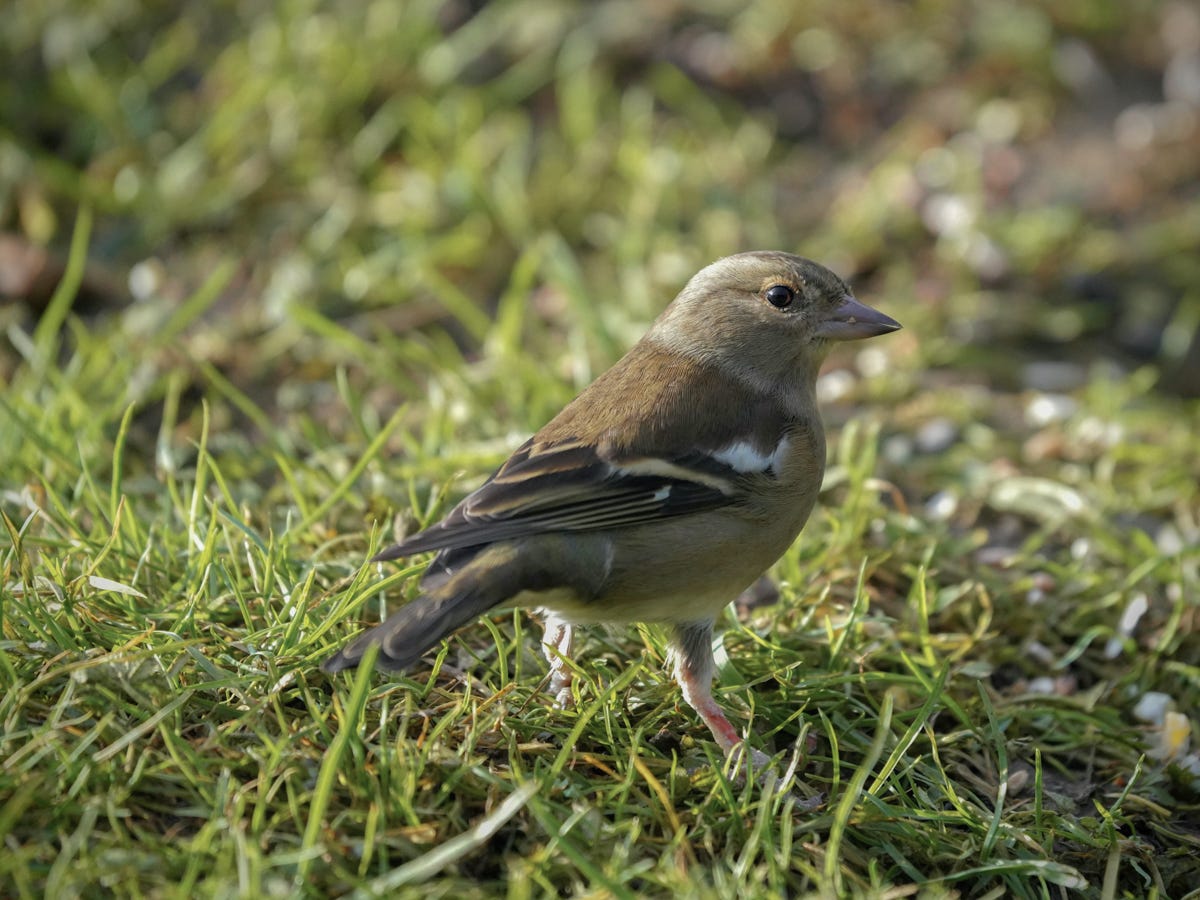
Almost as fast as those trees grow new buds, a small group of Chaffinches strip them from the branches and eat them. The sticky sap seems to annoy them, so they regularly wipe their beaks on a branch like a chef sharpening their knife on a steel.
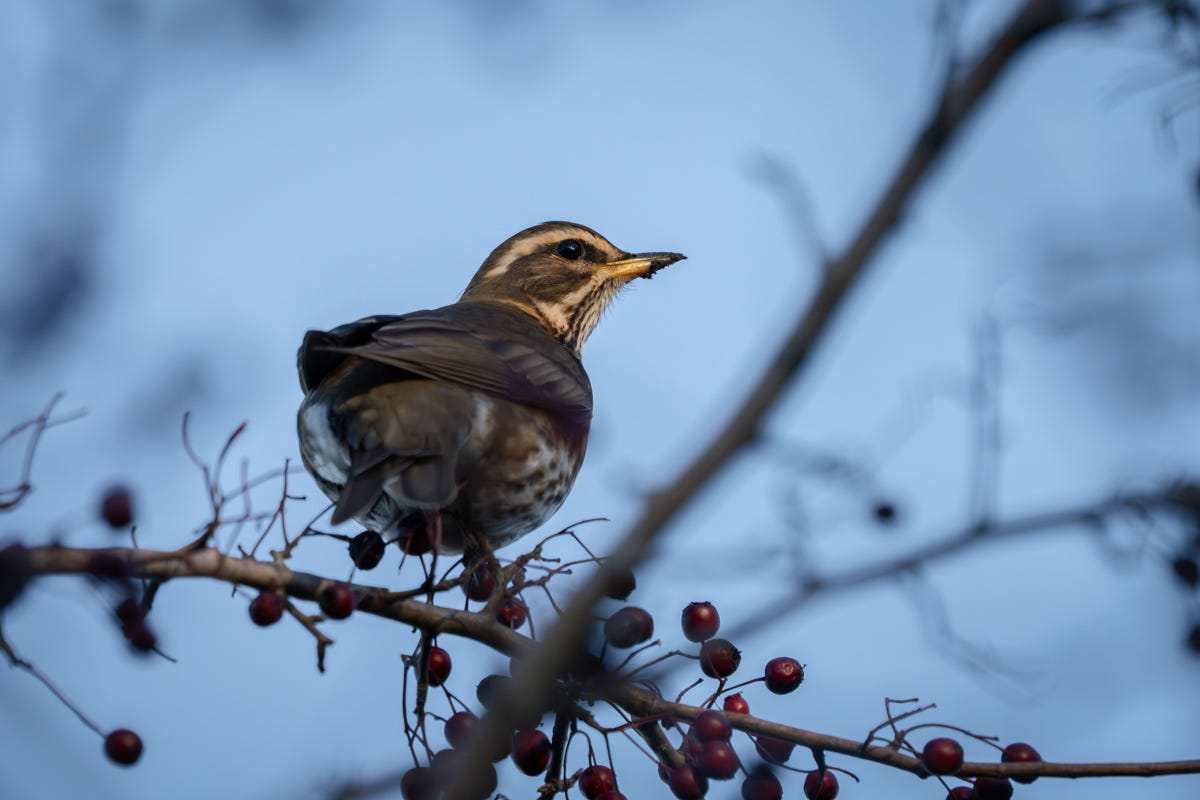
The local woods are a gathering point for Redwings and Fieldfares as they prepare to migrate back to Scandinavia, Eastern Europe and Russia. They don’t usually leave until March-ish, but seem to be gathering earlier than usual this year – I’m holding out hope that they know we’re in for a pleasant summer!
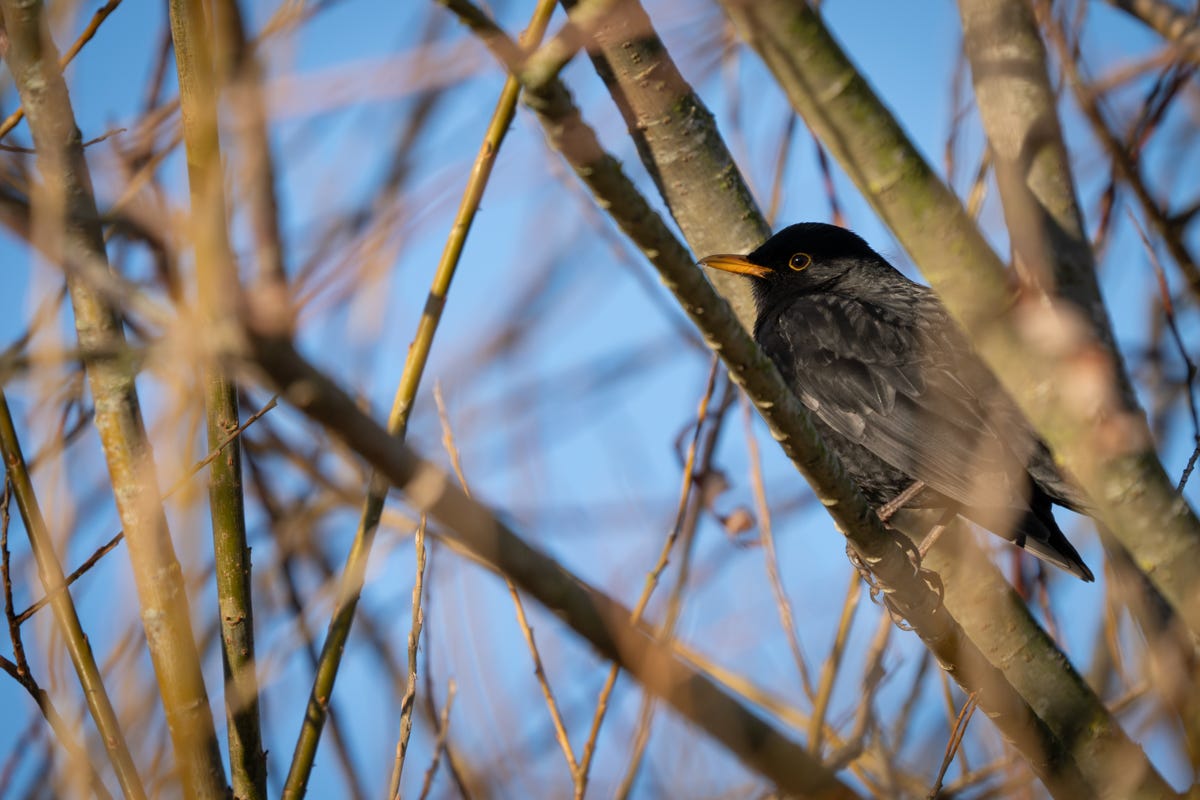
Despite their recent decline, there are still a few Blackbirds to be found. They seem to become shyer in the winter, perhaps taking the lead of their skittish visiting cousins.
I’m hoping to photograph some ducks before I next write, because they are coming into their breeding plumage and there’s nothing quite as spectacular. Even black feathers feature flashes of iridescent green and purple when they catch the light.
Thanks for joining me again. What have you seen this week? I’d love to hear about it.
Gem
A wonderful post Gem, and such beautiful photos ❤️ I particularly love the little Blue Tit 😍
We've been noticing such a change in the bird song here too, with Great Tits incredibly vocal, which has brought such joy to our days. A Blackbird's started singing its beautiful melody over the past two afternoons too, joined by a Song Thrush somewhere nearby. It really does feel like life is stirring, and everything's beginning to wake from its winter slumber 🌱
Seen a few Blackbirds tootling about, some finches feeding of my neighbours table. Time for a stroll down to my local wetland, most years it boasts a small herronry! Not bad for a small urban wetland!