

Hello! This week you’re joining me at a very special place, home to a significant portion of the world’s Northern Gannets, Razorbills, Guillemots and Atlantic Puffins: RSPB Bempton Cliffs. This is going to be a long one, so grab a cuppa and open it in the app!
We arrive at 6am on a Thursday. The visitor centre Puffin stands nearly 6 feet tall and looms out of the mist. The dense, grey mist…
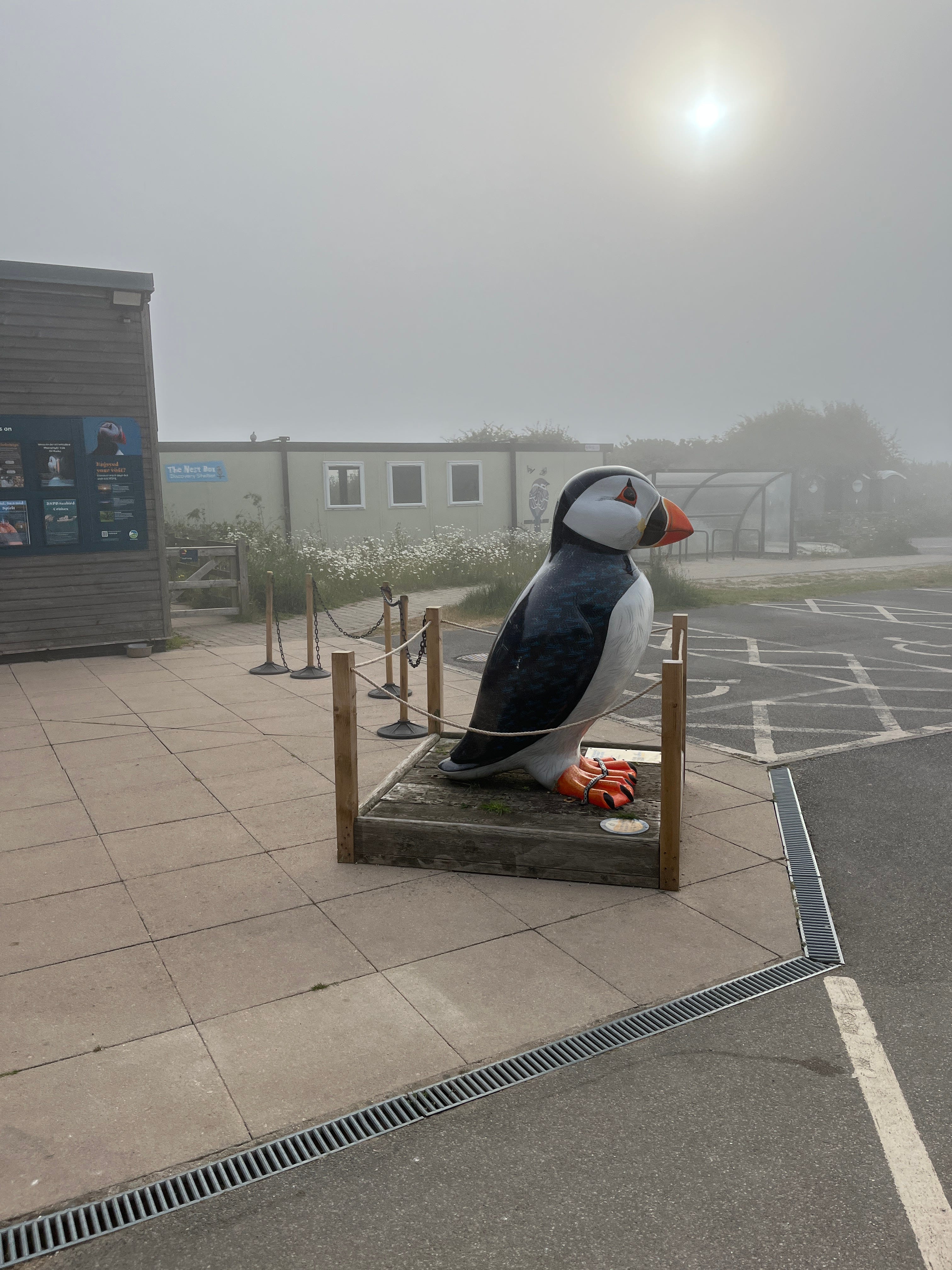
Not a great start. But there’s a cheerful chirping coming from the bushes, waiting to greet us. Tree Sparrows!
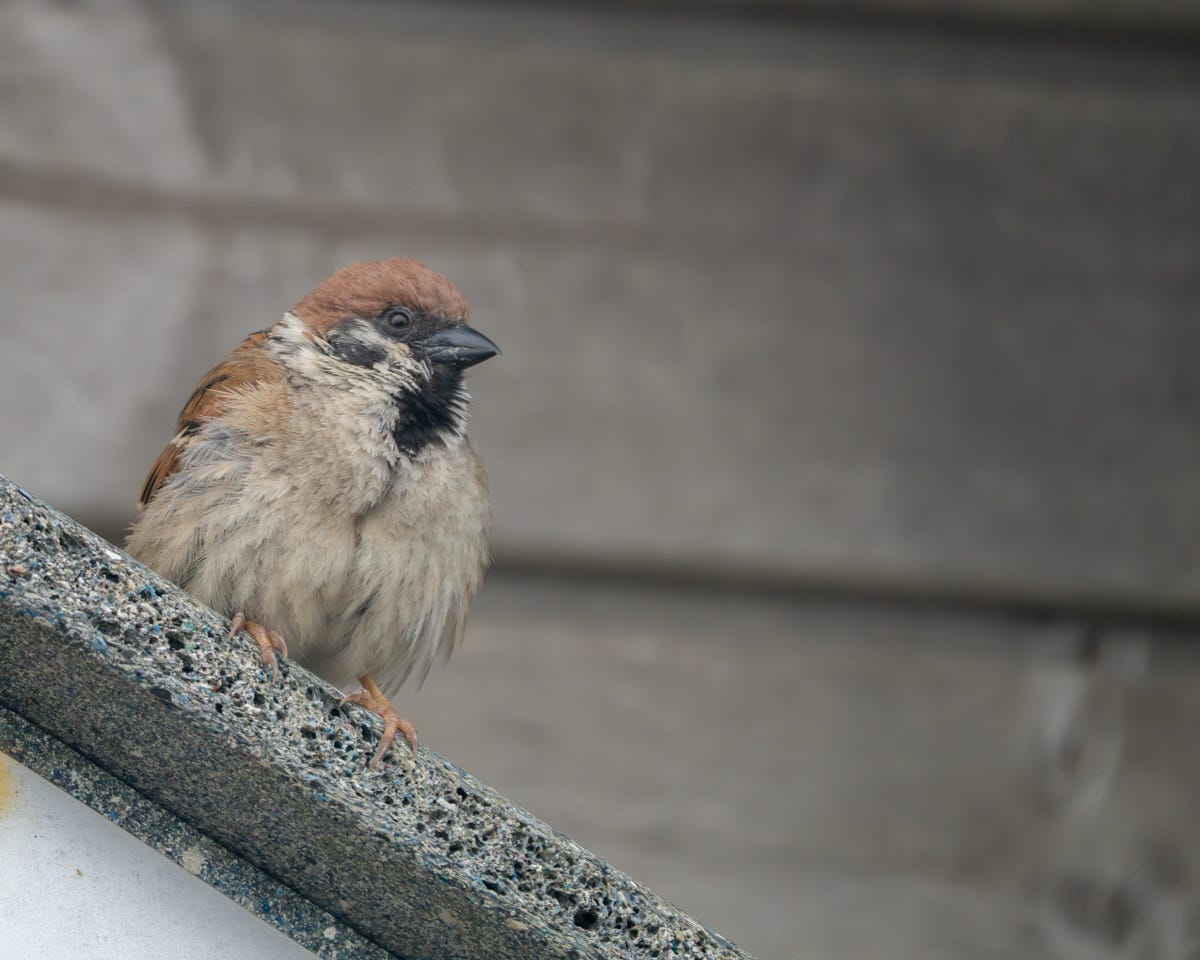
I find these gorgeous little birds fascinating. They look just like male House Sparrows, except they have a black spot on their cheek. This spot sometimes joins with the cap, looking more like mutton chops! They are, I think, a richer, redder brown than House Sparrows.
But what I find particularly interesting is that while House Sparrows are sexually dimorphic (meaning the female looks different to the male), both sexes look the same in Tree Sparrows.
Assuming the two species look so similar because they are closely related, why does the female Tree Sparrow look so much like the males (of both species)? Or was it that the common ancestor of both looked like the male, and only female Housies changed? Why?
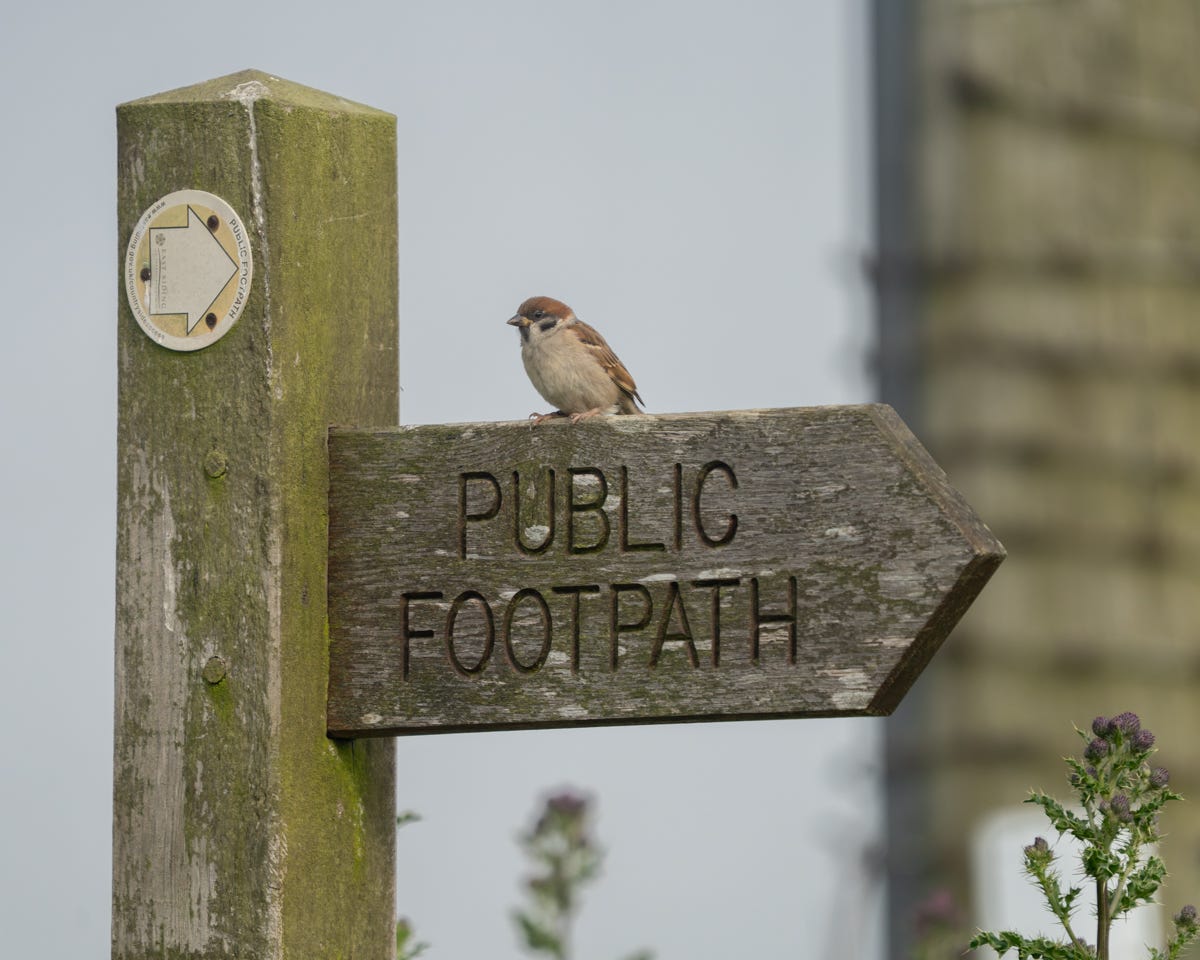
Anyway woe is us, because I don’t know the answer. Perhaps someone will tell us in the comments.
Any visit to Bempton Cliffs requires you to stop and squeal as the Barn Swallows twist and turn directly over your head before perching or darting over the shutters at the visitor centre to reach their nest. We oblige.
I do not attempt to photograph such fast-moving birds in the mist. But I do stop for this adorable and inquisitive juvenile Common Whitethroat in the bushes on the path down the the cliffs.
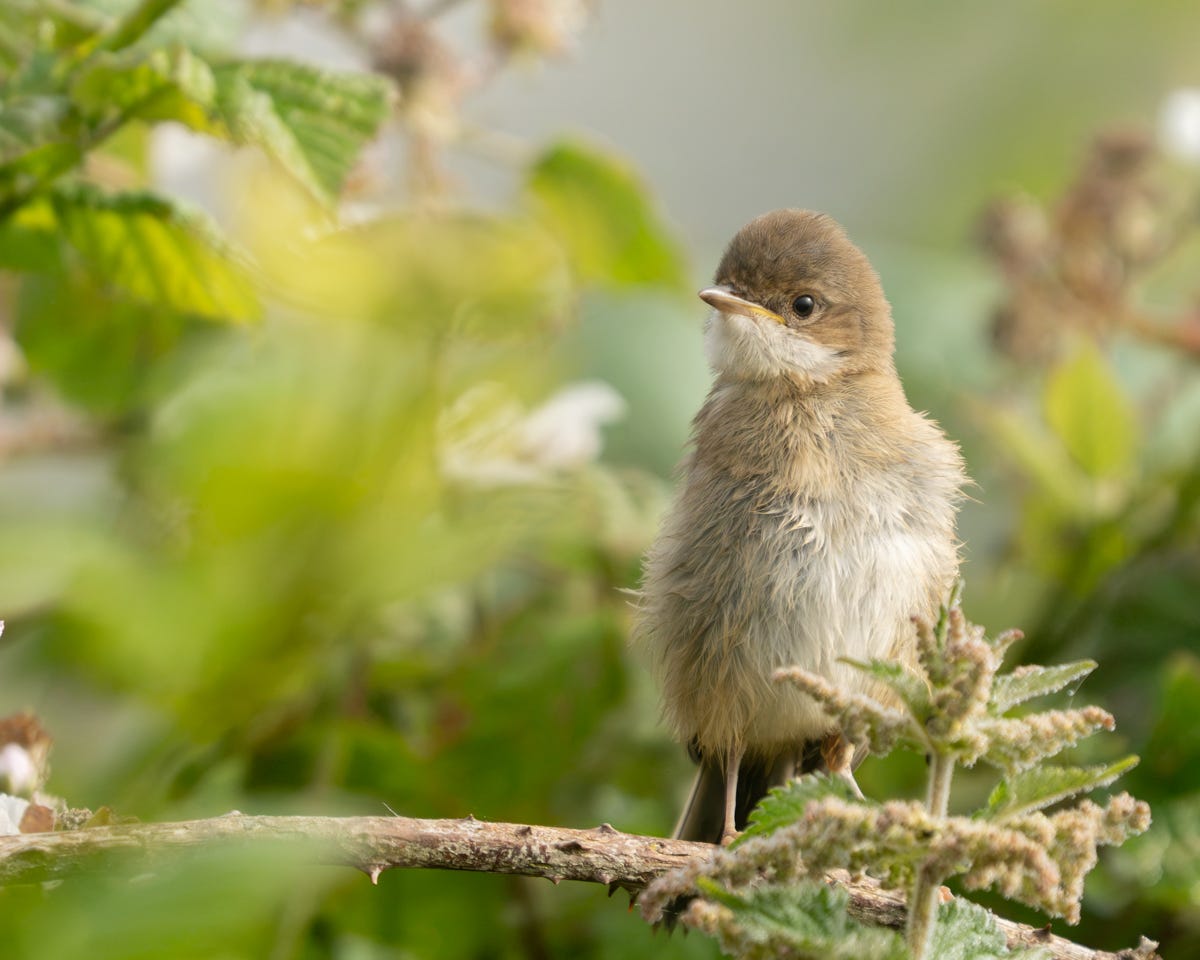
I recently learned that Common Whitethroats are not closely related to Lesser Whitethroats, which will come as no great surprise to you if you have ever dabbled in bird taxonomy and naming.
As we get closer to the sea, sounds guide us. There are guttural groans and deep aaaaarrrrrrrrrs, mewling cat sounds, cries and screams. At the top of the cliffs, Gannets occasionally rise up to our eye level - they’re hunting for grass to line their nests with.
And by ‘nest’ I mean ‘beakful of grass on a cliff edge’. (Don’t worry, that chick is alive and well - it was just having a nap!)
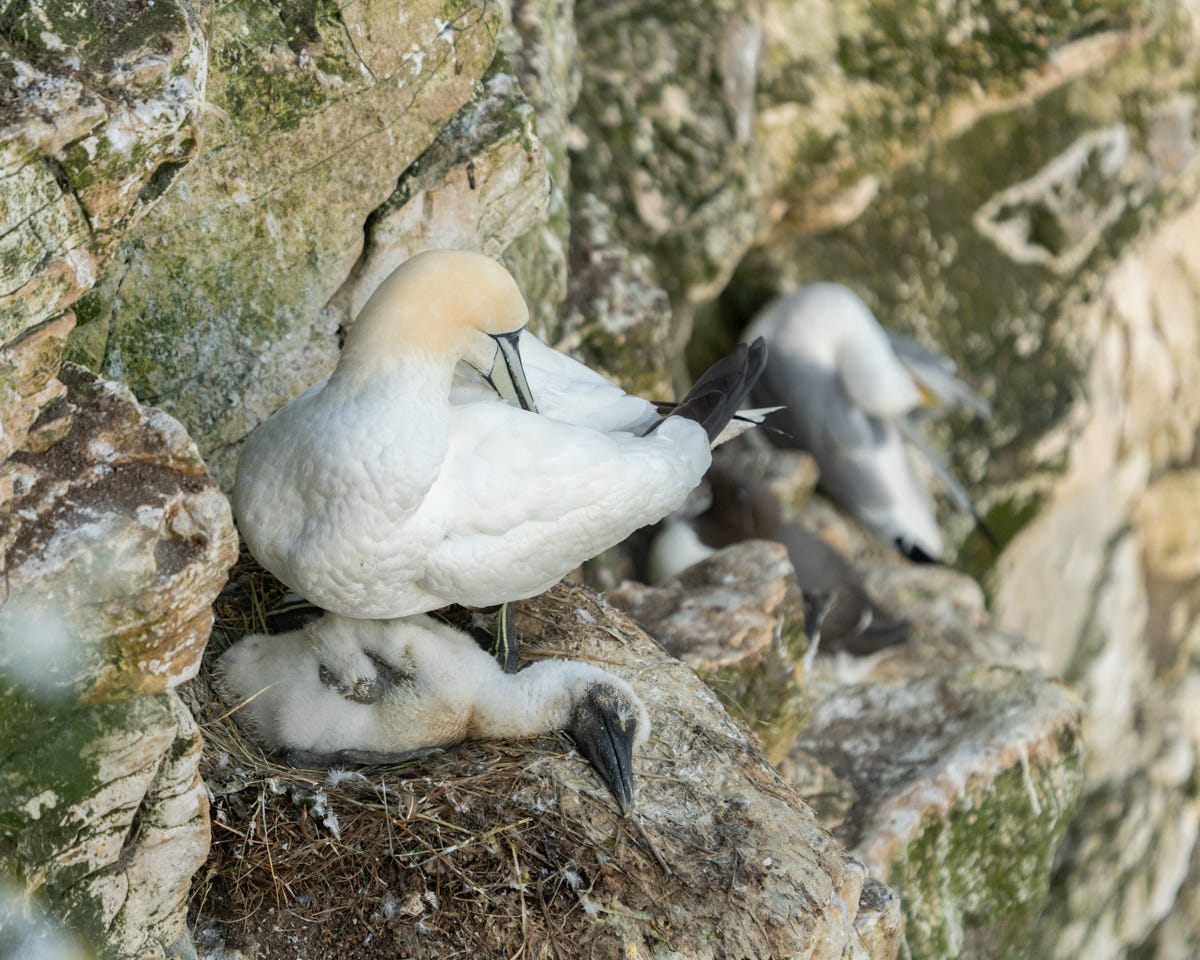
These birds are complete contradictions - they are huge, waddling, booby-esque creatures that frequently land on each other’s heads and fall over. But they have a graceful curve to their necks and look utterly serene in flight.
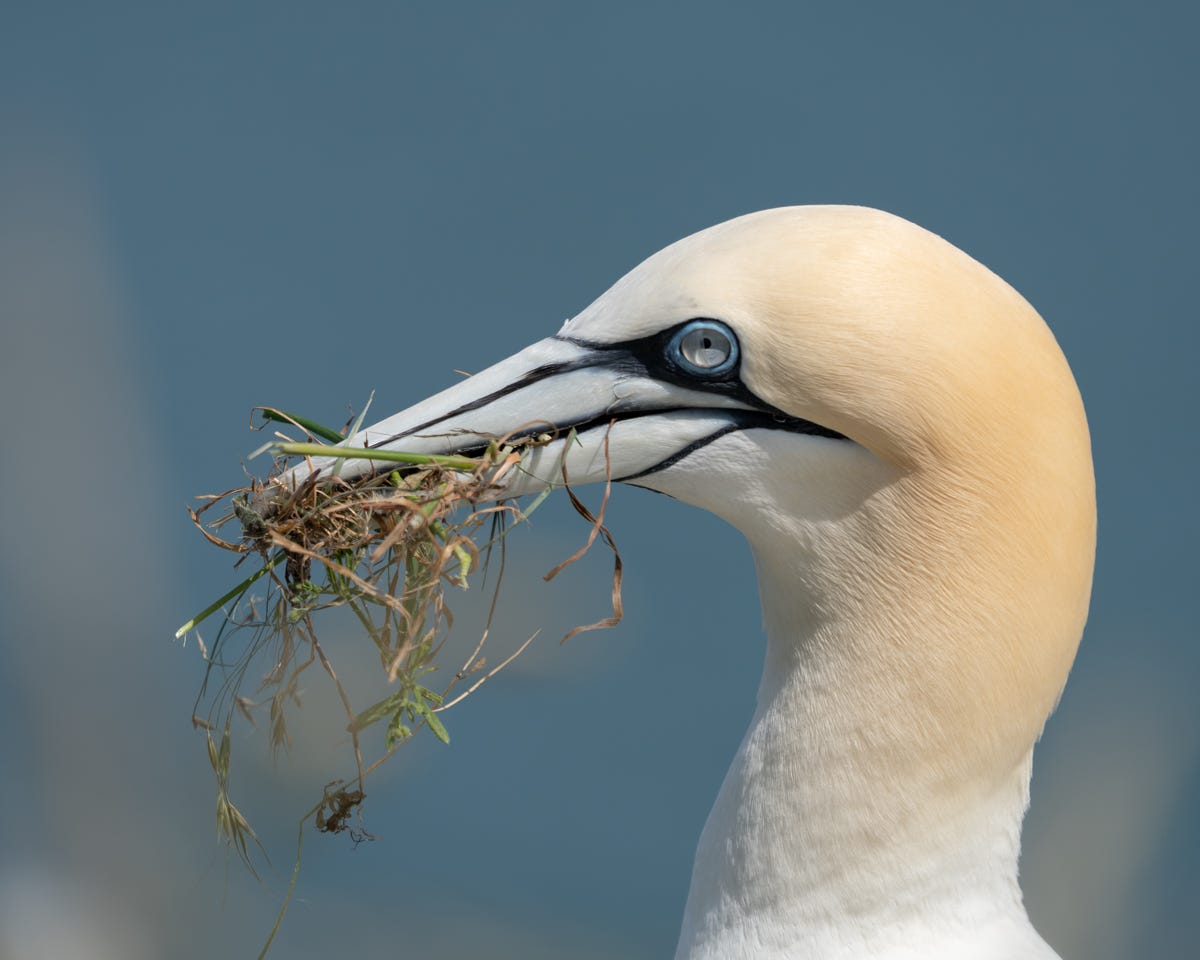
They bicker mercilessly with their neighbours, often clacking their weapon-like beaks. But in the next breathe they turn to nuzzle their partners, turning their heads in time and crossing bills.


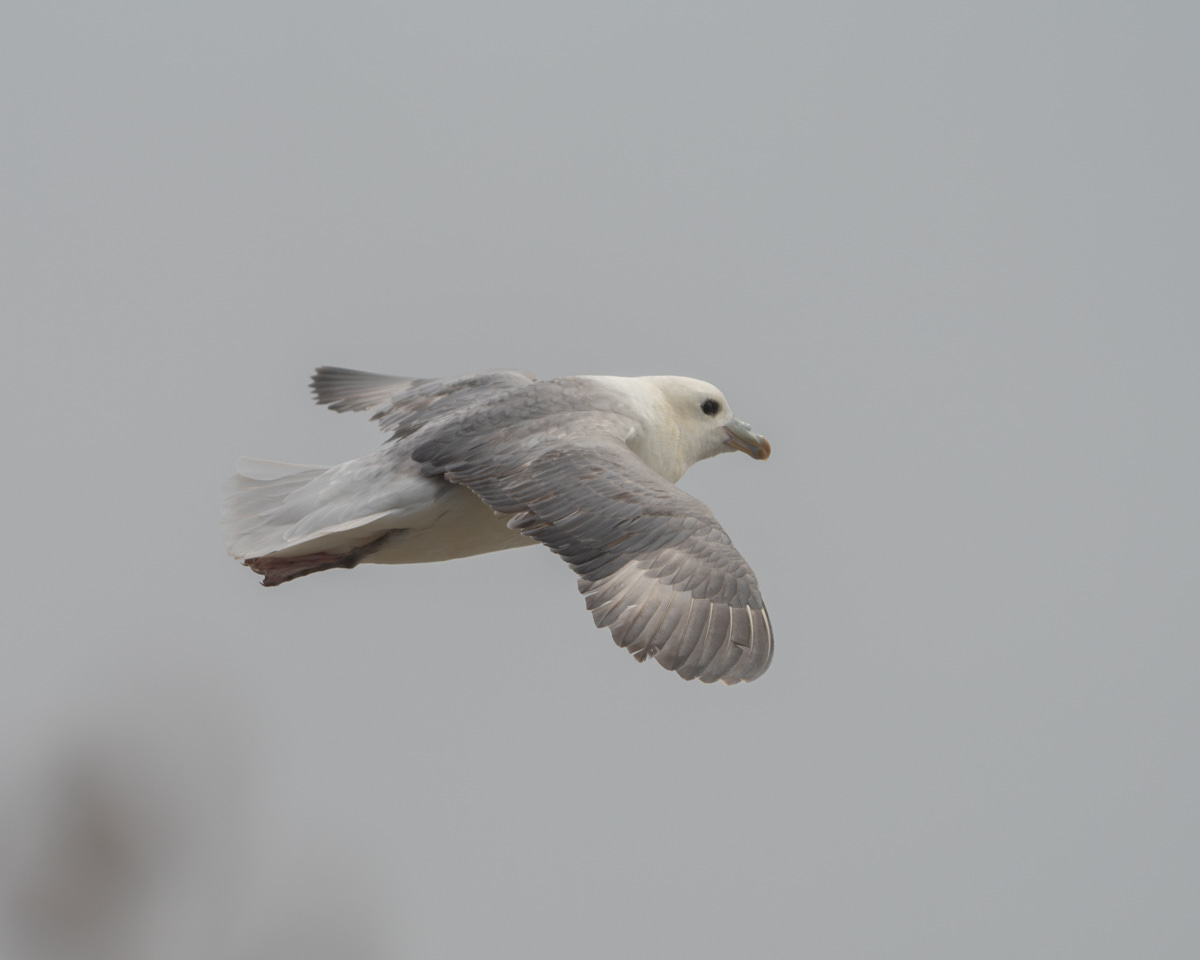
Also drifting into sight over the wildflowers that line the edge are Kittiwakes, Fulmars, Herring Gulls, Rock Doves. Jackdaws, Carrion Crows. So many birds soaring, calling, trying to land on the sheer rock face or leaping off of it.
We stand for a moment, taking it all in. Then a step closer to the fence that stops us plunging to our deaths, and another moment is required.
The land gives way to enormous white cliffs, glowing in the morning sun. The smell of seabird guano - distinctly fishy, yes - rises up to greet us. The noise increases, too, swelling to double the volume now. Waves crash far below.
And the birds. So. Many. Birds.
Every rock face is dotted with hundreds of birds. Half a million in total. And many of them are trying desperately to keep their precious charges - eggs or chicks - from falling off the edge.
Puffins do this by nesting in burrows or cracks in the rock face. This one was desperate to deliver some sandeels to its offspring, but the comparatively enormous Gannet was blocking the way.
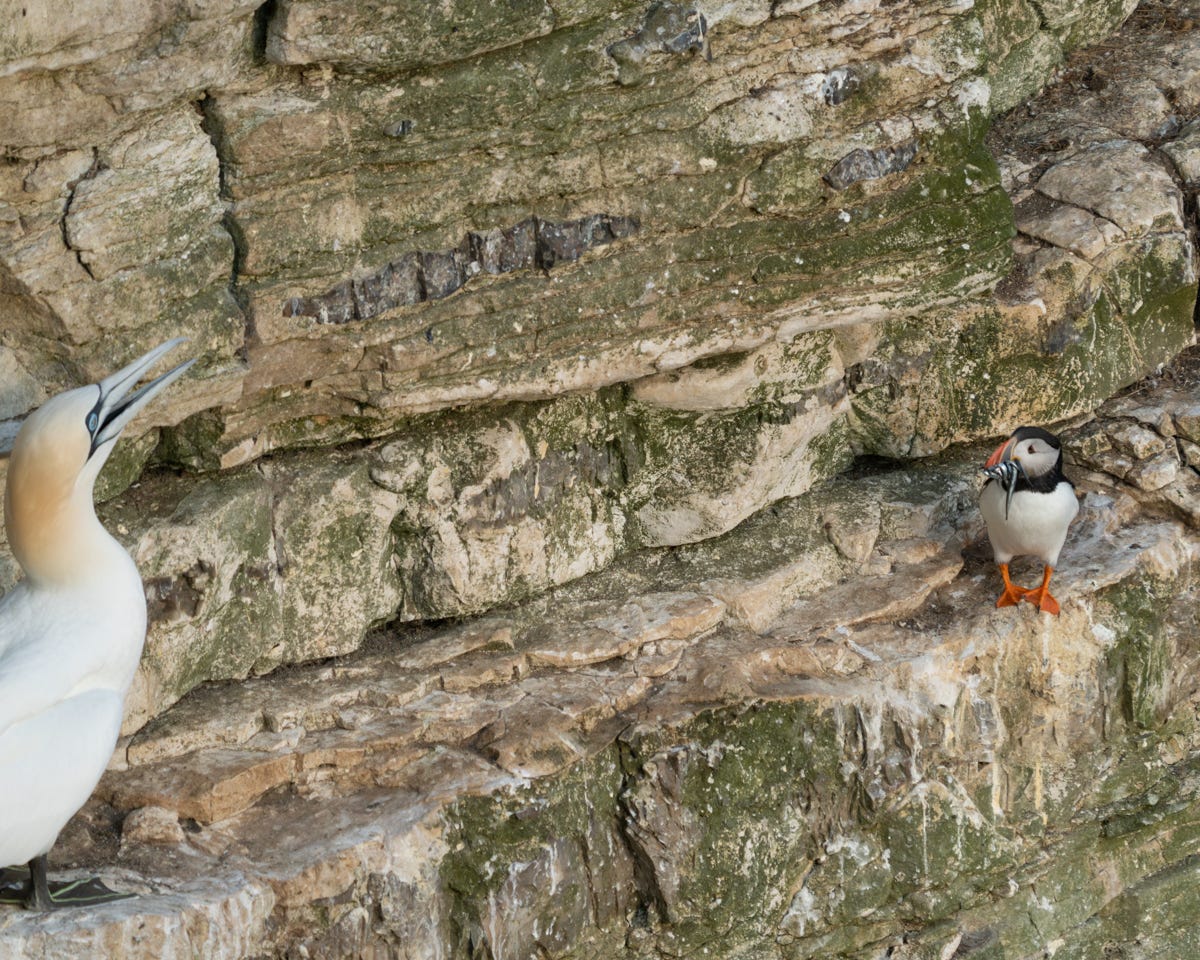
Eventually, a Jackdaw tried to mug the Puffin, so it flew off. I did see it dive into the nest hole from the left-hand side a few minutes later - success!
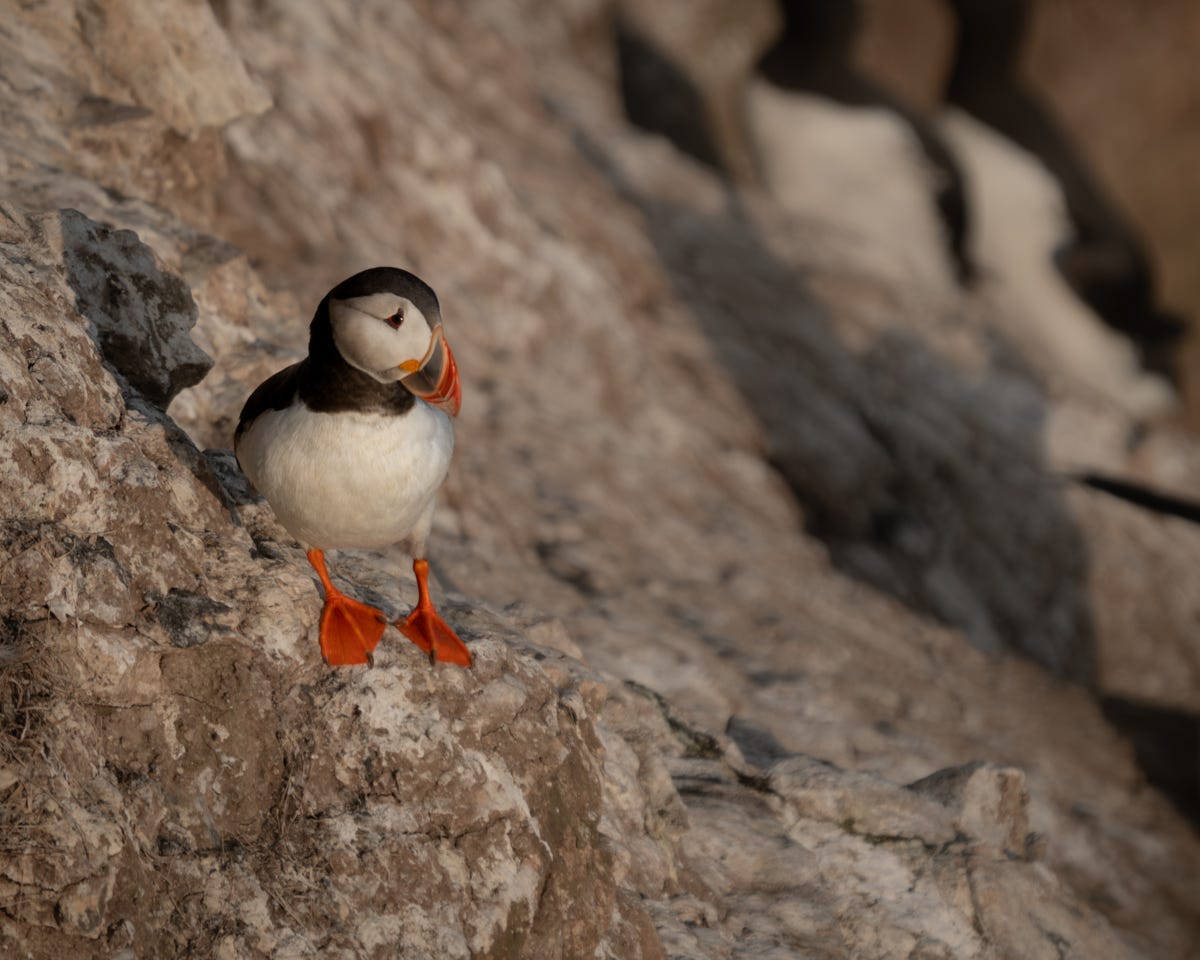
Among all the noise and activity, a calm moment locking eyes with this quiet, sincere looking little bird is breathtaking.
But we can’t block out all that noise forever. After a few hours of sensory overload, a quick nap back at the accommodation is in order. Then we return for the rest of the birds that demand a mention.
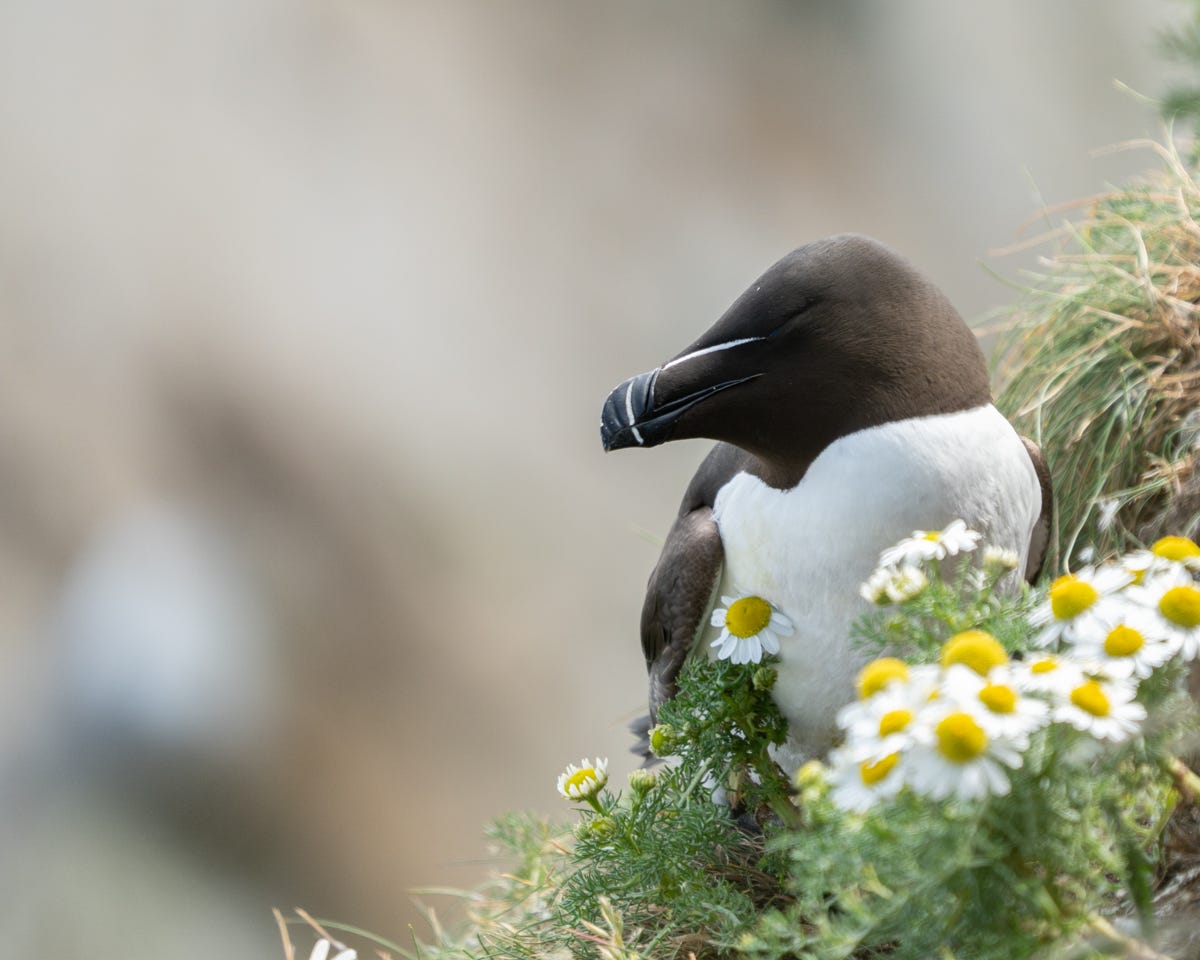
This is the gorgeous Razorbill, which looks jet black compared with the Guillemots. They are often caught with their eyes closed as if in contemplation.
At around 20 days old, Razorbill chicks leap into the sea below using their not yet fully formed wings to slow themselves down - they do not have flight feathers at this age, so it’s quite the feat. The male adult follows and will stay with the juvenile until it is capable of feeding itself.
(In my opinion) Guillemots are the most likely to be yelling and covered in poop. They are sleek and slight, until you seem them fly (then they look like a potato with rather too-small wings). Their beaks look a bit slender for holding fish in, but they have sharp tongues and sharp bits on the roof of their mouth, so they get by.
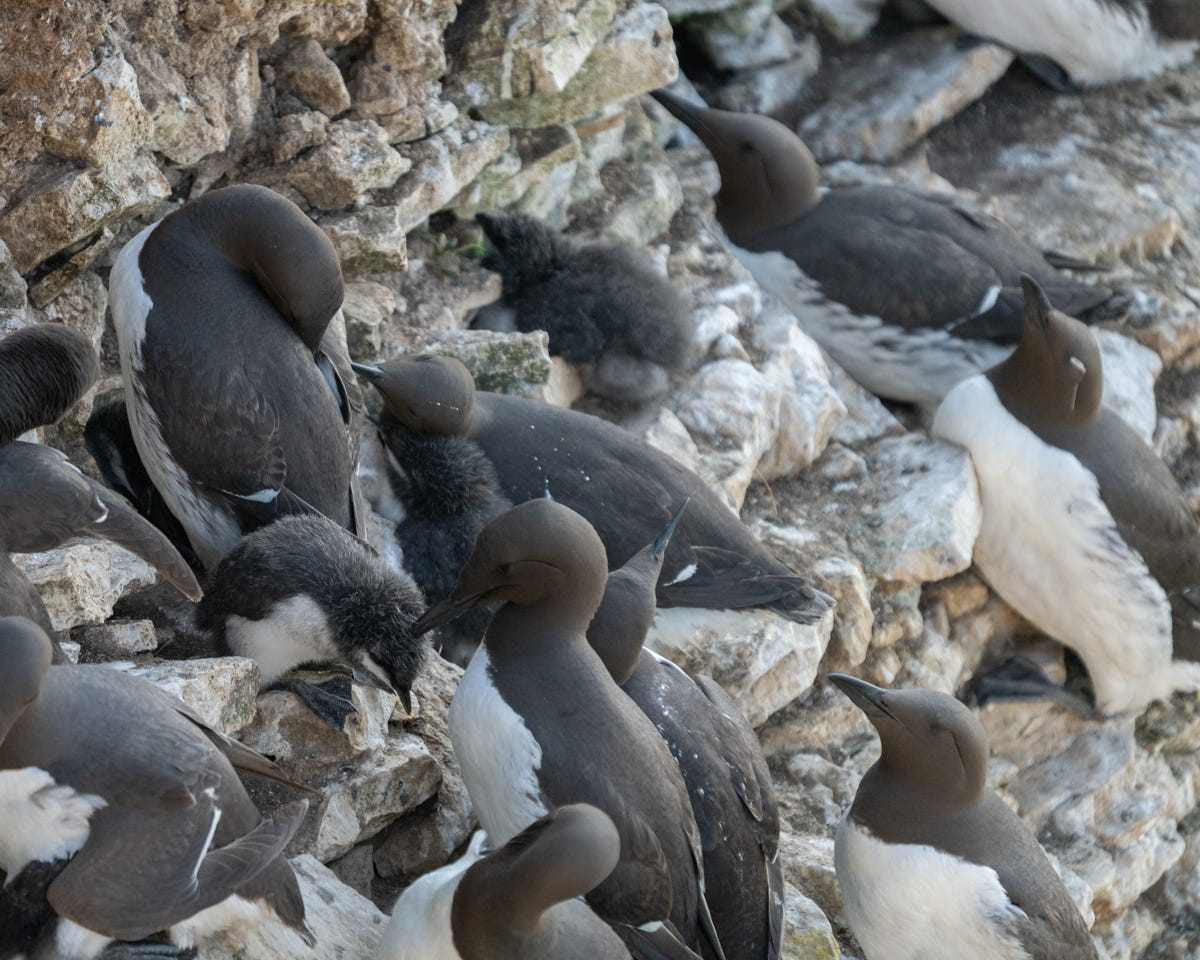
They dote on their chicks, often preening and cuddling with them, presumably to hold them in place. The bird on the right-hand side of the photo above is a ‘bridled’ Guillemot, an unusual colour variation with white eyeliner.
And that is about as much excitement as I can take for one day. Time for a snooze!
Friday morning, 5am, and we wander down the nature trail in the reddish light of the just risen sun. The glint of a white bird quartering the fields catches my eye.
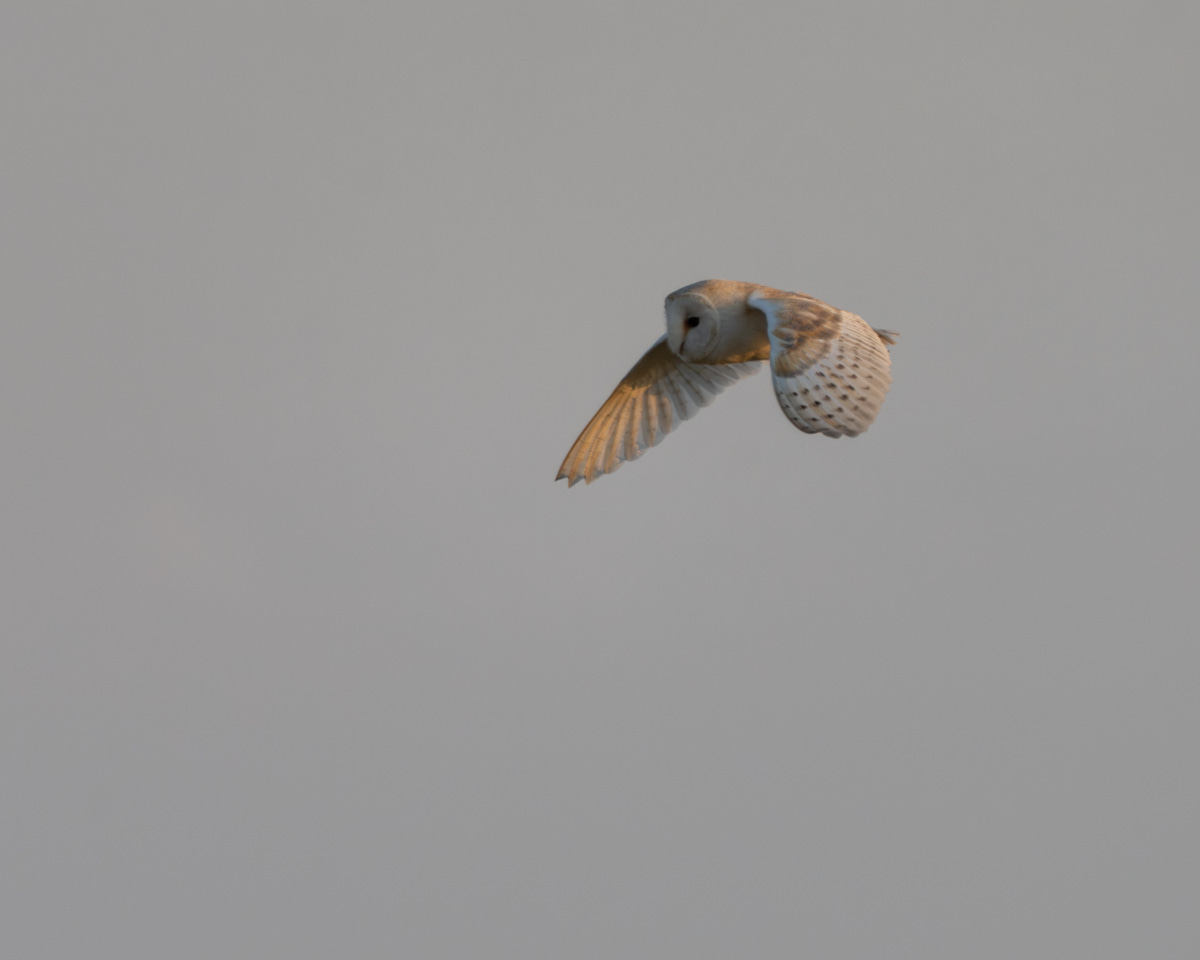
That’s a happy half-hour whiled away watching the Barn Owl hunt, with about as many successful dives as not. Later, as we walk along the cliff path, a silhouette catches our attention.
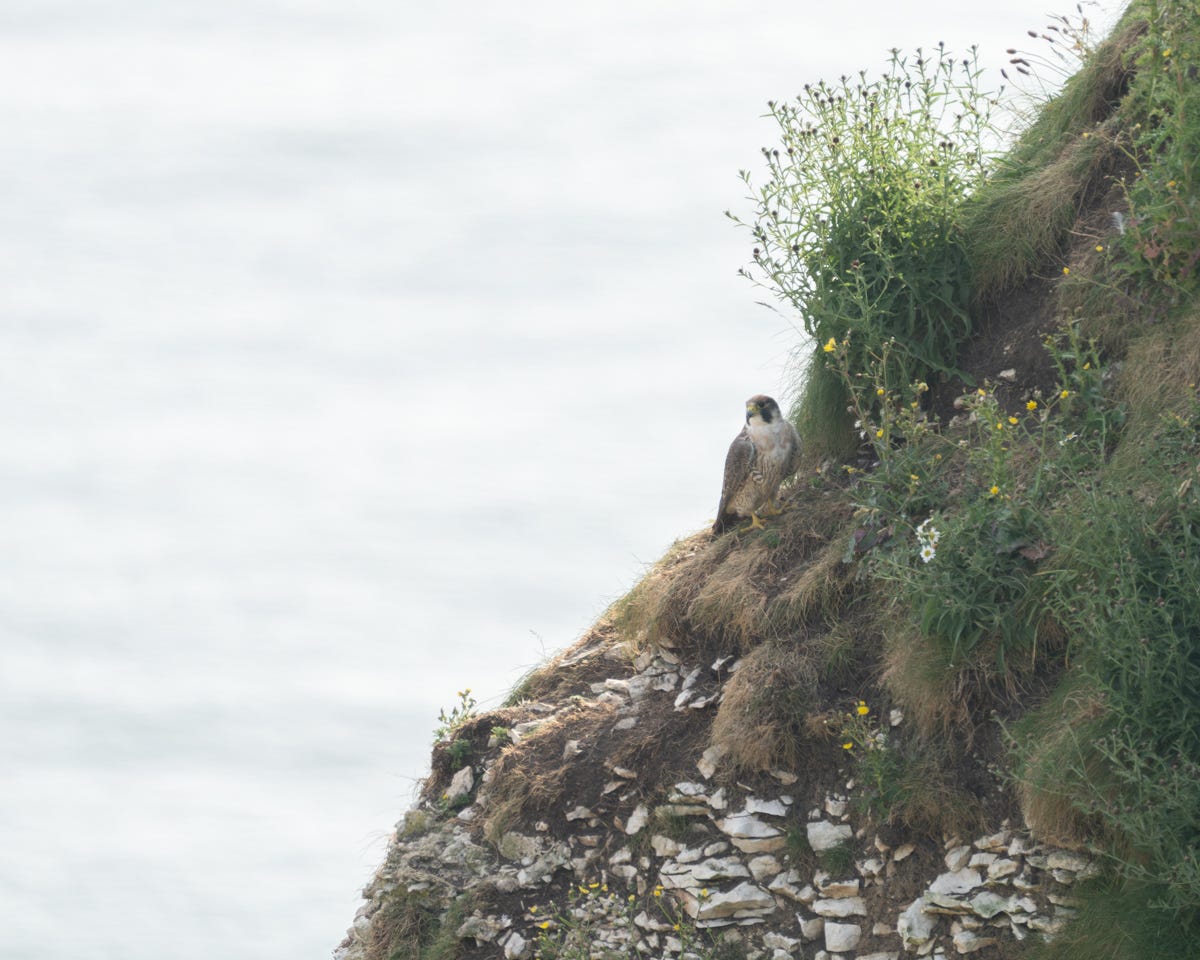
A juvenile Peregrine Falcon, understandably not welcome enough to sit out in the open. It is huddled on a quieter cliffside, hoping to go unnoticed.
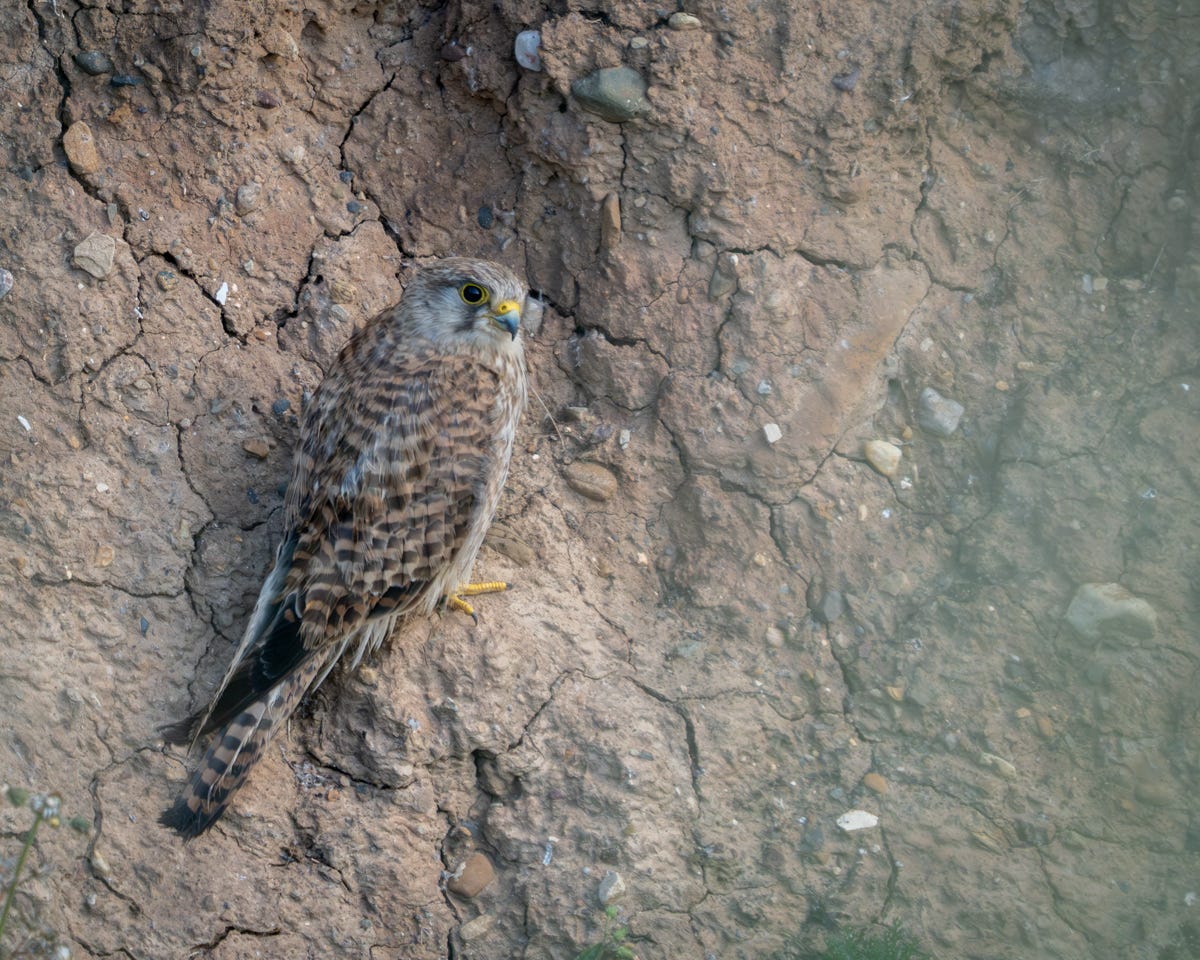
Not unlike this female Kestrel, just a short distance away. Though she is more interested in the voles found among the wildflowers, they are also subjected to mobbing by other birds if caught hanging around.
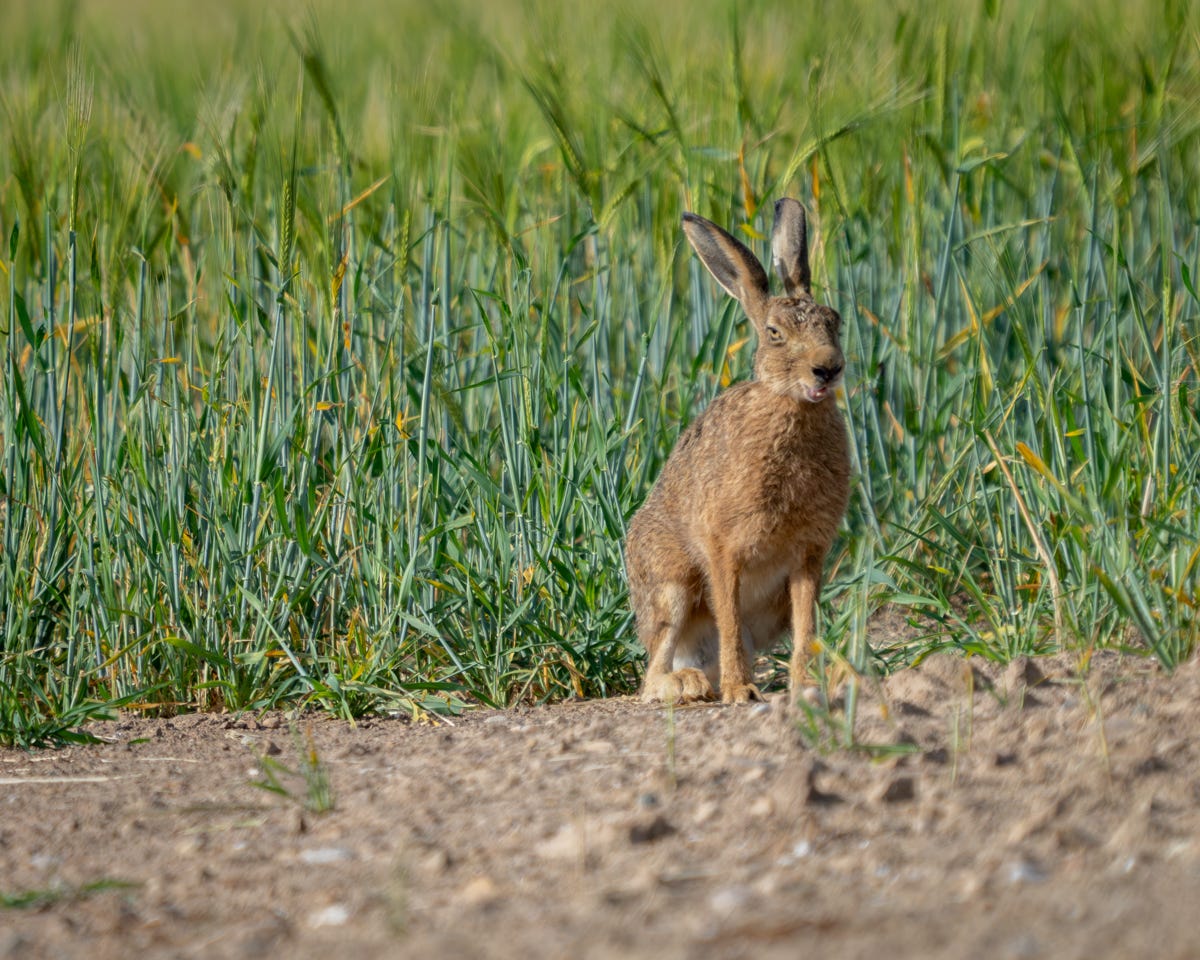
Shortly after, the sun comes out with more force than my pale complexion can handle, even with factor 50 suncream. I pause briefly to photograph this enormous Brown Hare, then beat a hasty retreat.
I head to a nearby woods recommended by another nature Substacker - no photos, but I did catch a lifer there: the Common Crossbill.
And later that evening I met that Substacker - Burhinus - in person. And now I think ALL the NatureStack writers (as I have decided to call us) should organise to meet. Can anyone work out what the most central nature reserve in the UK is?!
Thank you for joining me. What did you see while I was ambling along the cliffs?
Gem
Really enjoyed reading this Gem. Thank you 🤩
Reading this felt like I had just visited - whats nice to see is that some of the lesser known birds and mammals are still there - I love Bempton more when I have it to myself just me and the other wildlife